Etiquette For Kids…From 1530

Kids! They’re always fidgeting and yawning and being unhygienic, and this was as true 500 years ago as it is now. In 1530, Erasmus published the educational treatise On Good Manners For Boys, which may be the earliest example of an etiquette book out there. Dedicated to the 11-year-old Henry of Veere, it outlines some good manners, though he insists that Henry doesn’t even need such a book, “having been, in the first place, brought up from infancy at court.” If only we were all so lucky. He goes on to describe how “the task of fashioning the young is made of many parts,” and I assumed he was talking about collecting legs and eyes and teeth to build an army of youths. Really, he means the task consists of teaching piety, a love for liberal arts, giving instruction on the duties of life, and teaching good manners. So, how do you do that? Erasmus explains.

“For the well ordered mind of a boy to be universally manifested—and it is most strongly manifested in the face—the eyes should be calm, respectful, and steady: not grim, which is a mark of truculence; not greedy, the hallmark of insolence; not darting and rolling, a feature of insanity; not furtive, like those suspects and plotters of treachery…”

This goes on for another paragraph, which is just to say you should be constantly aware of your eyes. What are your eyes doing right now? Are they grim? Are they truculent? Stop that.

“It is bad manners to look at someone with one eye open and one shut. For what else is this than to deprive oneself of an eye?”

It is literally nothing else, Erasmus. Do not wink at me.

“The eyebrows should be smooth, not contracted, which denotes fierceness; not arched, a sign of arrogance…”

He goes on like this nearly as long as he did about the eyes themselves. Following this he finally gets to the etiquette of the nostrils, the mouth, and how you’re cheating if you use blush because a natural modesty should be giving your cheeks that glow. You’d think that Erasmus would have the most polite face, given that he knows all the rules, but I don’t know…

Erasmus-lecture-3

That mouth looks pretty tight set, Are you “afraid of inhaling someone else’s breath”?

“To expose, save for natural reasons, the parts of the body which nature has invested with modesty ought to be far removed from the conduct of a gentleman. I will go further: when necessity compels such action, it should be none the less done with decency and modesty even if there is no observer present. For the angels, from whom derives that most welcome sense of shame that accompanies and protects the chastity of boys, are always near.”

Are you saying the angels don’t want to see my butt? I’m pretty sure they want to see my butt. What else are they doing all day?

“There are some who lay down the rule that a boy should refrain from breaking wind by constricting his buttocks. But it is no part of good manners to bring illness upon yourself while striving to appear ‘polite.'”

I love old science, and the idea that holding in a fart could cause you illness. He later says that it is more dangerous to hold in a fart than it is to hold in a bowel movement, which is bananas. Try to do both of those today and see which is worse. Anyway, he does say that if you must break wind, cover it with a cough. Slick.

Finally, Erasmus gets to the bottom of the body, discussing whether or not one should cross one’s legs like an Italian. Now, we move on to dressing.

“To drag long trains after one is ridiculous in women, reprehensible in men; whether becoming in cardinals or bishops I leave others to judge.”

I had no idea cardinals or bishops could be “becoming.” But thankfully I’ve also learned from Erasmus that wearing multicolored or embroidered clothing is for “idiots and apes.” Dude is bitchy. He also reserves an entire section on behavior in church, including this gem.

“Touching the ground with one knee while the other is upright supporting the left elbow is the gesture of the impious soldiers who addressed the Lord Jesus in mockery, ‘Hail King of the Jews!'”
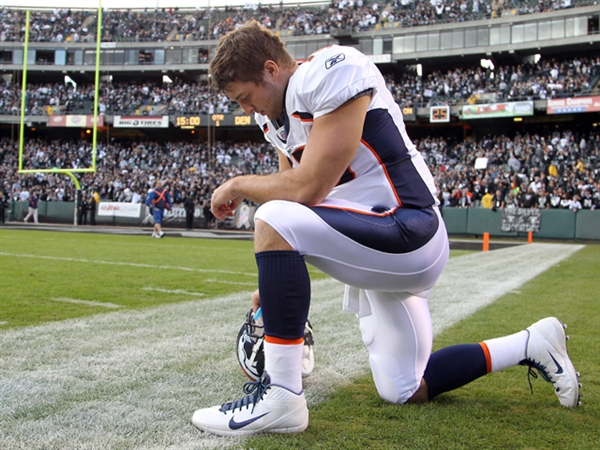
DID ERASMUS JUST DIS TEBOWING? I THINK HE DID.

Erasmus addresses banquet and bedtime manners, but in the end comes up with the cardinal rule of etiquette itself. “The essence of good manners consists in freely pardoning the shortcomings of others although nowhere falling short yourself: in holding a companion no less dear because his standards are less exacting.” May we all strive to be better ourselves and more forgiving of others. And to let each other fart in public.

Etiquette For Children: It’s Not That Hard (Ok It Probably Is But Please Try)

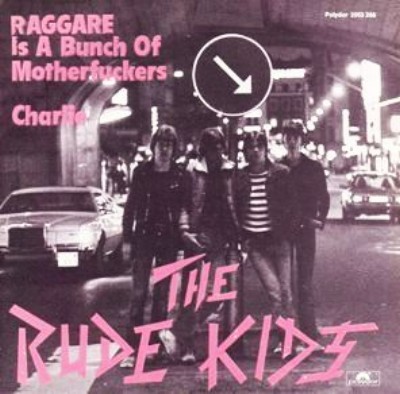
raggareI’m going to preface this by saying I don’t have children. I do not know what it’s like to have children. I have a niece who’s the bomb and have seen firsthand how difficult parenthood can be, but every time I visit my niece I know I can leave the apartment and go to a bar or a show and then get eight hours of sleep. Parents, you have a hard job, and I know lots of sacrifices have to be made just to keep everyone sane.

However, I am a human who lives in the world, and that world is full of children whose parents seem to have NO IDEA just how ridiculous they are acting.

I’m not talking about a baby throwing a tantrum in a cafe or on the subway, because if a child cannot talk and is screaming at the top of its lungs there is only so much a tired parent can do, and we should all be more forgiving of that. I’m talking about the kids running around restaurants and banging their silverware, or screaming to each other in a museum, or that one kid I saw in a grocery store who was just picking up produce and throwing it on the ground. Yes, having a kid is hard and you can’t be everywhere at once, but ultimately you are raising your kid to live in the world with other people. People who maybe are going to expect them to have an inside voice.

I don’t want to be in the business of giving parenting advice, but I will be boastful and say that I have been told on many occasions that I was a well behaved child. So here’s some of what I remember the adults in my life teaching me.

Learn where kids are unwelcome. I don’t necessarily agree with people who say children shouldn’t be allowed in restaurants or bars or anywhere public, but there is a line. Yesterday, a story came out about a couple who brought an 8-month-old to a fancy restaurant in Chicago that only serves a $210 tasting menu, which I assume will last hours. I’m sure their baby is lovely, but at what point did they think a child that young would be able to last through a meal like that?

Make sure you can accommodate your child to the expected behavior of where you’re going, not the other way around. Have a 10-year-old who can stay in his seat and eat politely at a nice restaurant? Great, bring him along. Bring your 4-year-old to a bar at night? Don’t expect anyone to change their normal bar behavior for you, and be ready to leave if your child throws a fit.

When your kid is old enough/knows how to mostly sit still, introduce them to what Adult Spaces look like. My parents used to bring me to dinners or cafes with their friends when I was a kid, and I was either given the option of doing something like sitting and coloring quietly, or joining the adult conversation, mainly by listening since I didn’t really have much interesting to say when I was seven. They’d be happy to speak to me and explain things, but it was also clear that if I wanted to interact with everyone I had to raise myself to the adult conversation, rather than them coming down to speak to a child. This was not my time to be the center of attention.

There are plenty of opportunities to make Adult Spaces in the home, especially when family comes over. For instance, the idea of a “kids table” at holidays can be somewhat detrimental to a child’s etiquette experience. You’ll go from sitting with other kids and generally being unsupervised to having to hold your own at a table with adults. It’s intimidating! But if you’re sitting with adults, you’ll learn by watching how they eat and how they converse, and if something goes wrong, at least you’re in your own house surrounded by people you love. The flip side to this is that you need lots more adults than children to make it an Adult Space. My fiance’s family has six kids ages 7 and under right now, so any family gathering is very kids-focused, even at the dinner table.

Be aware of what your kid can handle. My mom was lucky to have a few museum memberships when I was growing up, so some days we’d pop in somewhere and wander around for about twenty minutes. That was apparently my museum threshold, before I’d start getting cranky and tired, so we’d leave before I started crying. However, it still got me used to being a place like a museum, where I have grown to withstand almost a full hour without getting cranky.

Use the magic words. A parent friend of mine says “how do you ask?” is a constant refrain in his house, in making sure his kids know “please” and “thank you.” Use them yourself to show your kid what you mean. I’d also suggest reminding family or friends frequently around your kids to do the same. I am totally guilty of giving my little cousins whatever they want when they demand it, without reminding them to ask politely.

Ultimately, it seems that if you expect your child to be reasonably well behaved in your home, they’ll have better manners outside the home. But also, kids are crazy and unpredictable and sometimes you just want to let them do what they want so you can avoid another screaming match. Parents: what are your tips for raising a polite child?

For Goodness Sake Stop Eating Your Pizza With A Fork

Victoria and I both live in New York City, which has recently elected a new Mayor, Bill de Blasio. Though he hails from Boston, he has made his life in Brooklyn for the past many years, and as such credited with the beloved title “New Yorker.”

Until this happened.

What you see here is an image of our new mayor eating pizza with a fork. New York-style pizza. Pizza that comes in a slice, perfectly shaped for picking up and eating.

I will stress that eating pizza with your hands is specific to certain forms of pizza. Chicago deep dish would obviously be a disaster if you tried to pick it up, as would many Sicilian slices, and some that are far too thin and wobbly. But your average New York slice is engineered such that you can hold it by the crust, fold it in half a bit, and eat it with one hand. We’ve addressed this before. So why, may I ask, would someone use a knife and fork?

The answer, I believe, lies in the idea of affectation, the awkward and forced imitation of manners when one doesn’t know what to do. This involves things like sticking your pinky out when drinking tea. One person justified using a knife and fork because it is “civilized,” perhaps not realizing that refusing to eat something the way it was intended to be eaten is not “civilized,” but just makes you look weird.

Lest I be considered one of those arrogant New Yorkers who cannot understand why someone would choose to do something a different way than I was taught (disclaimer: I am), I have come across a few other reasonable explanations for why cutlery may be used with pizza. As a few have pointed out, if you don’t like getting your hands messy, it is a cleaner way to eat. That’s fine! I mean, you can (and should) wash your hands before and after, but whatever, to each her own. Perhaps you just had dental surgery, or are a small child, or your pizza arrived unsliced and this is the only way to really get at it. These are all fine. But when a food so clearly suggests the way it should be eaten, for goodness sake, follow suit.

Feel free to argue about oil blotting in the comments.

UPDATE: The new mayor MAY OR MAY NOT have eaten pizza with his hands. We may never know if this was staged or not, but that doesn’t make any of the above any less true.

Thank Goodness No One Is Making Us Take Snuff

Aside from alcohol, I have never really been one for drugs. And in terms of the way to take drugs, I think snorting anything sounds like the most unpleasant way. Ok, maybe I wouldn’t stick a needle in my arm either, but can anyone tell me they actually enjoy the sensation of a dry, powdery substance going up their nose? This is why I always found snuff so fascinating. We have cigarettes and cigars and dip and patches, so why would you decide that shoving it up your nose is a good idea?!

According to this WHO report, “American Indians were probably the first people to smoke, chew and snuff tobacco, as early as the 1400s (Christen et al., 1982). The Indians inhaled powdered tobacco through a hollow Y-shaped piece of cane or pipe by placing the forked ends into each nostril and the other end near the powdered tobacco. This instrument was called a ‘tobago’ or ‘tobaca’. The word was later changed by the Spaniards to ‘tobacco’.” It also notes, “When smoking was forbidden on British naval vessels because of the fire hazard,sailors turned to chewing tobacco and snuff.”

By the 18th century, it was really popular, and because many Europeans seemed to have nothing better to do with their time, a complex set of social rules was set up around the practice! Women, of course, were to abstain from snuff, and men were not supposed to take snuff in the presence of women. When they did, you were to pinch some in your fingers, bring it to your nose, and inhale quickly. There is debate as to whether it is alright to sneeze afterward. In some places it was popular because of the risque idea that the feeling of a sneeze was akin to that of an orgasm. Other books say it’s incredibly rude. If you were at a party, you were also to use the host’s snuff box, not your own snuff from your waistcoat pockets. The Laws of Etiquette from 1836 also says “as to taking snuff from a paper, it is vile.”

American habits mirrored those of Europe for a while. However, many in the South believed the French and English snuff habits were too precious, and instead began to favor chewing tobacco. But it wasn’t just Westerners using snuff. The Uncivilized Races of Men in All Countries of the World of 1876 describes the snuff practices of South African natives, with the added benefit of doing it in an incredibly racist way! The author writes, “It is considered bad manners to offer snuff to another, because to offer a gift implies superiority; the principal man in each assembly being always called upon to snuff to the others. There is an etiquette even in asking for snuff. If one Kaffir [racial slur for a black person in South Africa, FYI do not use this word] sees another taking snuff he does not ask for it, but puts a sidelong question saying “What are you eating?”

The same thing happened in China, where snuff was presumably brought by Jesuit missionaries. Though initially it was all imported, China began producing snuff in an array of colors and scents. Many of the upper class still prefered imported product. It was so popular they even wrote a song about it, called “Snuff Bottle Song”:

A marvelous plant, the absolutely unique tobacco

And this wonder drug is also not the yabulu

But a special kind of foreign tobacco

Not produced in China but imported from abroad

It is its virtue to clear out one’s blood

To liven up the nostrils, and invigorate one’s spirit

Despite its popularity, in many circles it was still seen as a bad habit. In Charles William Day’s Hints on Etiquette and the Usages of Society: With a Glance at Bad Habits, published in 1844, he writes:

As snuff taking is merely an idle dirty habit practised by stupid people in the unavailing endeavor to clear their stolid intellect, and is not a custom particularly offensive to their neighbors, it may be left to each individual taste as to whether it be continued or not. An “Elegant” cannot take much snuff without decidedly losing “caste.”

BURN.

Snuff is not as ubiquitous in America anymore, though you can still find it in most European tobacco shops. It’s also responsible for the name of the “anatomical snuff box,” the little dip in your hand right under your thumb when you hold it taught. However, some suggest there may be a comeback, what with all the public smoking bans happening around the world. Many are right to point out the absence of secondhand smoke when tobacco is taken this way, and the lower risk of lung cancer for the taker, which I guess is better, but I also really hope I don’t have to start putting up with a bunch of people making gross snorting noises around me when I’m out at a bar.

Anyway, if you’re interested in snuff, there’s a competition in Germany where you’re supposed to shovel five grams of it into your nose in a minute. The photos are incredible.

Things Not To Do Ever, According To This Lady

This woman does not like it when you hum in her company

This woman does not like it when you hum in her company

As we’ve mentioned before, the Victorian era was the height of the etiquette boom, and all it takes is a quick look on Google Books to see just how many people fancied themselves experts and got book deals (hint hint, anyone in the position to give us a book deal). One such book I came across was Woman in Her Various Relations: Containing Practical Rules for American Females by Mrs. L.G. Abell, which she introduces by saying “the allotments and responsibilities of Woman, in her own appropriate sphere, should be brought before the mind in their true weight and importance.” Whatever that means.

There are chapters on parlor care and the duty of benevolence, New Year’s Calls and a chapter specifically for young girls. But the one that caught my eye was entitled “Things To Be Avoided By All Persons.” It is every rant I’ve ever wanted to give. So here you go, a list of things to never do ever no matter who you are.

Loose and harsh speaking; making noises in eating and drinking; leaning awkwardly when sitting; starting up suddenly and going unceremoniously out of a room; standing in the way when there is scarcely room to pass; going before any one looking at a picture or sitting at the fire; taking possession of another’s seat when you know they are to return soon; intruding opinions when you know they will give offense; leaving acquaintances in the street or leaving a room abruptly and without taking leave; whispering in company; making remarks on the dress of those about you; using slang expressions; or a habit of saying “says he” “you know” etc.; helping yourself at meals without first asking others to be helped; scratching or touching your head; paring or cleaning your nails before company; spitting, picking the nose, or looking at your handkerchief after blowing it; standing or sitting with your back to the fire, when others would enjoy the warmth; alluding to subjects that would give pain to those you address; neglecting to answer letters; leaning the chair against the wall or furniture; spitting on the carpet or floor; drumming with the feet or fingers; whistling or humming tunes; reading papers, letters, and books in company; looking over another’s shoulder when reading or writing; talking lightly of serious matters; jesting when none take pleasure in mirth; sitting with the hat on in the house; touching any part of the person not usually exposed; rocking eagerly; showing yourself glad at other’s misfortune; being disrespectful in language or motion; continuing conversation when others come in without an explanation of the subject; showing marked attentions to some more than others unless they are strangers; neglecting to call on friends that have sent their card informing you they are in town; not informing your friends who have entertained you of your safe arrival home, and thanking them for kindnesses received; using deceit; making expense without benefit to yourself or others; being disturbed about trifles or accidents, common or unavoidable.

“Jesting when none take pleasure in mirth” you guys I’m dying. Why did she even write a book? This is the only list you ever need.