Thank Goodness We Don’t Have to Do That Anymore: Mourn Like It’s 1861

Maybe we should bring back the timeless craft of making stuff out of dead people’s hair? The Children’s Museum of Indianapolis [CC-BY-SA-3.0], via Wikimedia Commons

A lot of our notions of etiquette come from the Victorian era when the middle class was on the rise and everyone wanted to show everyone else how on point they were with all of the intricacies of etiquette. One area that was particularly elaborate and somewhat gruesome to us today is the etiquette of mourning.

Length of Mourning

A widow was expected to be in deep mourning of her husband for two years. Then a third year was “ordinary” mourning, and the FOURTH year was considered “second” or “half” mourning. Many older women remained in mourning for the rest of their lives, the most famous being Queen Victoria who was in mourning for her husband, Prince Albert for more than forty years.

Widowers were expected to mourn for a year.

Parents and children were mourned for a year, siblings and grandparents for six months, aunts/uncles for three months, and cousins for six weeks.

Mourning Dress

For a funeral, everyone had to wear black (unless the funeral was for a child or unmarried girl, in which case everyone wore white). Sometimes the family/funeral director would even provide black gloves and scarves for all the mourners.

Then again, I always love a veil. By Anders Zorn 1860-1920  [Public domain], via Wikimedia Commons


Etiquette dictated what you could wear while you were in mourning (in relation to how much time had passed and your relationship to the deceased) right down to what kinds of fabric and jewelry was appropriate.

Men only had to wear a black armband over their regular clothes (though they were supposed to wear only white shirts instead of colored.) This was partially sexist and partially practical. Men’s clothes were much more difficult to dye than women’s clothes and typically when you were in mourning you would just dye all your clothes black instead of buying new, black clothes. The sexist reason was that men still had to go out and go to work and didn’t want to look too depressing.

Women did have to wear all black. In addition, it couldn’t be just any black, it had to be very matte black, so you will see a lot of references to crepe/crape as a fabric choice (a slightly crinkly fabric that does not reflect any light.) Women also had to dress fairly plainly without a lot of embellishments and jet jewelry was the only appropriate kind (other than hair jewelry, which we will get to in a moment.) In addition to all of this, widows had to wear veils over their faces.

Widows didn’t have to wear the crow look for the whole period of mourning. For instance, the widow’s veil could be shortened after the first year! Exciting! The very dark, matte fabric was for deep mourning. For ordinary mourning, you could wear shinier fabrics like silk. For half mourning, you could wear muted colors like grey and lilac.

Children wore a mixture of black and white so they wouldn’t look too sad.

Hair Jewelry

Hair jewelry designs. [Via Flikr user LEOL30]

Hair jewelry is pretty much what it sounds like- jewelry made out of hair! It was very popular during the Victorian period because hair does not decay and therefore makes a great memento of a person who has died.

The hair could just be a simple lock inside a pretty setting or it could be arranged into fabulous shapes and scenes. Simple braids of hair were also worn as bracelets. Hair wreaths hung on the walls were also very popular-see if you can spot one the next time you are in a period house museum.

Like most things related to Victorian mourning, the trend probably relates very closely to Queen Victoria’s mourning of Prince Albert. In fact, the trend disappeared almost entirely right after her death.

Weirdly, only jet jewelry was thought appropriate for deep mourning, though hair jewelry could be worn for the lighter mourning periods.

Being Social While in Mourning

Since mourners were supposed to be sad, they didn’t really go anywhere. It was supposed to have made them more sad to see other people being happy. A rule of thumb was that as long as you were wearing mourning clothes, you shouldn’t go to fun events because mourning clothes and fun clash or something. When you were in lighter mourning you could attend the theater, small functions, and informal events.

Post-Mortem Photography

Photography was first invented during the Victorian period. Combined with extremely high childhood mortality rates, photos of dead people became extremely popular! Sometimes the corpses were shown in a coffin or a bed, looking like they were sleeping. Other times they would be propped up or posed with relatives to look more lifelike. The practice died out (ha-HA!) with the advent of snapshot photography when people started taking pictures of you shortly after you had emerged from the womb and your death photo was no longer the only chance for someone to get an image of you. See some examples here if you are not too faint of heart.

As a note, I am calling this Victorian mourning, but Emily Post was still talking about all of this in her 1922 book and Amy Vanderbilt was still talking about it as something that was just dying (ha-HA! again) out in my 1967 edition of her book.
Thank Goodness We Don’t Have To Do That Anymore: The Trousseau

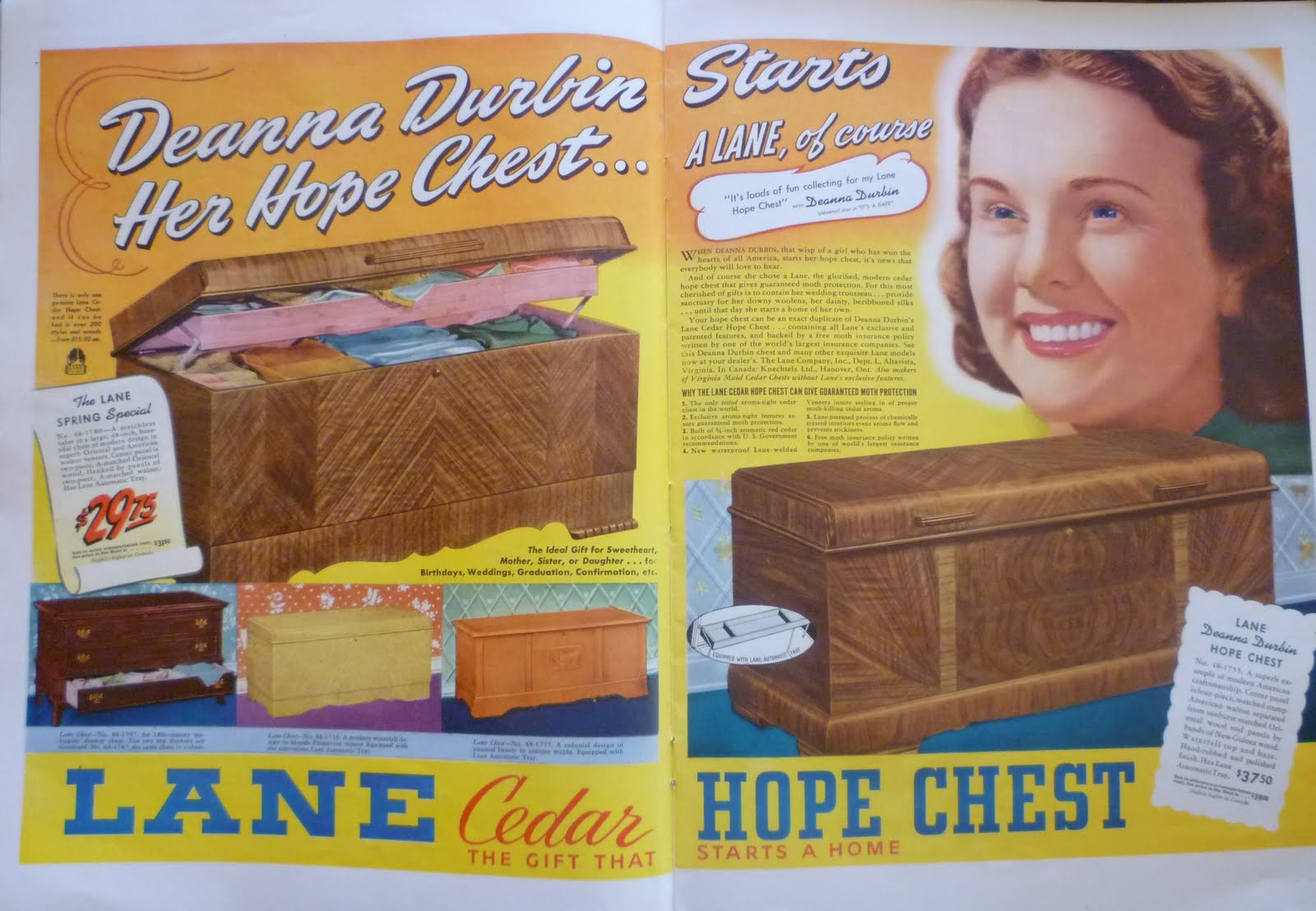
"provide sanctuary for her downy woolens, her dainty, beribboned silks...until that day she starts a home of her own."

“provide sanctuary for her downy woolens, her dainty, beribboned silks…until that day she starts a home of her own.” [Via]

Ladies! You know how when you were a kid you went to school and stuff, and it sort of sucked, and you spent all day wishing you could maybe not do that? Well, what if instead you spent your youth sewing tablecloths and blankets and clothing for your future husband? Childhood solved!

The Trousseau goes by many names–glory box, hope chest, bottom drawer, dowry–but essentially it was a collection of linens ‘n’ things for the bride and groom’s new home and/or clothing to last the bride the first few years of marriage. And for a long time, the bride was expected to make it all herself, and stow it all away until a groom finally appeared. According to Lillian Eichler’s 1921 Book of Etiquette, “The development is most marked in Roumania. Here we find the tiniest girls, some of them as young as five years, working on bridal finery each one striving to outdo the other in beauty and elaboration of work.” In many cultures female relatives pitched in too, and wealthier families simply had the maids do it.  However, once a suitor did arrive, he “had the privilege of examining the trousseau and deciding whether or not it was complete.” So tough luck if you sucked at sewing. Maybe you could find a job as a chaperone?

The whole reason you needed to do this is because your husband just wanted to come home to some comforts, ok?! Part of any western marriage, especially before the 20th century, was the agreement that the woman was the head of the household, and responsible for all the comforts found there. Lots of men looked forward to marriage as a way to finally have some nice things around the house. The irony was that often men were older and more established, so they could buy things like linens and blankets their damned selves.

Here’s an idea of how elaborate these things got. From “Lights and Shadows of New York” by James McCabe, 1872:

The society woman must have one or two velvet dresses which cannot cost less than $500 each. She must possess thousands of dollars worth of laces, in the shape of flounces, to loop up over the skirts of dresses… Walking dresses cost from $50 to $300; ball dresses are frequently imported from Paris at a cost of from $500 to $1,000… There must be traveling dresses in black silk, in pongee, in pique, that range in price from $75 to $175… Evening robes in Swiss muslin, robes in linen for the garden and croquet, dresses for horse races and yacht races, dresses for breakfast and for dinner, dresses for receptions and parties…

Ok, this was Vanderbilt Level Trousseauing, but that shit trickles down.

Thankfully, as time went on, the idea that a girl needed to spend all of her pre-engagement time sewing and collecting things for her household got a little ridiculous. Eichler argues “It seems rather a foolish waste of time for the girl of means to sit for endless hours sewing on rows rows of lace when machine made garments may be at reasonable figures. If she chooses her things carefully they will bear the stamp of her personality almost as as if she had fashioned them herself.” The 1920s were also the dawn of the Department Store in America, and buying pre-made items was a way to show off your middle-class status. So it was out with the homemade trousseau and in with buying one at Lord & Taylor’s…a modest improvement.

Traditional trousseaus fell out of fashion around the 1950s, replaced with the modern idea of the wedding present and registry. Until then, wedding presents were expected to be small, decorative items. It wasn’t until relatively recently that the idea became for all the guests to provide the gifts that would set up the new couple in their home. However, with many more couples living together before marriage, or choosing not to marry at all, the idea of setting up a new home is becoming a little dated, isn’t it? Does this mean there is an opening for the trousseau to make a comeback?!

Thank Goodness Men No Longer Need to Walk on the Right to Keep Their Sword Arm Free

For some reason, it persists among (some) men that to be chivalrous, they need to walk on a particular side of a woman when walking down the street. Historical reasons cited for this include:

  • When knights existed, their right arm was their sword arm and thus is needed to be available to defend the lady.

  • When people used to throw garbage out the window, the woman needed to be on the building side of the street so it wouldn’t hit her.

  • The man needs to be on the street side of the sidewalk in case a car splashes water.

  • Having the lady on the wrong side implies she is a prostitute

This often results in some ridiculous running around the lady to get to the correct side creating awkwardness all around. From a quick Google, men’s dating sites are strongly encouraging this practice though it should clearly die out. The fact of it is there is no really good reason for the man to be walking on the street side, danger is just as likely to come from the other side.

Granted, most old etiquette books (right up through Emily Post) do instruct the man to take the curbside position (or the married lady should take it if walking with a single lady), but they all also say that a gentleman should always defer to a lady’s preference. This means no pouting like a petulant child if a woman refuses to let you act the gallant.

There are any number of acceptable chivalrous practices that you can participate in if you wish to feel like a knight in shining armour:

  • Hold doors (but don’t insist she wait in the car while you run around to open her side!)

  • Offer your jacket (but only because it is likely you are wearing a long sleeved shirt and she is not)

  • Hold the umbrella (because you are likely taller)

  • Go to the door to pick her up instead of honking (or calling/texting) from the car

  • Give the lady (or anyone!) a hand or elbow if they are unsteady on their feet from illness/drunkenness/ill-advised heel heights

Thank Goodness We Don’t Have to Do That Anymore: Southern Belles

I have this great book that someone gave me when I moved from California to go to college in the South called The Southern Belle Primer or Why Princess Margaret Will Never Be a Kappa Kappa Gamma by Maryln Schwartz. I think its supposed to be satirical to some extent, but all the reviews of it online suggest that the majority of it is true facts. It was published in the early ‘90s, so I don’t know if it still holds true. I didn’t meet any Southerners like this when I was in school, but I would love love LOVE to hear if any of this is still going on. Some highlights pertaining to etiquette (you will have to acquire the book to find out about the Silver Pattern Zodiac):

  • Walking around with a lighted cigarette is a no-no.

  • Pink lemonade has Communist undertones. (WHAT???)

  • Bridesmaids’ shoes should match the punch. (If someone can invent gold or silver punch, this could totally work!)

  • Never chew gum in public and never smoke on the street.

  • Never wear an ankle bracelet.

  • Ribbons are taken from the presents at a bridal shower and made into a fake bouquet for the substitute bride to carry at the rehearsal. It’s bad luck for the real bride to participate in the rehearsal.

  • Appropriate shower presents: appliances. Appropriate wedding presents: silver, china, crystal, etc.

  • Wedding gifts are displayed in the bride’s home.

  • You can’t put deviled eggs on a regular plate- they need a deviled egg plate. (My mom has a deviled egg plate and it is AWESOME, so.)

  • “You can always tell just how fancy a tea is by how tiny the food is that is served, Anything that’s big enough to fill you up is just tacky.”

  • No lady wears jewelry before 4 in the afternoon.

  • Beer should never be drunk out of the bottle, always from a glass.

  • Southerners always pass on, they never die.

Please join us TONIGHT at Otto’s Shrunken Head in the East Village (Facebook event page here) for tiki drinks and etiquette talk!

Follow us on Twitter or on Facebook for updates and extra etiquette links and advice!

Thank Goodness We Don’t Have To Do That Anymore: Turning Of The Tables

You will never be this fancy. (Via)

You will never be this fancy. (Via)

I think we can all agree that being that one person left out of a conversation at the dinner table is really uncomfortable. It’s happened to me plenty of times when I’ve tried to jump into conversations happening to my right or my left, and, after a few unsuccessful attempts, retreated back to my wine. This is nothing I get too frustrated at, but it can be stressful.

You know what’s more stressful, though? Appointed conversational start and end times with assigned partners. Which is what we had to apparently do at formal dinners in the 1920s. It was called the “turning of the table” and it sounds awful. Emily Post writes:

“The turning of the table is accomplished by the hostess, who merely turns from the gentleman (on her left probably) with whom she has been talking through the soup and the fish course, to the one on her right. As she turns, the lady to whom the ‘right’ gentleman has been talking, turns to the gentleman further on, and in a moment everyone at table is talking to a new neighbor.”

That’s right, some time before the fish you are required to stop talking to the person which whom you’d been talking, and start talking to someone else. God forbid you try to talk to someone across the table, or with more than one person, etc. A few people have made the argument that elaborate centerpieces at formal dinners 100 years ago often made speaking to the person across from you impossible. However, elaborate formal place settings would probably make the person next to you equally distant. I imagine people communicated solely by the tones you make when you rub the rim of your crystal water glass.

We’ve mentioned before that the point of etiquette is making people feel comfortable, which this definitely tries to accomplish. It’s a good idea to make sure everyone has someone to talk to! You don’t want your guests to feel lonely! But this is an example of when slavish devotion to a rule (Emily Post called this an “inexorable rule”) obstructs the actual idea behind it. For example, this is what is recommended if a guest is so engaged in conversation that they do not want to switch partners:

“At this point the hostess has to come to the rescue by attracting the blocking lady’s attention and saying, “Sally, you cannot talk to Professor Bugge any longer! Mr. Smith has been trying his best to attract your attention.” “Sally” being in this way brought awake, is obliged to pay attention to Mr. Smith, and Professor Bugge, little as he may feel inclined, must turn his attention to the other side. To persist in carrying on their own conversation at the expense of others, would be inexcusably rude, not only to their hostess but to every one present.”

Oh, and do you hate the person sitting next to you? Too bad. You’re encouraged to do something like recite the times tables to each other to make it look like you’re talking.

I hate rude people as much as the next person (maybe more, since I co-founded a website about etiquette), but publicly shaming your dinner guests seems a little extreme. Granted, we live in a time where it is highly unlikely that you’ll be dining this formally, and the prevalence of circular tables at fancy occasions makes various triangulations of conversation much easier. So let’s toast to the fact that, no matter where we eat, we can generally converse with whom we want, and about more interesting topics than the times tables.

Come see Jaya speak more on this topic at TED-y Talks next Tuesday at the Branded Saloon in Brooklyn. Facebook event with time and address here!

Thanks for joining us for our first week! Stay up to date by following us on Twitter and on Facebook.