Gifts for Second Weddings

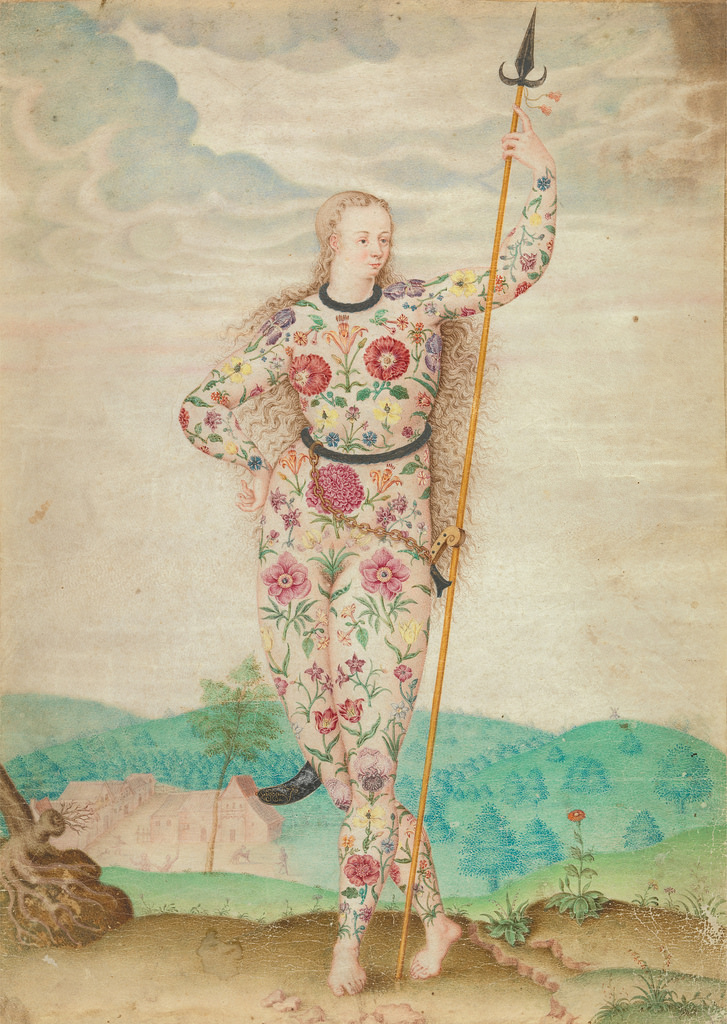
FYI I'm getting bored of wedding pictures so have this tattooed Pict lady instead

FYI I’m getting bored of wedding pictures so have this tattooed Pict lady instead

Greetings!

I have a question regarding wedding gift etiquette. This spring, I will be attending the second wedding of a friend. I was in the first wedding, enjoying her bachelorette party and gifting her at her shower and at the actual wedding.
What is your opinion on an appropriate wedding gift for a second wedding? They are not doing a registry and only have a honeymoon fund. Should my gift for this wedding be equal to that of the first? 
Hoping the ladies of Uncommon Courtesy can advise on the appropriate etiquette here.
Sincerely,
Second Time at the Rodeo

Official Etiquette
Peggy Post says that guests who gave gifts for a first marriage have no obligation to give another gift.

Our Take

Victoria: Okay, so I looked it up, and all the official etiquette people say that you don’t have to give a gift for a second wedding if you gave one for the first.

Jaya: This seems so strange to me. First off, it may be the first wedding for one of the couple.

Victoria: Yeah, and theoretically, they would still get presents from all the 1st wedding person’s friends and family, plus all the new friends. Just not the ones who went to the first wedding. I mean, this does seem to be a holdover from the days when a second wedding was supposed to be very, very small. (Second wedding of the bride anyway! A whole other big problematic issue.)

Jaya: Yeah! It’s working under the assumption that a second wedding is a thing to be kept quiet, and that you still need to be punished for getting divorced. (I assume you’re not chastised for marrying again if you were widowed?)

Victoria: I mean, I don’t think its to be kept “quiet” it’s just that its “unseemly” to have a big to do when all your friends and family have already done that with you. I have never read it as “punishment.” Usually just as, you are generally a bit older and to a degree, the whole poofy white princess thing looks a bit ridiculous.

Jaya: I always sorta read “unseemly” as the flip side to punishment. Like, just saying it’s a bad thing for you to be doing this.

Victoria: Ahh thats so interesting that we have two totally different reads on it! That would never have occurred to me.

Jaya: Maybe not quite punishment, but that you should feel bad if you want anything more than something really small. That it’s still shameful.

Victoria: I mean, I guess I always felt in the olden days, the second wedding was more likely to be of someone who was widowed, not divorced, so the shame doesn’t really come in. It’s more that those huge type of weddings are expensive, and previously your parents were always the host of your wedding, but you’ve been living as an adult for quite a long time and wouldn’t expect your parents to host it again. And not to mention the idea of gifts being to set up the household of a young couple, and a second marriage usually doesn’t need that set up.

Jaya: But yeah, that has completely shifted now, in that probably a lot more second marriages resulting from divorces and also that you can throw a big wedding for yourself. Like it’s just working on a lot of outdated information.

Victoria: Yeah, no I know, I’m just saying this is the root where all the “second wedding” etiquette comes from, for everyone’s edification.

Jaya: Haha totally. Okay, so the letter says nothing about divorce or widowing or even the size of this wedding.

Victoria: True. So for ME, I am not particularly one to give extravagant wedding presents anyway, so I would probably just do what was in the budget and that would be that. But like, if you usually gave like $500 for a wedding present, I would say you would be well within the bounds of reasonableness to give a more token gift the second time.

Jaya: I can’t tell where I stand on this. Like, say it’s a divorce. There’s no guarantee my friend has the $500 thing I gave them the first time around anyway. If they’re just doing a honeymoon fund, chances are they’re pretty casual about the whole affair and don’t need a ton of gifts. But I’d also hate my friend to start their marriage thinking I somehow wasn’t as enthusiastic about it this time around.

Victoria: Lol well I kind of think it’s on the couple to not assume that the size of the gift pertains to the enthusiasm about their marriage. You know? Like, it’s not about that. And it sounds like she was in the wedding last time, did the whole bachelorette AND shower and the whole thing. That is a TON of money that you’ve given to your friend already

Jaya: Oh totally, I guess it depends on who the “toning down” is coming from. I feel like if I ever had a second marriage I’d be like, fuck it, let’s elope. But I would hate to ever be in that position wanting a large, fun wedding and having everyone around me telling me it’s bad form. Or everyone to be like “well we would have gotten you something, but we already did the first time…”

Victoria: I guess I just kind of think it’s a bit outrageous to expect that kind of generosity from your friends twice (or three times? or four times?). You know? Like, it’s very unkind. I mean, I am on board with hosting whatever kind of party you want.

Jaya: It probably depends on who you are. if you’re the type of person to use a wedding, or any event, to milk gifts out of your friends then I probably don’t wanna give you that much anyway. But hey, if you’ve had a rough time and are entering a second marriage and want a big, fun party, even if you’ve already had a big, fun party, then yeah I wanna get you something.

Victoria: Yeah, totally! And I actually really think you should at least get something to mark the occasion.

Jaya: I don’t know, I see a lot of people feeling ashamed to celebrate a second marriage at all. And I just wouldn’t want to add to that feeling.

Victoria: :(, I guess I have never really gotten that impression from (okay the limited number of) people I know who got remarried. I mean, I guess it ties into my feelings about extravagant wedding gifts anyway just being sort of unnecessary and getting a bit out of hand.

Jaya: Absolutely, and ongoing wedding extravagance is a whole issue in and of itself. Okay but anyway back to the present, I totally think she can get something equal to whatever she got her friend the first time, if she wants, or donate that much to the honeymoon fund.

Victoria: I mean, I think she can do whatever she feels is best, basically. Like she is within bounds of etiquette to do little or nothing, but it’s also perfectly fine to do as much as she wants. And it is probably nicer to do something rather than nothing. And if they have a honeymoon fund, I would definitely go with that rather than trying to pick out a physical gift since by not registering they are hinting that they would prefer not to get physical gifts.
Email Greetings

Unlike paper mail, emails don’t need a salutation each time.

Dear Uncommon Courtesy,

At what point in an e-mail exchange can you start omitting the greeting/salutation?

Sincerely,

Tired of Endless Salutations

Official Etiquette:

The Emily Post Institute says you only need to use a salutation in the first reply.

Our Take:

Victoria: Ooooh, this question came from Twitter.

Jaya: Ooooh, I think it depends on who you’re contacting and their tone.

Victoria: Haha yeah. I mean in my formal business emails I almost never drop it but with friends I drop it pretty much right away. Like, sometimes the initial email will have it but then it isn’t used after that

Jaya: If someone else drops it I will too. But also if they seem pretty friendly I will. That’s been happening recently with research for the cookbook. [Ed: Jaya is writing a book about historical recipies!]

Victoria: Oh yeah! That kind of cold emailing for sources must be really interesting.

Jaya: Like if after one exchange they use a lot of exclamation points and are enthusiastic, I’ll get more casual.

Victoria; Definitely. And i’ve noticed that busier people definitely drop it faster- also they are usually the more “important” person in the conversation.

Jaya: It’s funny, I think we have this idea of older people being very finicky about “professionalism” in email.

Victoria: Haha I think older people are a lot more likely to be short!

Jaya: Yeah!! And to format it weird!

Victoria: Haha yeah.

Jaya: But yeah email is weird; I tend to just take the tone of whoever I’m emailing with.

Victoria: Yeah, exactly. Although, if you were emailing with someone super important, like say, the President, I would recommend keeping the more formal tone even if the other person drops it

Jaya: Oh definitely.

Victoria: Or if in business, they are the client.


How To Help Shop For A Wedding Dress

say-yes-to-the-dressWhen I asked my mom and stepsister to go wedding dress shopping with me I specified that they should absolutely be honest with their opinions, but refrain from calling me ugly or anything of that nature. They looked at me like I had two heads, because obviously, normal people do not need to be told not to call someone ugly. However, I had been spending most of my Sunday mornings watching Say Yes To The Dress (I still do), so I was under the impression that “normal people” morph into heinous bat creatures upon entering a wedding dress store.

There is something about shopping for that dress that brings out weird things in people. It’s held up as this “moment” that should be savored and remembered, the pressure of which automatically sets everyone on edge, and the stakes are somehow seen as higher. This isn’t just a flattering dress, it’s THE dress, which will be immortalized on film and passed down through generations so why on EARTH would you want to buy that one when it makes your hips look so huge? (Thankfully, a lot of people are realizing that no, you do not have to spend $5k on a dress if you don’t want to, and it doesn’t have to be perfect, and it doesn’t even have to be from a bridal store. You can just wear something that makes you feel pretty and happy and that’s it.)

There’s also a lot of pressure because if someone chooses you to help them pick out their outfit, they’re saying they trust you, they want you to like it, and they want your honest opinion. But too often people mistake “honest” for “mean,” so here are a few tips on how to make sure you don’t end up on SYTTD’s “10 Worst Bridal Entourages” reel.

1. Talk About It Before: Talk to your friend/daughter/sister/whoever about their tastes before you go shopping, just so you don’t spend the entire time pulling stuff they hate. Ask them how they see themselves, what they want to highlight or hide, or just how they want to feel in it. That way, while shopping you can ask them these questions in return to help them see how they feel.

2. Forget About Your Own Tastes:  It should not have to be said that you are not the one wearing this outfit but, you know, YOU ARE NOT THE ONE WEARING THIS OUTFIT. Thus, it does not matter if you would not personally choose to purchase it, or if you hate lace, or you think tea-length dresses are “tacky.” If the dress is five sizes too small then yes, that’s an issue, but it not being something that would match your closet is not. This also goes for general expectations. While wedding planning, I always heard the argument that parents had been dreaming of their children’s weddings longer than their children had. Which, yes, I guess my mother had the capacity to think about my wedding before I did, but that doesn’t mean her opinions trump mine. It doesn’t matter if you’ve always envisioned your daughter/niece/cousin in a satin ballgown if that’s not how they envision themselves.

3. Give Your Opinion…Nicely: My grandpa had this saying: “Eat what you want to eat, but wear what other people want you to wear.” I don’t entirely believe that’s true, but I do believe in getting a second opinion. That’s why you’re there in the first place, right? So what if you think there is a problem with the outfit that the bride just doesn’t see? Try to go about it in the nicest way possible. A good strategy is to ask some questions and let them decide.Your first question should always be “What do you think?” instead of throwing all your opinions out there. Then, based on their answer, you can help them figure out if they’ll be happy or not. Are they comfortable in a corset? Do they think they’ll spend all night pulling up a strapless dress? Will those sleeves and satin make them hot? While shopping, I tried on one dress that was beautiful, but my mom mentioned that it probably wouldn’t match with the jewelry I was planning on wearing, which was something I honestly hadn’t considered!

Also, take a moment to figure out if your judgments are about the bride or about the dress. If you think the bride looks bad in everything because she’s not a size 2, that’s on you, not them.

4. Take The Bride’s Lead: Presumably, this is someone you know well, so you know what they look like when they’re excited, confused, upset, etc. Pay attention to that. If they look uncomfortable, tell them they look uncomfortable. If they look puzzled, ask them what they’re thinking about. And if they look overjoyed and say this is the prettiest and happiest they’ve ever felt, for god’s sake, tell them they look beautiful.

5. A GIFT IS A GIFT, OMG: You may be in a situation where you’ve offered to pay for all or part of the dress as a gift to the bride. All too often, on TV shows and in real life, I’ve heard of people using this as a threat, saying they have ultimate power over choosing the dress and that they won’t pay for something they don’t love. I’ve never understood this, especially here. Do you want your loved one spending the entire wedding hating how they look but grin and bearing it because they wanted to make you happy? Because that certainly wouldn’t make me happy.

How to Be a Polite Job Applicant

Dress sharp!

Dress sharp!

Just so you know that I do actually know of which I speak, I have quite a bit of HR experience in addition to being a self proclaimed etiquette expert.

The Application

  • Make sure you fully read the job posting and follow all instructions. If they need your resume and cover letter in a Word document, you had better format it that way. If they do not state a preference, put it in a PDF because it guarantees that the formatting stays the way you intended it.
  • Once it is in, it is in and now you have to wait. A lot of advice will tell you to call to follow up. DO NOT do this, you will just irritate the HR person or hiring manager and they will throw your application directly into the trash (or circular file, which I literally just found out means the trash a couple of weeks ago.)
  • Your extended social network is a great way to find out about jobs. However, if you see a job posted by someone you know on the internet but who does not really know anything about you or your skill set, do not imply on your application that you know that person. It is not a good look when the hiring manager asks their coworker about you and they reply “who?” It is better to contact that person directly and let them know you are applying for the job they posted and ask if they can put in a good word for you.

Cover Letters and Resumes

  • KISS- keep it simple stupid. Your resume should not have swirly whirly graphics and four different fonts. Keep it very direct and readable.
  • Objectives are stupid, do not write them on your resume.
  • Keep your resume to one page, two max. You do not have to list every job and every club you’ve ever participated in, change your resume for each job or each type of job to directly reflect the experience that would be most useful for the position you are applying for.
  • This is picky, but try to avoid bullet points that all start with “I.” You don’t actually have to say “I,” it’s better to write: Answered fan mail, organized the Director’s schedule, updated the calendar.
  • Write a tailored cover letter for each job. You cover letter should express exactly why you are interested in THAT job at THAT organization. It should not be your resume in narrative form. Do not write that you are the perfect candidate for the position. You are most certainly not, and the perfect candidate would never say that.
  • Please read the Ask A Manager blog. She goes into incredibly more detail about the whole job searching process than I have space for here and is a phenomenal resource. I was job searching for 10 months about 2 years ago and following her advice I applied to 100 jobs, received 10 interviews, and landed an incredibly awesome job in a very competitive field.

The Interview

  • Be on time, not even early. You should wait in your car or walk around the block a couple of times. I used to assume all businesses have a lobby with chairs that you can wait in, but I have been finding out (especially in NYC) that it is not guaranteed that they will, so it really is better to just be there, ready to go, at your appointment time.
  • Do your research. Know what the company does and anything else important about it. It is not impressive to ask a question about something where the answer is prominently featured on their website. Say, for example, interviewing at a museum, you should know what kind of collection they have, what exhibitions are upcoming, and form some kind of opinion in which you are very excited to work for that institution because of those particular things.
  • Practice answering common interview questions, which you can find online. The idea is not to memorize answers, but have some examples and anecdotes ready to go.

The Follow Up

  • Always send some kind of follow up email. This is not a thank you note, per se, but you should thank the interviewer for their time and reiterate in a few words how the interview has given you even more of a sense about the job and confirmed your desire to work there in that position. You can read more about that in our previous post here.
  • Again, do not hassle HR or the hiring manager. They aren’t going to forget that you are a candidate for the position, and different companies have different timelines for hiring. If they’ve told you they will be letting you know in two weeks and it’s been three, you can send a follow up email asking if they’ve come to a decision. But honestly, if they really like you and want to give you the job, they will let you know.


The Manners of Downton Abbey: A Review

If you didn’t watch the Downton Abbey Season Five US premier live on PBS, you might not have caught this little gem of a documentary that directly followed it. The Manners of Downton Abbey follows Alastair Bruce, the historical advisor for the series, as he helps the cast navigate every little detail of proper Downton etiquette.

Bruce explains how all the details of manners, dress, etc tells everyone everything they needed to know about who you were and were basically as natural as breathing to the people who lived them. He also notes how difficult it is to get the cast to follow the rules in a natural way, because it goes against all the ways modern people act.

The special is divided into five sections:

How to Eat

The dining room is practically the showcase for etiquette and thus is a perfect place to start.

What’s really great, is how clearly Bruce pays attention to details that are barely even visible in the show. For instance, it was proper etiquette for women to place their gloves on their laps, under their napkin,while they ate. On the show, the actresses are required to do this even though the viewers would never know that they were there.

Bruce even explains the reasoning behind etiquette- for example, no one was ever supposed to let their back touch the back of the chair. Then why should chairs have backs? So the footmen have something to hold! He even mentions that Nannies used to put knives down the back of the chair to train children not to touch them.

He explains that the manners are especially important at dinner because, having said grace, the table becomes the Lord’s table and it is respectful to be on your best manners with all the best dishes and silver and everything because of that.

It turns out that the art department sets the table the same way a butler in Edwardian times would have- using a ruler! Unlike a butler, they use their fingers to touch the silver- for a real dinner, the staff would wear gloves so as to not leave any finger prints.

They don’t leave out the servants- they are taught the footman choreography for serving and the proper way to serve, stand, and look. Amusingly, they point out that, unlike real servants, the actors have to do all the complicated serving while stepping over electrical cords and filming equipment.

How to Marry

This section is less about etiquette and more about the social structure. They emphasise the importance of marriage for women, in that they have no position of their own, only position given to them by their husband’s position.

There is a fun bit about the debutante’s presentation at court which has extremely exact etiquette rules about how long your train could and how many feathers you had to wear in your hair. The presentation to the King and Queen showed that she was available as a suitable wife, so of course, it was incredibly important.

They discuss Burke’s Peerage, the very thick book that lists all the important aristocrats in Britain- this was important for matchmaking to ensure that all suitors were…suitable.

For the servants- generally they didn’t. It was not allowed between servants and they didn’t have much free time in which to meet new people. For a woman, if one did manage to get married, she would be expected to immediately leave her job. Being married also split a servant’s loyalty and servants really worked best if their only loyalty was to their service.

How to Behave

Formality was the building block of the aristocracy during this time, and they feared that if they showed any weakness or lessening of etiquette, the whole system would crumble around them.

However, they point out that the aristocracy is actually fairly rude to those around them- for practical reasons. If you have a servant handing you something thousands of times a day and you had to thank them each time, it would get ridiculous.

The servants themselves prided themselves on being invisible and perfectly discreet. They wanted the family they worked for to be absolutely above reproach because a servant’s status came from the status of who they worked for.

How to Dress

Clothes didn’t escape the Edwardian’s attention to every detail. Clothing was the most obvious example of who you were. Aristocrat’s clothing was incredibly expensive and detailed to show their status. But then within that there are even more rules- only married women are allowed to wear tiaras, for example.

They have an outfit for every activity and setting, you could only do that if you had plenty of leisure time to be constantly changing clothes. They do point out that as the show moves through time and clothing loosens so do the women gain more freedoms (not to mention literally being more free to breathe as corsets became less tight.) Men did not escape the stiffness of their clothes- most modern people can imagine what it might be like to wear a corset, but they don’t realize that men’s formal wear was very stiff and difficult to move in as well.

Hats and gloves all had their own rules as well, of course.

How to Make Money

This isn’t in the show, but the definition of a gentleman (as a job title) was someone who didn’t have to work for a living, they made money from their holdings and investments. This is, of course, one of the key plot points in Downton Abbey, how to maintain this lifestyle in a rapidly changing world.

They also discuss “noblesse oblige” (not in those words) but the idea that the lord of the manor provided jobs for everyone who lived there and it was important to keep up the whole staff of servants because if you decided, hey, I don’t need a valet anymore, that meant that that man was now out of a job.


I thought this was a really great program that does really give a strong and accurate insight into how hard they work to pay attention to those details to bring the audience an authentic experience. I was actually really impressed that they have a person doing this for them full time, but I guess it makes sense since there are so many things to keep track of. Alastair Bruce is an incredibly charming host and there was plenty of behind the scenes action, cast interviews, and hilarious clips from the show (prominently featuring Maggie Smith’s commentary on all things etiquette.) I highly highly recommend it for fans of Downton Abbey and all etiquette buffs.

If you didn’t catch it, you can watch the full thing on the PBS website here.