
Thank Goodness We Don’t Have To Follow These Crazy Dating Rules

Via Random_fotos

Pheasants make very romantic gifts Via Random_fotos

I think I have only been on one date in my life. I was 16, he was the 19-year-old half-brother of a friend, and we saw Master and Commander and then got pizza. It all happened because he asked me. He straight up asked me. Ok we had been making out on my futon at a party, but afterward he asked if I wanted to go out sometime, and I said yes, and then we went on a date. And even though that was the only date, how fantastic is it that he could just ask and I could just go? Obviously this was not always the case because if not for an elaborate system of rules, someone might get the wrong impression.

Dating as we know it did not even really exist in more western culture until the 1920s, when first-wave feminism and cars collided to pretty much invent the modern teenager. You could get a lot more necking done in the backseat of a model T than on your parent’s porch, and young people in general were rebelling against the Victorian models of etiquette and decorum solidified by their parents. Furthermore, with more women entering the workplace, the idea of what marriage meant was beginning to change. Women began looking for a friend and companion with sexual chemistry in a potential husband, not just someone to provide a house.

But we’re getting ahead of ourselves. Before the radical drunks of the ‘20s, there was courtship. You’ve probably read about it in a Jane Austen novel. A man and a woman of the same social circle are introduced formally, the man makes clear his intentions to woo this woman, and after some supervised interaction they agree to plan a wedding. Romance was not really in the picture the way we experience it today. Cassell’s Hand-Book of Etiquette (1860) states “According to the strict code of our forefathers a gentleman should ask the consent of the parents or guardians before he endeavours to win the affections of the young lady.” Because of that, “parents should be very careful whom they receive as intimate friends,” especially if they have daughters. (However, it was not just men who were in danger. Men should “beware the lady of unmeaning attentions.”)

Once a man decided he wanted to woo a lady, there were a few options. He could hang out at her house. He could hope to run into her at a ball. He could take her out with a chaperone (more on that later). He could also send her gifts of fruit and flowers, though according to Cassell, “in fashionable life, game is almost the only present that acquaintances make of each other.” For the love of god, why has nobody brought me a “Thinking of You” pheasant?

Later, if he wanted to propose, he could do so in a handwritten letter, provided he had received permission from her father first.  However, Gertrude Elizabeth Campbell mentions in her 1893 book Etiquette of Good Society that “it is said in the olden times of [England], the women made the advances, and often became the suitors.” She also mentions that “In the twelfth and thirteenth centuries it seems to have been the height of gentility to hold the lady by the finger only.” In case you wanted to go retro on your next date.

Anyway, back to the more modern age of 100 years ago, when “dates” began to be a thing. How do you know when you’re ready to date? How do you ask someone on one? How do you know when it’s over. Various etiquette books over the years had advice, though some rules are unbreakable. Putnam’s 1913 Handbook of Etiquette says “is it necessary to state that a young lady who desires to hold an enviable position in smart, ceremonious society does not, whether motherless or not, go to restaurants alone with young men for any meal?” Surely it is not!

By the 1950s things had changed even more. Amy Vanderbilt says that parents know when their boy is ready to date when “his shoes will be shined to a glassy polish” and he starts paying attention to all of his ties. However, Vanderbilt offers no advice on just how this boy will ask a girl on a date, saying they “bungle through somehow in the early years of dating, eventually acquiring a certain polished technique only experience can bring.” Great. Once he does ask her on a date, it is the girl’s responsibility to signal when the night is over. To do this, “She places her napkin unfolded at the left of her plate, looks questioningly at her escort and prepares to rise. If he suggests they linger she may do so if she wishes. However, her decision must be abided by.”

Even if you were an adult with a career and your own place, some old rules still applied. Vanderbilt wrote in 1952, “A career girl, from her twenties onward, can accept such an invitation [to a single man’s house] but should not stay beyond ten or ten-thirty. An old rule and a good one is ‘Avoid the appearance of evil.’” No word on what to do with your napkin if you’re a career girl in a bachelor’s pad; we’ll get back to you on that.

What To Wear To That Formal Event (Which Is Probably A Wedding)

5663297348_fa7c9a0340

Please, wear clothing. [Flickr user violet.blue]

Does anyone else get insanely excited about planning outfits to wear to a wedding? Or other formal event? I’m going to assume that most of the events you’re getting a formal invitation to are weddings, because if you’re getting invited to a ton of awards shows and other galas…you probably don’t need this post.

I know it can be a chore, but personally, I love getting dressed up. I love seeing my friends wearing ties. I love having an excuse to not just be wearing sneakers and a ponytail. So it’s fitting that I get excited when I see the dress code printed on an invitation.

Firstly, I want to say to anyone planning a wedding, engagement party, or otherwise “official” event–have a frickin’ dress code! Otherwise you may be inundated with calls from friends going “Is this purple dress ok? But I also have this blue one I really like, but that one is longer. And I never wear the purple one. But what are you wearing?” and it will make you want to punch all your friends. Explicitly stated dress codes mean you don’t have to talk to anyone, which really is our goal right?

Now, on to what to wear once you know the code.

Do not wear a wedding dress (men, this goes for you too).  Unless the invitation says to wear white, you want to steer clear of any type of white dress, even if it looks nothing like the bride’s gown. Though this rule only applies for our “traditional” American/European wedding ceremonies. My cousin wore a white dress to a family member’s wedding and it was fine…because the bride was wearing a red and gold sari. Don’t wear a red and gold sari to an Indian wedding.

What you wear really depends on what it says on the invitation, and the season. Usually the couple will specify something like “Black Tie” or “Cocktail Attire” on the invite, which should give you an idea of what to wear. Here are the basics for that.

White Tie: You will never go to a White Tie wedding. We can pretty much guarantee this. But if you do, men should wear an evening tailcoat tuxedo with a white bowtie. Women should wear a floor-length ballgown and usually elbow length gloves, and really elaborate hair/makeup/clothing. Good luck shopping. (I would also like to note that a Google Image search of “White Tie” brings up the suggestions “Fred Astaire,” “Downton Abbey,” and “Obama.” Interpret that how you will.)

Black Tie: This is the most formal wedding you will probably go to, which has men wearing tuxedos (sans tails) and women wearing either floor-length gowns or more formal cocktail dresses (think darker colors, satins and silks, etc.). Think red carpet gala for clothing inspiration.

Black Tie Optional: This is most likely what the wedding you’re going to is, and IT SUCKS. PEOPLE, STOP PUTTING “BLACK TIE OPTIONAL” ON YOUR INVITATIONS. For men it’s fine; they either get to wear a tuxedo or a dark suit, which pretty much every man has. But for women’s attire, The Knot suggests “A long dress, a dressy suit, or a formal cocktail-length dress.” That is literally every possible clothing option, and it’s infuriating. You can’t go wrong with a nice cocktail dress in a deep color, though. But seriously, either put Black Tie or Cocktail Attire on your invitations, and stop the madness.

Cocktail Attire: This is what people most likely want when they say “Black Tie Optional” but they don’t know about it, so NOW YOU KNOW. It may also be written as Semiformal or Dressy Casual. This means a dark suit for men, and a cocktail dress for women, which is pretty much exactly what everyone thinks of when they think of what people wear to a wedding.

The main differences in these attire suggestions concern the time of day and the season. Most people do not host a daytime Black Tie wedding, because making women sweat in heavy satin dresses in the sun is a mean thing to do (on this note, according to Official Etiquette, tuxedos should never be worn before 6pm, but omg who cares anymore). So consider the information on the rest of the invitation. Is this going to be a winter wedding? Think darker colors and thicker fabrics. Outdoors in July? Lighter fabrics work better, in a brighter color or pattern. A blouse and skirt combo also works for this for women, and men can go for lighter fabrics and colors too in the summer, like light grey or blue.

There are a slew of others, from “Creative Black Tie” to “Evening Resort” to “Festive Attire.” Some may ask you to wear a specific color, or dress to a certain theme. Sometimes there are even costume changes. One person we know said it was tradition in his community to wear suits to the wedding ceremony, then change into jeans and t-shirts for the reception. When in doubt, ask! If a couple is asking for a specific, more non-traditional dress code, they’re probably ready to receive some questions about it.

A Note on Black for Women: Wearing black to a wedding is still a tricky subject. My mother-in-law enthusiastically told me to wear a black cocktail dress to my sister-in-law’s black tie optional wedding, but in many circles, black is an absolute no. “But UC!” you cry, “I have just the cutest black dress in the world, and I need to wear it because it makes my legs look fantastic and I need to bang one of the groomsmen!” Use your best judgment! If you’re running with a more traditional and conservative crowd, then perhaps not, but if it’s a chic evening wedding in the city, go for it! To be on the safe side, dress it up with colorful or sparkly accessories. You just don’t want to look like you’re going to a funeral.

Thank Goodness We Don’t Have To Do That Anymore: The Trousseau

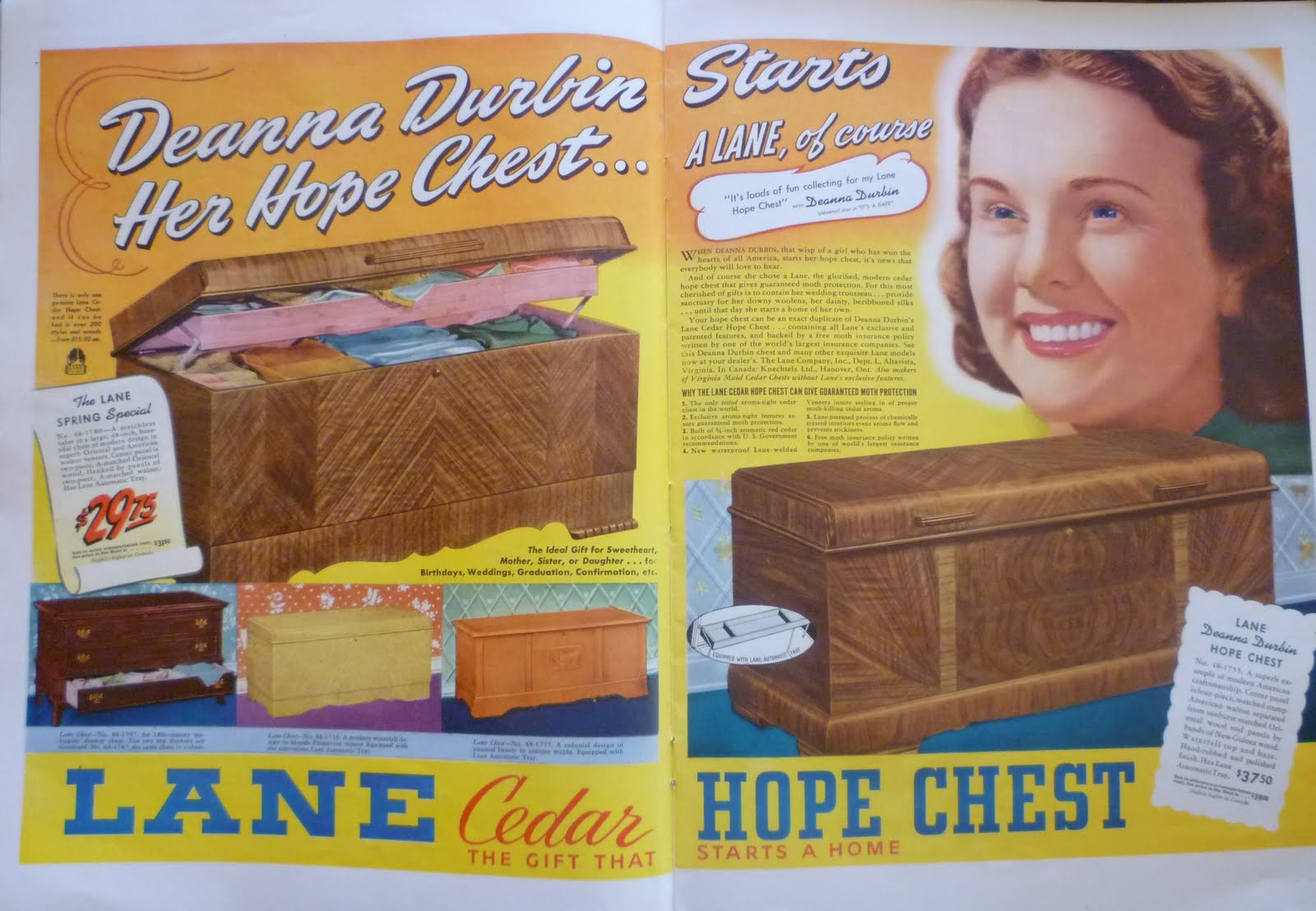
"provide sanctuary for her downy woolens, her dainty, beribboned silks...until that day she starts a home of her own."

“provide sanctuary for her downy woolens, her dainty, beribboned silks…until that day she starts a home of her own.” [Via]

Ladies! You know how when you were a kid you went to school and stuff, and it sort of sucked, and you spent all day wishing you could maybe not do that? Well, what if instead you spent your youth sewing tablecloths and blankets and clothing for your future husband? Childhood solved!

The Trousseau goes by many names–glory box, hope chest, bottom drawer, dowry–but essentially it was a collection of linens ‘n’ things for the bride and groom’s new home and/or clothing to last the bride the first few years of marriage. And for a long time, the bride was expected to make it all herself, and stow it all away until a groom finally appeared. According to Lillian Eichler’s 1921 Book of Etiquette, “The development is most marked in Roumania. Here we find the tiniest girls, some of them as young as five years, working on bridal finery each one striving to outdo the other in beauty and elaboration of work.” In many cultures female relatives pitched in too, and wealthier families simply had the maids do it.  However, once a suitor did arrive, he “had the privilege of examining the trousseau and deciding whether or not it was complete.” So tough luck if you sucked at sewing. Maybe you could find a job as a chaperone?

The whole reason you needed to do this is because your husband just wanted to come home to some comforts, ok?! Part of any western marriage, especially before the 20th century, was the agreement that the woman was the head of the household, and responsible for all the comforts found there. Lots of men looked forward to marriage as a way to finally have some nice things around the house. The irony was that often men were older and more established, so they could buy things like linens and blankets their damned selves.

Here’s an idea of how elaborate these things got. From “Lights and Shadows of New York” by James McCabe, 1872:

The society woman must have one or two velvet dresses which cannot cost less than $500 each. She must possess thousands of dollars worth of laces, in the shape of flounces, to loop up over the skirts of dresses… Walking dresses cost from $50 to $300; ball dresses are frequently imported from Paris at a cost of from $500 to $1,000… There must be traveling dresses in black silk, in pongee, in pique, that range in price from $75 to $175… Evening robes in Swiss muslin, robes in linen for the garden and croquet, dresses for horse races and yacht races, dresses for breakfast and for dinner, dresses for receptions and parties…

Ok, this was Vanderbilt Level Trousseauing, but that shit trickles down.

Thankfully, as time went on, the idea that a girl needed to spend all of her pre-engagement time sewing and collecting things for her household got a little ridiculous. Eichler argues “It seems rather a foolish waste of time for the girl of means to sit for endless hours sewing on rows rows of lace when machine made garments may be at reasonable figures. If she chooses her things carefully they will bear the stamp of her personality almost as as if she had fashioned them herself.” The 1920s were also the dawn of the Department Store in America, and buying pre-made items was a way to show off your middle-class status. So it was out with the homemade trousseau and in with buying one at Lord & Taylor’s…a modest improvement.

Traditional trousseaus fell out of fashion around the 1950s, replaced with the modern idea of the wedding present and registry. Until then, wedding presents were expected to be small, decorative items. It wasn’t until relatively recently that the idea became for all the guests to provide the gifts that would set up the new couple in their home. However, with many more couples living together before marriage, or choosing not to marry at all, the idea of setting up a new home is becoming a little dated, isn’t it? Does this mean there is an opening for the trousseau to make a comeback?!

What To Do When You Find Yourself In An Argument

argument-irrelevant

Just make puns! Everyone loves puns!

Growing up, my grandpa always said you should never discuss money, politics, or religion at the dinner table. As a young New Yorker who was used to every conversation eventually becoming a discussion of how much you paid in rent, I was pretty sure that this left nothing to be discussed but the weather and perhaps the nice color of the wood on the floor. However, there is something to be said for not bringing up wildly divisive topics in diverse company. For instance, I would have no problem discussing transsexual porn at a meal with close friends (this has happened), but you probably don’t want to bring this up with your parents’ friends (who were at the lunch table when this happened, oops).

Conversation is a tricky thing, and what may seem like an obviously neutral topic to you may soon become a heated discussion. If you find yourself here, there are a few ways to tackle it.

1. Run awaaaaaay

This works best when you’re at a large party, or anywhere with ample distractions. At my family Christmas party a few years ago, my fiance and I were speaking to one of my uncles about Obamacare. Soon, another family member came up to us and began to argue about socialism. Quickly, my fiance and I looked at each other, and politely excused ourselves to refill our wine glasses. We were never seen again. (JK we basically hung out in the living room until my uncle showed up an hour later and was like “YOU BAILED ON ME!” and we were like “Dude, we were not getting into that.”)

2. Change the Subject

A nice way of doing this is to find a neutral kernel within the tricky subject and focus your comments on that. Let’s say I was stuck in a conversation with someone who didn’t share my views on legalizing marijuana, and who was becoming very vocal about that. I could perhaps transition that into talking about the episode of “True Life” I saw about smoking pot, and then mention how I’m a sucker for trash TV, and then ask if she watches “What Not To Wear.” Try not to say much, and listen for an opening into a topic that won’t get you both so riled up.

This is old advice. According to A Gentleman’s Guide to Etiquette by Cecil B. Hartley, published in 1875, “Even if convinced that your opponent is utterly wrong, yield gracefully, decline further discussion, or dexterously turn the conversation, but do not obstinately defend your own opinion until you become angry.”

But easier said than done, right? I mean, you’re never going to know what someone’s trigger subjects are. Maybe this person hates Clinton Kelly with a fiery passion and this sends the whole thing into a tailspin. One trick is to turn to things in the present. Discuss the beautiful Christmas tree, or a friend’s lovely necklace, or the host’s great selection of beer. Hell, discuss the nice color of the wood on the floor. I’ll concede that it’s better than arguing about abortion.

3. Politely Disagree

The thing you need to know about arguments is that there is pretty much no chance you are going to change someone’s mind. You may have all logic and evidence on your side, but parties, dinners, business meetings, etc. are not the place to convince someone that tattoos are not a sign of moral inferiority, even if you’re totally right. A quick “I’m going to have to disagree with you on that” in a light tone usually suffices, if followed by a brand new topic. If you’re pushed to explain why you disagree, you can give an example (“I know plenty of friends who have tattoos who have great careers/I have a tattoo and I’m not a monster”), but keep the focus on personal experience, not why the other person is Objectively Wrong.

Of course, some people are just looking for a fight, in which case it’s perfectly acceptable to be a bit more forward and say something like “I really don’t feel like talking about this right now.” And if they get upset, return to Step 1 and walk away, knowing full well that they’re the rude ones for pushing the issue.

How To Write A Thank You Note

No matter how old I get, my mom (hi, Mom!) still asks if I’ve written a thank you note for every single present she knows I’ve received.  Well, every present I’ve received from someone older than 40. Perhaps my 20-something friends don’t deserve the stationery, or perhaps they just don’t care. I think it’s the latter. But whatever your personal views on thank you notes are, the fact is that lots of people enjoy getting them. I enjoy getting them! I don’t expect them, but it’s always a treat getting some  mail.

Ultimately the goal of this is pretty obvious: you want to make the person feel appreciated. There are many times when this can be accomplished with a phone call or an email. Seriously. I give you full permission to just call your cousin and tell her what a nice time you had at dinner. But sometimes a handwritten note is really what’s needed.

That’s the first key to this: handwritten. With everyone typing nonstop to each other, there really is something nice about receiving something no one had to stare at a screen to do. Well, except you, staring at this screen, learning how to write a thank you note. Get a nice, blank card (signing your name at the bottom of a pre-written card is cheating) or stationery, and get at it.

Step 1: Who do you send thank you notes to?

If you sent a note to everyone who ever did anything nice for you, you’d probably be responsible for the genocide of the whole Amazon. I don’t write thank you notes for birthday gifts, or for holiday gifts I receive in person. For instance, I’m not gonna write to my mom about the sweater she gives me in person on Christmas morning, but I will write to my aunt in Minnesota to thank her for sending me new pajamas as a gift. I do write thank you notes for engagement/wedding gifts, gifts sent a long distance, and other instances where someone has really gone out of their way for me. (P.S. There are instances where you write thank you notes for job interviews and other business interactions, but that’s a whole other conversation). It is also generally recommended that you send one to your grandmother, even if you thanked her when you opened it. She will appreciate hearing from you.

You do not need to send a note for a thank you gift. So if you are a bridesmaid and the bride gives you a little gift to thank you for your help and participation, leave it at that,  lest you end up in a never ending circle of thanking.

Step 2: How does this person want to be addressed?

When in doubt, use Mr./Ms. Firstnames Lastnames on both the envelope and salutation. I generally like doing something like Mr. Obediah Pennywitt and Mrs. Lucreca Pennywitt, instead of Mr. and Mrs. Obediah Pennywitt, because we’re all modern people who understand women have their own first names. But if you know how said person wants to be addressed, use that. If you’re a bit closer to the person in question, you can just use their first names in the salutation. For example, address Ms. Muffy MacSween on the envelope, and say “Dear Muffy” on the inside. For your signature, the rule is to go as formal as you’ve addressed them. If you said “Dear Ms. Muffy MacSween,” sign your full first and last name. If you said “Dear Muffy,” your first name will suffice.

Step 3: What do you actually write?

As usual, this depends on the situation, and on your relationship with the recipient. But whatever you do, make it personal. Saying “Thank you very much for the gift/meeting/reference, it was very nice” makes it sound like you’re 11-years-old and your mother is hovering over you and forcing you to write. Once, a friend’s mom got a note for a Bat Mitzvah present that said just “Thank you for the $50.” Don’t be that girl/boy/cat.

Did someone get you a nice gift? Tell them how you plan to use it. Cash? Say how generous it is and what you may be saving up for, but don’t mention the exact dollar amount. Did you meet with someone in your field who gave you some good advice? Tell them how it’s helped you, or a specific situation in which you’ve used it. It doesn’t have to be any longer than 3-4 lines.

Step 4: The tricky stuff.

There are times where you will have to write a thank you note for something you can’t be specific about. It may be a gift that you think is hideous and plan on returning, or something you already have, or to someone you just don’t know all that well and can’t get specific with. One way to solve this is to lie, which obviously you shouldn’t do because it can totally backfire. You don’t want to be writing “We loved the crystal bowl and will be so proud to display it in our foyer” only to return it and then someday have them come over and see that your foyer is decorated with some other bowl and feel hurt.

The better option is to be specific about the thought.  Say how much it means to you that they thought to get you a gift, instead of the gift itself. Mention something about the last time you saw them, or the next time you’re getting together. If you take the focus off the physical thing they got you, they’ll rarely think to ask about it.

Sample thank you notes:

Thank you for a gift from a friend or relative:

Dear Grandma,

Thank you so much for the lovely scarf. I can tell you put a lot of effort into making it for me and I can’t wait to wear it all winter. Purple is my favorite color! It was great seeing you at my birthday dinner the other night, isn’t Chez Fancypants a great restaurant?

Love,

Matilda

Thank you note for a monetary gift:

Dear Aunt Trudy,

Thank you for the kind graduation gift. I’m sure it will come in great help when I am setting up my new apartment in New York City! It was so kind of you to come to the ceremony, I could hear you all yelling when they called my name!

Love,

Tammy

Thank you note for a gift from a stranger (weddings/engagements)

Dear Mrs. Doolittle,

Thank you so much for the beautiful bowl! It is so kind of you to think of us at this exciting and happy time. Craig has such happy memories of playing with Tommy back in pre-school!

Warmly,

Susie and Craig

Thank you note for a favor:

John-

Thank you so much for hosting me when I was in New York! It was so great to get the chance to catch up after my interview. What a great bar that was- I hope we will get to hang out there a lot if I get this job.

-Joe

We are having a little launch party get-together thing on Friday at Otto’s Shrunken Head in the East Village, please join us! See the Facebook event here.