Rude Things You Will Do While Planning A Wedding

We talk a lot about weddings here, because for many adults it’s the first time the World of Etiquette descends on them in such a massive way. I’m having a wedding tomorrow. I’m sure it will be lovely, and I used much of Victoria’s and my own advice in planning it in as polite a way as possible.

But I have a secret for you–even if you’re the editor of a minor etiquette blog, you will fuck up. You will do some tactless things and commit some faux pases. Some will be out of thoughtlessness, and some will come after you’ve thought everything through and said “fuck it,” and you will not know if it goes unnoticed but you also will not care. Here are a few things we did:

  • Got overexcited and emailed a bunch of friends for their addresses with the hint that it was for invitations, before we were solid on how many people we could invite, and then didn’t invite some people on that list.
  • Threw an impromptu “engagement party” by inviting a bunch of local friends to a bar, including people who were ultimately not invited to the wedding. (I justify it in that it was clearly not an Official Wedding Event.)
  • Had an engagement party thrown for us (by my grandmother) which included guests not invited to the wedding. (This was an Official Wedding Event, but we did not have control over it.)
  • Asked people to turn of their phones/not take pictures during the ceremony (which some people think is rude but Victoria assures me is not.)
  • Invited people and not their spouses or long-term partners.
  • Invited some people within one “tier” of relation and not others.
  • Had a B-list.
  • Not had seating charts, which is apparently Not Done if you have over 50 guests. The justification is that we went to a wedding of 120 with no seats and everyone figured it out just fine.
  • Not realized we had to actually tell people our plans about day-after breakfast or afterparties or anything.
  • Ignored emails with helpful “suggestions” from family members.

More than the actual rude actions though, there have been rude feelings, which I hope you know are okay to have. It’s okay to wish that you could spend the day drinking and partying and not having to say hi to every person. It’s okay to realize that after a year of planning, if you had to do it over, you might not have a wedding in the first place, but accept that that would be impossible feel that way without having planned it already. It’s okay to not have a vegan cake option (sorry, Steve). Make every effort to ensure people have a nice time, but remember that you can’t please everyone. Just don’t apologize for not having wedding favors.

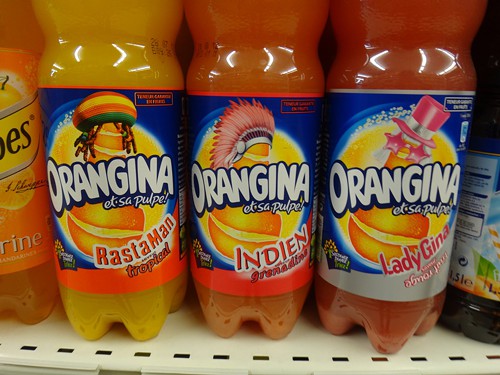
Help! My Bride Wants Me To Participate In Cultural Appropriation!

cultural-appropriation-in-France

Ok seriously what is up with this Orangina? [Via]

Dear Uncommon Courtesy,

My friend asked me to be a bridesmaid in her wedding, which I’m really excited to do. However, she wants all of us to wear kimonos. She loves a lot of Japanese culture and spent some time there, but neither she nor the groom have any Japanese heritage, and to me this sort of feels like cultural appropriation. How do I deal with this, given that I’ve already agreed to be her bridesmaid?

Best,

Hopefully Staying Respectful

OFFICIAL ETIQUETTE

The Emily Post Institute lists the top responsibility of a wedding attendant as “pay for their wedding attire and accessories,” though they say nothing of who gets the choose said attire. The general protocol is that it’s the bride’s choice, though a polite bride should always take her attendant’s opinions into account.

OUR TAKE

Victoria: Maybe we should first explain what cultural appropriation is and why it’s bad.

Jaya: Yes. But that is so difficult! For a lot of people I think there is a huge grey area between enthusiastic cultural exchange and one-sided cultural appropriation, which is where these issues happen. To this bride, I’m sure this is a way to honor her love of Japanese culture. But to others, it may come off as unfair appropriation.

Victoria: True.

Jaya: To me, it involves this idea of someone in a more privileged position utilizing an element of a marginalized culture without experiencing or understanding that marginalization. This is a good post on it, and I like this quote in particular: “It’s a matter of telling people that they don’t wear things in a vacuum and there are many social and historical implications to treating marginalized cultures like costumes.” Here’s another good conversation about it. This is not to say there can’t be any cultural exchange, just that if you’re doing it, you have to work for it, not just use it however you want because it “looks cool.” What that “work” looks like will depend on a number of variables, but it has to be there.

Victoria: Right, a big part of this is using important cultural symbols as “decoration.” For instance, I think it would be fine if the bride were Japanese and asked her non-Japanese bridesmaids, or guests, to wear traditional Japanese clothing. Because in that instance she is asking people to share her culture with her.

Jaya: Definitely. I’ve been to weddings like that, where one of the couple is of another culture than the majority of the guests, and asked everyone to dress up in that culture’s “traditional” clothing.

Victoria: So what do you do if the bride wants you to participate in this?

Jaya: I think she should first ask the bride why she’s doing this, and then maybe explain her reservations.

Victoria: Absolutely, and explaining is important. I feel like awareness of cultural appropriation is still, unfortunately, new. Some people need it spelled out for them.

Jaya: I think a lot of people really are convinced doing things like this are nice ways of being “colorblind” and “international,” not realizing that glosses over so many issues. I can see how it happens though. Maybe this bride spent a few years living in Japan, fell in love with a culture (as so often happens) and now feels this connection that she wants to incorporate, not seeing how it comes off.

Victoria: Yeah, it’s a nice thought, but no. The only way I can see an event like that working as “international” is if you invited guests to wear traditional clothing from their culture, if they wanted.

Jaya: That would be nice. But yeah, maybe HSR can suggest alternatives. Serving Japanese food is always a great option, or incorporating a reading from a Japanese writer or poet.

Victoria: Oooh totally! But if the bride is still being stubborn, I think you are well justified in bowing out as an attendant.

Jaya: Yes, this is bigger than the bride putting you in a dress you don’t like. If it goes against your belief system and makes you uncomfortable, don’t do it. Maybe it’ll shock the bride into realizing what she’s doing. Or maybe she’ll flip out and not want to be friends anymore.

Victoria: Yeah, that is for sure a risk you will be taking. But why would you want someone who is that insensitive as a friend anyway?

Jaya: Haha oh no! Man, the line is so thin though, especially with things like westerners connecting to traditinally non-western cultures or even religions. Though that is no longer etiquette. Unless socio-political interactions are etiquette. Which, sorta?

Victoria: Everything is etiquette to a certain extent.

Jaya: Ugh, just don’t treat another culture’s regular form of dress as a costume.

Victoria: That’s what this boils down to! Even if that culture is really important and meaningful to you, it is still likely just a costume to you. We should also mention that this applies for things like Halloween as well.

Jaya: Yess. Unless someone from that culture is asking you to wear it, maybe don’t do it. Like, I went to my Indian cousin’s wedding, so I wore a sari. But if you invited us over to your house for a party and asked us to dress like Native Americans for fun, I would not come to your house.

Victoria: Omg, I wouldn’t come to my house if I did that.

Can I Ask Why My Parents Weren’t Invited to This Wedding?

Not Invited copy

Hey Ladies,

My question is actually sort of similar to the one y’all just posted about wedding invitation snubs, but a little different. Okay, so one of my oldest friends is getting married, and she initially told me at least one side of my family (Mom vs Dad) would be invited, but maybe not both because they are divorced. I told her they are fine in the same room, and by the end of that convo it sounded like both would be invited. Since both parents have known this friend basically her whole life, they were pretty much expecting to be invited. I received my invitation a month ago, but neither of my parents received one. Everyone is a bit disappointed and hurt, and I don’t know what to tell them. I should also note that my sister falls under both my mom and dad, so I assumed she would be invited one way or another. For all I know all of this is actually an oversight, but is rude me to ask my friend if that’s the case? Is there a way that I can find out what happened without stressing out my friend and making her feel bad? Also, should I ask about my sister specifically?

Sincerely,

Confused About Invitations


OFFICIAL ETIQUETTE

You can’t assume you will be invited to a wedding until you receive a save the date or an invitation. Note for brides and grooms- don’t go around willy nilly verbally saying you will invite people to your wedding until you are SURE that they will be on the guest list. It is also generally considered rude to ask about invitations.

OUR TAKE

Victoria: Ok, this question is basically “My friend said she was inviting my parents to her wedding and then didn’t.”

Jaya: Right. Oy. So, anyone getting married, do not say someone is invited unless they are 100% invited! Like, I’m sure she thought it was 100% and it turned out not to be.

Victoria: Yeah, I feel like this is a major rookie mistake.

Jaya: Haha “rookie.” There’s an etiquette league.

Victoria: Yes and we are the refs. But just to act like “of course they are invited” and then boom there’s no room, is a pretty big mistake. I asked the writer for a follow up and it turns out the bride ended up not being able to invite anyone’s parents.

Jaya: Oooh interesting. So yeah, this seems like she had an idea of what her wedding was gonna be like, was very vocal about it, and then circumstances made it not possible. Which happens.

Victoria: And I think thats fine mostly. I mean, do people really enjoy attending weddings of random people? Like your kids’ friends?

Jaya: I mean, it sounds like they weren’t random. And omg they do.

Victoria: You know about all this now!

Jaya: Everything I’ve heard from my fiance’s family friends is that they LOVE attending the weddings of their friends’ kids. I mean, weddings can be fun, I get it, and this seems like they’re super close family friends? It at least sound like the reader’s parents have their own relationship with the bride.

Victoria: Yeah probably.

Jaya: But anyway, as much as this sucks, there is not really anything to get upset about. Because even though her parents thought/assumed there was an invite coming, they were never formally invited.

Victoria: True! You just have to be gracious.

Jaya: You can get upset that you weren’t invited, but it’s not like the invitation was rescinded. And no one is obligated to invite you to their wedding. And while it’s not rude to ask about it, I’m not sure asking the bride about it is going to do any good.

Victoria: She says she ended up not even having to ask because it came up in conversation at the bachelorette party with everyone. But yeah, and I wouldn’t do it with someone I wasn’t so close to, but if you are a bridesmaid, I feel like you have a bit more leeway as long as you frame it as being curious, not accusatory.

Jaya: I think on all sides, don’t talk about things like invitations a lot unless you’re entirely sure you’re invited, or the other party is invited. Even if she made it seem “very likely,” that is not a guarantee. And don’t ever expect invitations to things like this. It is so personal. Unless you’re like, the groom’s mom or something. And even then maybe your son just wants to elope!

Victoria: LOL

Why Are Some People Sending Mass Facebook Messages Instead of Thank Yous?

thumbs-down1

Dear Uncommon Courtesy,

I recently (September) received a Facebook message from a couple whose wedding I attended in April, thanking all the recipients for coming and asking us to “keep an eye out” for cards. This is ridiculous, right? I mean, the wedding was five months ago!

Sincerely,

Where Have The Manners Gone?


OFFICIAL ETIQUETTE: The Knot says “The rule is that you’re supposed to get thank-yous out for gifts received before the wedding within two weeks of their arrival; after the wedding, within a month after you return from the honeymoon,” to say nothing of Facebook.


OUR TAKE:

[Note: Jaya and Victoria read the original Facebook message]

Victoria: So, they are intending to send actual thank you cards.

Jaya: It sounds like it. Which makes this sort of not even necessary?

Victoria: If this wedding was in the spring and they are only now sending a mass Facebook message with cards to follow, then they are really pushing into rudeness territory. Although, I GUESS if you know you are already super late with TYs, maybe it does seem like a good idea to send around a message that they are coming soon- though I think it would have been better to be super apologetic, because definitely on the first read through this sounded like it was the only TY they were sending.

Jaya: Yeah, I think this could have been done with a little more recognition of how late this is. They also say they just got back from their honeymoon, so unless they were on their honeymoon for four months, maybe they should have said something sooner? Though who knows, maybe they had a lot of shit going on.

Victoria: I mean yeah, but sending thank you notes is part of the deal. Like, don’t eat at a restaurant if you can’t afford to tip- don’t invite more people to your wedding than you can thank in a reasonable amount of time. And if it was something catastrophic that happened to them, their guests probably already know about it.

Jaya: This reader also wrote to us about not getting thanks for another wedding that she did a lot for, which, we don’t even need to debate, that’s just wrong.

Victoria: Yeah.

Jaya: Both were destination weddings, so I think people need to remember that even if your wedding isn’t “traditional,” you still need to thank people.

Victoria: Yes! And even more so if they were really shelling out a ton of cash and time to attend. It takes a lot more effort to get to Hawaii or wherever than to pick something of the registry and drive to the next town over.

Jaya: Right. And maybe they didn’t get you a gift, but your guests still showed up and dedicated their time to you, and that deserves thanks. It’s interesting looking at this in light of the post I just wrote about thank you notes, because even if you debate using email v. writing, other rules still apply. You still have to thank people individually, and those thank yous must be timely.

Victoria: Yes and yes. And to be honest, major travel to attend your wedding is a gift unto itself and should probably be thanked, even if you don’t officially have to. It’s weird that we only think to thank people for tangible items they give us.

Jaya: I think it’s maybe a symptom of what you see in a lot of these wedding horror stories that come out on the internet, of people getting angry at guests for not giving them what they want, or not giving them enough money or something–The idea that you need to make back what you spent on a wedding, and that on the flip side, if your wedding was cheap and you didn’t get many gifts, you don’t need to thank anyone because somehow it wasn’t “real.”

Victoria: Yeah, which is just ridiculous. I mean, you wouldn’t expect to make back money you spent on a dinner party or whatever. I almost think that a lot of drama around weddings these days results from the couple throwing a party to celebrate themselves. I ALMOST think it works better the old way where the parents hosted it, and the couple was the guest of honor.

Jaya: I meaaaaaaaaan.

Victoria: LOL I totally don’t want to go back to that! But it has certainly driven up costs and expectations and all kinds of things that don’t need to be there.

Jaya: There’s nothing wrong with throwing a party to celebrate your own relationship, but the priority should be getting all your loved ones in a room and having fun, not getting stuff. I mean, that’s what I’ve had in my head while wedding planning.

Victoria: Yeah, but you guys are sensible people, and a lot of people aren’t sensible.

Jaya: Well they should fix that.

Victoria: By reading our site and listening to us tell them what to do.


How to Deal with a Wedding Invitation Snub

This kitten is sad for you. [Via Flickr user Mourner]

Dear Uncommon Courtesy,

I recently found out that I was not invited to the wedding of someone I had considered a close friend for the past seven years. Knowing that wedding planning is very stressful and tricky, I’m hurt, but understand that there could be any number of reasons for being left off the list. Do you have any advice for avoiding friendship awkwardness in this situation?

Sincerely,

Hoping to Keep Things Smooth

P.S. Just to add, I’m planning to send her a congratulatory card, but any additional advice would be appreciated!

OFFICIAL ETIQUETTE:

Miss Manners strongly promotes the idea of having a less fancy wedding so as to include as many people as possible so as to avoid these kinds of situations. Official etiquette always dictates taking the high road and not expressing anger at a snub like this.

OUR TAKE:

Victoria: So I totally get the hurt- I’ve been mildly disappointed in not being invited to super old friends’ weddings who I definitely wouldn’t expect to be invited to. And I’ve been really thrilled to be invited when it was an old friend I hadn’t seen in YEARS. I think, if it’s someone you see frequently, the best you can do is just smile and hope they don’t talk about it too much.

Jaya: Yeah, it’s rough realizing that you’re maybe not as close as you once were. But that’s also only one possibility, right? Like, maybe this person just has bitchy parents and a small venue?

Victoria: Yeah, there could be a million reasons why they couldn’t invite you. Although, it won’t be much consolation if they’re having 500 people. In that case, maybe re-evaluate how much effort you are putting into the relationship v. what you are getting back.

Jaya: Definitely. A Practical Wedding had some great posts on this, about how friendships are relationships like any other. And even though there’s no cultural narrative about how to end them, they need to be re-evaluated and ended sometimes, just like any other relationship. If she feels like this girl is a super close friend but she didn’t get invited, yeah, take a look at how the friendship has played out.

Victoria: What’s that old romantic relationship advice? Don’t make someone a priority when they are making you an option? I just Googled that.

Jaya: I love that we can just Google sage relationship advice.

Victoria: It sounded way more poetic written in my high school notebooks.

Jaya: But that totally goes for friendships too. And as for how to act, I think sending a congrats card is totally fine, and then maybe stand back and see if this friend steps up post-marriage.

Victoria: Yeah, exactly. The card is above and beyond and very sweet. I personally just like to comment on the photos on FB about how beautiful they look.

Jaya: I mean, I don’t know their relationship, but if this is someone you thought was your BEST friend–like someone you talked to every day, shared everything with, and watched this relationship grow–I think you’d be justified in asking about it?

Victoria: Yeah, that’s a very good point.

Jaya: Maybe not saying “Hey, why the hell wasn’t I invited!?,” but I think it’s a decent catalyst for a conversation about your friendships. Especially if there was no discernible falling out. For instance, if you didn’t invite me to your wedding, and your wedding was a normal-sized, friends-invited affair, I might ask.

Victoria: There’s always the very TINY chance your invite got lost.

Jaya: True, but you probably would have gotten a phone call about an RSVP.

Victoria: Yeah, you’d have to be very sure. Maybe if the bride was talking to you this whole time as if you were invited, you could ask about that.

Jaya: If you feel like your relationship was close enough, you can maybe ask about it. But “closeness” is so subjective, and you have to be prepared for the option that this person didn’t consider you as close.

Victoria: I think this also might be a good time to remind brides and grooms that their wedding is still a party and maybe you shouldn’t be sharing all the details with your coworkers/acquaintances if you don’t want to invite them.

Jaya: Yessssss. I’m trying to be pretty aware of that with planning my wedding, but it’s so hard sometimes.

Victoria: Part of that is that people do like to hear these details, even if they know they’re not invited.

Jaya: Totally. I try not to put anything on facebook, because there are definitely people I’m not as good friends with who maybe think we still are? I hide behind Facebook a lot

Victoria: We all do.