
Thank Goodness We Don’t Have to Do that Anymore: Display Wedding Gifts

This is something like what the display would look like. Via The Smithsonian

Now that we’ve learned how to give a wedding present, we can all be grateful that we no longer have to worry about it being displayed in the bride’s home to be judged against all the other presents that people have given!

As I mentioned in my post on The Southern Belle Primer, in the past, many brides would display their wedding gifts in their home for people to come and see.

This custom began sometime in the late 19th century, right around the time that wedding guests started to give significant gifts. Prior to that time, the bride’s family provided all of the household equipment the couple would need through the trousseau with guests giving token gifts, if anything. In fact, giving large wedding gifts would imply that you thought that the family could not properly provide for their daughter.

But by the end of the 19th century, that had all changed and manufactured goods had become pretty cheap and people started the wedding gift traditions that we know today. Unlike today, appropriate wedding presents were commonly accepted to be things like china, crystal, silver, and fine linens. These types of items made a much more lovely display.

The basic idea is that the gifts were displayed in the bride’s home for guests to see before or during the wedding. It was much more common at that time for weddings to take place at home, so it actually kind of makes sense to have the gifts displayed, since they were already there. Also, “visiting” at people’s homes was much more common around the turn of the 20th century, so it wouldn’t be as strange as it seems now for people to stop by to see the gifts- in fact, it made it a little bit easier to just have them out instead of having to pull them out of wherever they were stored every time someone came by.

There were variations over the years:

In 1896 Maude Cook writes that if the presents are not to be exhibited at the wedding reception, the bride frequently gives an informal tea the day before to her lady friends for the purpose of displaying them.

The Dictionary of Etiquette in 1904 said that it is not in good taste to display the gifts, but if they are, the names of the givers should be removed and only close friends invited to see them.

Emily Post’s 1922 book states that wedding presents should be sent ahead of time so they can be unwrapped and displayed in the brides home to show them off in a pleasing manner, not to brag but to show appreciation of people’s kindness. They do not have to be displayed, especially if the family cannot spare the room. If they are not displayed, a small afternoon party can be given for close friends to come and see them.

By 1967, Amy Vanderbilt concedes that you do not see the wedding gift display very often, though it is still correct to have it. She does mention that all the cards with the names of the givers should be removed and that though you can display checks, the names should be covered up. She also suggests grouping gifts of similar value together to prevent people from making comparisons. She also suggests having a tea for close friends to come see them and having them on view during the reception if it takes place at home.

Not everyone thought that these displays were such a great idea. Many etiquette books and the very popular Godey’s Lady’s Book denounced the practice as being vulgar and show offy. Sometimes the bride’s trousseau was included in the display, so everyone would be looking at what underwear you would be wearing the next few years- fun! When Consuelo Vanderbilt famously married the Duke of Marlborough, Vogue ran an article, illustrated, of her trousseau including one and a half columns on her lingerie. Consuelo was mortified “I read to my stupefaction that my garters had gold clasps studded with diamonds…and wondered how I should live down such vulgarities”

I have not heard of this being done  in any recent times, though some etiquette books still mention it and even suggest doing it so you can easily show your gifts to close friends. Perhaps this is a regional thing? Is anyone still doing this? Let me know!
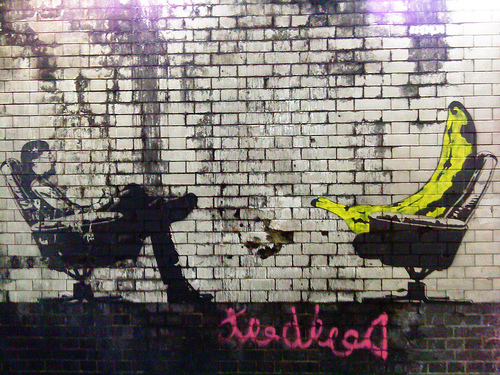
Should I Compliment My Therapist On Her Engagement?

Dear Uncommon Courtesy,

What is proper etiquette when you spot a diamond ring on the left ring finger of…your therapist?

Sincerely,

Awkward On The Couch

OFFICIAL ETIQUETTE

Miss Manners says that back in the day, it was rude to remark on anyone’s possessions, but she concedes that those days are long over. Since Miss Manners spends a lot of time talking about how to deflect personal questions, I think her advice would be more along the lines of not asking personal questions, especially in a business situation.

OUR TAKE

Jaya: I think this ties well into bringing up any noticeable life change you see in another person. Engagement, pregnancy, tattoo, etc.

Victoria: Miss Manners has mostly dealt with people grabbing the engaged lady’s left hand or asking to try it on. Which are both pretty rude!

Jaya: Just because they have a public display of something doesn’t mean they want to talk about it. Oh god, those people are terrible.

Victoria: Have people been grabbing you? (ed: Jaya recently got engaged!!)

Jaya: They have! It happened this a few weekends ago at a family party.

Victoria: Aaaaahhhh!

Jaya: Some family friend I’ve never met but who apparently knew ALL about me.

Victoria: LOL

Jaya: And would not stop asking questions about the wedding.  And it’s infuriating because it just makes me feel bad for talking about it to someone who is not invited.

Victoria: Yeah.

Jaya: However, a normal “congrats!” is totally fine

Victoria: I was going to say, in this case, I think a glance at the ring and a “do I owe you a congratulations?” is fine. Just like, if they have pictures of kids in their office, I don’t think it’s THAT bad to say, “cute kids” or whatever. Just don’t start asking tons of personal questions.

Jaya: And I think this goes doubly for a therapist. Obviously everyone has their own relationship with therapists, but generally the focus is more on the patient, right? Especially since there are rules about getting too involved, making your therapist a part of your personal life, etc.

Victoria: Yeah, I don’t know very much about therapy etiquette (therapists, please submit your thoughts to us!). I would think, for me, maybe its a little weird to be in such an intimate atmosphere and sharing so much about yourself and never asking any questions about the other person.

Jaya: It varies, but I think the therapist generally sets the tone. So saying congratulations at the end of a session is fine but asking lots of questions perhaps isn’t, in general but especially when it’s your therapist.

Victoria: Yeah, exactly, and if they seem like they want to talk more, then that’s great.

Jaya: And if your therapist doesn’t want to get involved, I’m 100% sure they are trained in how to gracefully discourage a patient from asking personal questions.

Victoria: Yeah, I would think they deal with these kinds of things all the time.

Jaya: It is strange though, these public displays of life changes. I had a coworker who was pregnant, and I never said anything, because by the time I could tell she was pregnant she had obviously been pregnant for a while. So it’s sort of weird going “congrats on the thing that clearly happened to you about six months ago.”

Victoria: I mean, I don’t think most people are annoyed or offended by simple congratulations for almost anything. It’s when the personal questions start piling up that it gets annoying.

Thank Goodness We Don’t Have to Do That Anymore: Mourn Like It’s 1861

Maybe we should bring back the timeless craft of making stuff out of dead people’s hair? The Children’s Museum of Indianapolis [CC-BY-SA-3.0], via Wikimedia Commons

A lot of our notions of etiquette come from the Victorian era when the middle class was on the rise and everyone wanted to show everyone else how on point they were with all of the intricacies of etiquette. One area that was particularly elaborate and somewhat gruesome to us today is the etiquette of mourning.

Length of Mourning

A widow was expected to be in deep mourning of her husband for two years. Then a third year was “ordinary” mourning, and the FOURTH year was considered “second” or “half” mourning. Many older women remained in mourning for the rest of their lives, the most famous being Queen Victoria who was in mourning for her husband, Prince Albert for more than forty years.

Widowers were expected to mourn for a year.

Parents and children were mourned for a year, siblings and grandparents for six months, aunts/uncles for three months, and cousins for six weeks.

Mourning Dress

For a funeral, everyone had to wear black (unless the funeral was for a child or unmarried girl, in which case everyone wore white). Sometimes the family/funeral director would even provide black gloves and scarves for all the mourners.

Then again, I always love a veil. By Anders Zorn 1860-1920  [Public domain], via Wikimedia Commons


Etiquette dictated what you could wear while you were in mourning (in relation to how much time had passed and your relationship to the deceased) right down to what kinds of fabric and jewelry was appropriate.

Men only had to wear a black armband over their regular clothes (though they were supposed to wear only white shirts instead of colored.) This was partially sexist and partially practical. Men’s clothes were much more difficult to dye than women’s clothes and typically when you were in mourning you would just dye all your clothes black instead of buying new, black clothes. The sexist reason was that men still had to go out and go to work and didn’t want to look too depressing.

Women did have to wear all black. In addition, it couldn’t be just any black, it had to be very matte black, so you will see a lot of references to crepe/crape as a fabric choice (a slightly crinkly fabric that does not reflect any light.) Women also had to dress fairly plainly without a lot of embellishments and jet jewelry was the only appropriate kind (other than hair jewelry, which we will get to in a moment.) In addition to all of this, widows had to wear veils over their faces.

Widows didn’t have to wear the crow look for the whole period of mourning. For instance, the widow’s veil could be shortened after the first year! Exciting! The very dark, matte fabric was for deep mourning. For ordinary mourning, you could wear shinier fabrics like silk. For half mourning, you could wear muted colors like grey and lilac.

Children wore a mixture of black and white so they wouldn’t look too sad.

Hair Jewelry

Hair jewelry designs. [Via Flikr user LEOL30]

Hair jewelry is pretty much what it sounds like- jewelry made out of hair! It was very popular during the Victorian period because hair does not decay and therefore makes a great memento of a person who has died.

The hair could just be a simple lock inside a pretty setting or it could be arranged into fabulous shapes and scenes. Simple braids of hair were also worn as bracelets. Hair wreaths hung on the walls were also very popular-see if you can spot one the next time you are in a period house museum.

Like most things related to Victorian mourning, the trend probably relates very closely to Queen Victoria’s mourning of Prince Albert. In fact, the trend disappeared almost entirely right after her death.

Weirdly, only jet jewelry was thought appropriate for deep mourning, though hair jewelry could be worn for the lighter mourning periods.

Being Social While in Mourning

Since mourners were supposed to be sad, they didn’t really go anywhere. It was supposed to have made them more sad to see other people being happy. A rule of thumb was that as long as you were wearing mourning clothes, you shouldn’t go to fun events because mourning clothes and fun clash or something. When you were in lighter mourning you could attend the theater, small functions, and informal events.

Post-Mortem Photography

Photography was first invented during the Victorian period. Combined with extremely high childhood mortality rates, photos of dead people became extremely popular! Sometimes the corpses were shown in a coffin or a bed, looking like they were sleeping. Other times they would be propped up or posed with relatives to look more lifelike. The practice died out (ha-HA!) with the advent of snapshot photography when people started taking pictures of you shortly after you had emerged from the womb and your death photo was no longer the only chance for someone to get an image of you. See some examples here if you are not too faint of heart.

As a note, I am calling this Victorian mourning, but Emily Post was still talking about all of this in her 1922 book and Amy Vanderbilt was still talking about it as something that was just dying (ha-HA! again) out in my 1967 edition of her book.

Special Royal Baby Edition: British Titles

By Duke_and_Duchess_of_Cambridge_and_Prince_Harry.JPG: Carfax2derivative work: Surtsicna [CC-BY-SA-3.0], via Wikimedia Commons

A special royal baby post on British titles!

Firstly, the new baby’s title is His Highness Prince [NAME] of Cambridge. William and Kate’s official titles are Their Royal Highnesses the Duke and Duchess of Cambridge and are properly referred to as such (or as just the Duke and Duchess of Cambridge). This title was given to them upon their marriage, previously William was HRH Prince William of Wales. As William was born a prince, he remains a prince and she is a princess, but the Queen has chosen to style them the Duke and Duchess of Cambridge, and what she says goes. Becoming a Duke made William a Peer of the Realm, which is better than being just a plain prince (and a commoner). If they had been styled as Prince and Princess, Kate would have been referred to as HRH Princess William of Wales because she was not already a princess in her own right. Prince/Princess is their rank, Duke/Duchess is their title. “Princess Diana” was made up by the press and was never her official title. Princess FirstName is only used in the UK when they are a princess by birth.

The ranking of the British nobility:

Duke/Duchess

Marquess/Marchioness

Earl/Countess

Viscount

Baron

In modern times, there isn’t that much meaning behind the titles except in rank. Dukes were first created (in England- the concept is older) by Edward III in the 1300s for his close family members and for a long time Dukes were only members of the royal family. Marquesses held pieces of land on the borders (marches) and because of their defensive position they were ranked higher than earls who held counties (earls are equal to counts in other countries, but the British use the Anglo-Saxon derivative of the Scandinavian word jarl) which were interior pieces of land. The title viscount doesn’t seem to have as much history or meaning as the others and is even now mostly only used as a courtesy title. Barons were originally the men who managed the land for a greater lord. Titles were often awarded to people for service to the Crown, so the greater the service, the greater the title.

Within each rank, age of the title indicates seniority. Life peers are titles given to people for the duration of their own life but which are not passed down to their heirs.

The word peer refers only to those who hold one of these titles fully (or their spouses) and traditionally would be eligible for the House of Lords. Everyone who is not a peer is a commoner (and that includes people like Prince Harry as prince and princess are courtesy titles for the children and grandchildren of the soverign). Children of peers may hold courtesy titles (we will get to those in a minute) but they are not accorded the full honors of that title and they are still commoners. So yes, even though they were rich, and Diana was aristocratic, before their marriages both Kate Middleton AND Princess Diana were commoners.

Courtesy Titles

Children of peers are commoners but they get to use courtesy titles to show their relationship to a peer. Peers often have multiple titles, so they give their eldest sons one of the lesser titles to use as a courtesy, as they will one day inherit the greater title. So the oldest son of a duke might be referred to as the Earl of ____. (This only goes for the eldest son of dukes, marquesses, and earls). Though the son may be styled a Marquess or Earl, they do not hold the full courtesy of that title. For example, a Marquess is properly known as The Most Honourable [first name] Marquess of _______, but a courtesy marquess is not The Most Honourable, they are just the Marquess of ______ (and the “the” is dropped for correspondence)

Younger sons of dukes and marquesses are styled Lord [first name][surname]. Younger sons of earls and all sons of viscounts and barons are styled The Honourable (often shortened to The Hon) [first name][last name]. This is only used descriptively and in addresses, Honourables should be called Mr. ________.

Daughters of dukes, marquesses, and earls are styled Lady [first name][last name].

Sons and daughters of viscounts and barons also use the courtesy title The Honourable in the same way as noted above.

Dowagers

The widowed wife of a duke, marquess, earl, or viscount is the Dowager of that title. For example: widows of dukes are referred to as the Dowager Duchess of ______ or [first name], Duchess of ______. If there is already a Dowager Duchess when the duchess in question is widowed, she is always referred to as [first name], Duchess of ______. If a duchess’s son is unmarried when she becomes widowed, she remains the Duchess of ______ until he marries. (This applies to widows of marquesses and earls also, with Marchioness, Countess, or Viscountess filling in for Duchess.)

Widows of barons are known as Dowager Lady _______ or [first name], Lady _______.

Duke/Duchess

Princes of the Royal Blood are usually created dukes when they marry, as Prince William became the Duke of Cambridge when he married Kate Middleton. There are also non-royal dukes who can trace their lines back to someone who was created a duke by a monarch. All the children and some of the grandchildren of the monarch are addressed as His/Her Royal Highness followed by their other title (the Duke/Duchess, Earl/Countess, Prince/Princess, etc).

In conversation/print Dukes/Duchesses are referred to as The Duke or Duchess of ________ or His/Her Grace. They are addressed directly as Duke or Duchess or Your Grace.

Marquess/Marchioness, Earl/Countess, Viscount/Viscountess, Baron/Baroness

In conversation/print and when addressed directly, these ranks are called Lord or Lady______ (where the blank is their holding, not their first name).

Countess/Baroness

Many earldoms/barons can be inherited by women, so these women are properly called the Countess of/Baroness ______, but her husband gains no title or style from being married to a Countess/Baroness.

A baroness in her own right has the choice of being called Baroness_______ or Lady ________ (where the blank is their last name). Most choose to go by Lady as Margaret Thatcher, a Life Baroness, went by Lady Thatcher.

Other

The Princess Royal refers to the eldest daughter of a monarch. Though as she retains the title for life and there can only be one at a time, if a monarch has a daughter and there is already a Princess Royal, she won’t be called that. Queen Elizabeth’s daughter Anne is the current Princess Royal.

His/Her Royal Highness (HRH) is a style given to members of the royal family.

I have been asked before why Prince Philip isn’t King Philip. The reason is that a King outranks a Queen and the ruler must be the highest ranked person, so when a woman is Regnant, her husband is Prince Consort instead of King. When there is a King, his wife is the Queen Consort as opposed to the Queen Regnant when a woman rules, though generally Queen Consort is just shortened to Queen.

This is an extremely simplified (but hardly simple!) explanation of a very complicated topic. For everything you could possibly want to know about British titles up to how to address the Queen, see http://www.debretts.com. The British Monarchy also has an excellent site specifically about the Royal Family http://www.royal.gov.uk/. And please see this excellent post by a royalty scholar http://royalmusingsblogspotcom.blogspot.com/2011/05/primer-catherine-is-princess.html.

How Do I Accept A Gift From Someone Less Fortunate Than Me?

juicyflexDear Uncommon Courtesy,

Could you please comment on the etiquette involved in taking gifts from people who can’t afford much in life?  I have occasionally been offered small things from people who have almost nothing including a man who asks for money on the street, to whom I have given money from time to time. One time the gift was a pen that I thought looked pretty hefty and fancy when I took it. though it turned out to be dried up when I tried to use it. Another time, it was a bunch of little single-serve juice cartons, which I think had been given to the man by a store, as they were a bit past their expiration date—but still good. He wanted me to take several, and I did.

I feel strange taking anything in a situation like this, but I always accept on the theory that the gift wouldn’t be offered if it was truly unaffordable, and it would be rude and unfriendly to refuse.  Your thoughts?

Thanks,

Kindness From Strangers

OFFICIAL ETIQUETTE

All the standard etiquette mavens emphasize accepting gifts in the spirit in which they are offered and thanking people. I haven’t found much discussion of a situation like this, though in a case of one person being very generous with gifts and favors, Miss Manners suggested to the writer that they try to reciprocate with what they can.

 OUR TAKE

Jaya: This is a really interesting question. I totally see how you’d feel guilty in that situation.

Victoria: Yeah. You don’t want to offend someone. And I’m definitely in the thought of taking things in the spirit of which they are offered.

Jaya: How often is this happening to this person!?

Victoria: This does not happen to me.

Jaya: It’s sort of the flip side of “a gift is a gift.” Do not expect that someone put themselves in a bad situation to give this to you!

Victoria: And these gifts are not that elaborate.

Jaya: So this makes me think of this quote that I see on Pinterest all the time (I can’t believe I’m gonna quote pinterest): “When a child gives you a gift, even if it is just a rock they just picked up, show gratitude. It might be the only thing they have to give, and they have chosen to give it to you.” It’s really weird, but it sort of applies?

Victoria: It totally applies. And some people are just givers.

Jaya: I think the best course for this particular guy is maybe just keep giving him change as normal.

Victoria: Yep, especially since they’re more like found objects. There’s this one guy near my subway stop who sells a whole spread of pretty nice stuff he finds.

Jaya: That’s awesome.

Victoria: Yeah, so these gifts are probably not costing him anything. Though I think if you have very close friends who are doing this gift giving and you know they are super poor, you can bring it up and suggest that they don’t need to be doing it. Or say that you feel badly that you can’t reciprocate. But still, you don’t necessarily know their circumstances; a lot of people get free stuff through work that they like to give out.

Jaya: Totally. No one should ever feel pressured to give a gift, but if they do, assume that they had the means and kindness in their heart to do it.

Victoria: And say thank you, wholeheartedly.