How Do I Deal With This Impossible Coworker?

Ok maybe not

Ok maybe not

Dear Uncommon Courtesy,

I have an impossible coworker! That is the best description. We sit in a big open office, and he is right across (a very short) partition from me and he’s driving me absolutely nutso. He’s extraordinarily loud and likes to yell all the time, either at the people around here, imaginary people, or will literally just yell out movie quotes or lyrics at nobody for no reason. When he’s not yelling, he’s got headphones in that don’t work very well as headphones. I’ve got a pretty stressful job, and I can’t hear myself think anymore.

I know that I should just TALK TO HIM, but there are a few obstacles:

1) I need him to do work for me, often, and he takes ANY criticism as a huge slight and will not talk to the person that “disrespects him” for WEEKS.

2) There is no HR department at my very small company.

3) The powers that be seem to be straight-up terrified of him, and won’t fire him or even reprimand him for anything, despite the fact that he actually recently stole a bunch of stuff from the office and now almost everything is under lock and key AS WELL AS previous incidents he’s been responsible for that I know the company lawyer is constantly being called in to deal with his shenanigans. I think they don’t want to pay him unemployment.

Anyways, essentially the guy is a huge pain in the ass and I don’t have ANY IDEA what to do here. I’ve narrowed it down to “quit my job” or “stew forever.” Help!

Sincerely,

DRIVEN TO ACTUAL MADNESS IN MIDTOWN

OFFICIAL ETIQUETTE

This is somewhat outside the scope of etiquette, but most etiquette experts would probably say to be polite and direct and go to your superiors about the problem and if all fails, then to grin and bear it. You might also check askamanager.com, a really great resource for questions about office politics and legal issues.

OUR TAKE

Jaya: Well, I do still think that talking to a superior is a good idea. And mention that the yelling makes it very hard for him to do his job. It seems like the letter writer has a higher up job, so that could help.

Victoria: And if they do fire him, they won’t have to pay unemployment.

Jaya: And if the letter writer wants to talk to the guy himself, and if he decides not to talk to him for weeks, that’s also something the letter writer can bring to higher ups if he doesn’t get work done.  Just say “well coworker for some reason is not responding to my many requests.”

Victoria: That’s true, and maybe even keep a log of incidents, which can be helpful when approaching management.

Jaya: If anything, perhaps he can request to move desks? I think in a lot of situations, the best advice is always to find what you can do for yourself, if there’s no way to change the other person. Which in this case, there probably isn’t. Move desks, get headphones yourself, something. Also, this coworker sounds like such a baby.

Victoria: Yeahhhhhhhh.

How To Never Address Anyone Again

These titles have been out of use since we stopped hanging witches.

You would think that since America doesn’t have a nobility, the historical use of titles would be very straightforward, but there are a few interesting uses that we don’t have anymore:

Goody/Goodwife and Goodman

If you’ve ever read The Crucible or other books based in Puritan America, you’ve probably come across the term Goodwife and its abbreviation Goody and have perhaps seen the term Goodman. Obviously these terms came with the colonists from England but seem to have been used mostly by the Puritans in New England. To an extent the term denoted church membership, as those who belonged to the church were “good.” They seem to have been titles denoting a slightly lesser social status than those addressed Master and Mistress, but still with some social standing in the community. The term fell out of use in the early 1700s.

Mistress and Master

Early forms of address for people of the middle and upper (but not noble) classes, precursors to Mister and Mrs. Mistress was used for both married and unmarried women. They fell out of use sometime in the 1700s as the democratization of language preferred Mister and Mrs. (which is still short for Mistress, but obviously pronounced Missus) or Miss for all people.

For a while, Mrs. was used as term of respect for women even if they weren’t married- such as calling the cook and housekeeper Mrs. Lastname to denote their rank even if they weren’t married. Miss also was derived from Mistress. An interesting historical fact about the use of the word Miss was that in a family, the eldest daughter would have use of the title Miss LastName and her younger sisters would be called Miss FirstName until the eldest married and the next was bumped up. The use of the term Master for the minor, male children of a house survived well into the 20th century.

During the period immediately following the Revolution, Americans were trying to figure out what they would call each other. Many advocated for a no-frills approach and an ending of most earlier courtesy titles. One wish was to change female titles to eliminate a distinction between married and unmarried women. For those who think the term Ms. originated in the 20th century, it has actually existed as the abbreviation for Mistress as long as Mrs. and Miss have been around.

How To Address Just About Anyone

Obama approves of using Ms. [Flickr user QueenofSpainErin]

Forms of address are complicated and fraught with peril because incorrect use can be seen as disrespectful. It’s a good thing that we have evolved from just Mr. and Mrs. Joseph Smith, but without one standard form, it gets a bit tricky. Women are insisting on not being defined by their marital status. Men are taking women’s names. There are same-sex couples to think about. Utter madness. Won’t someone please think of the great-grandmas stuck in their ways?

The rule of thumb is that if you know what someone prefers to be called, then call them that! (Shortcut: If they sent you a letter, see how they put their name on the return address. Boom. Easy.)  If you don’t know, then you can follow the basics:

A single person:

  • Professional titles like Dr. trump any of these (noble titles too, but c’mon you don’t know Sir Paul McCartney or Prince Harry anyway)

  • Mr. Horace Banks

  • Miss Flora Norwood (only for the VERY young- under 18)

  • Ms. Maude Fredericks (married or unmarried)

  • Mrs. Myrtle Hotchkiss (only if you are pretty sure they prefer Mrs.)

  • Mrs. Clarence Jacobs (only if you are CERTAIN they prefer it or if they are very old)

Interestingly in the case of a divorce, a woman shouldn’t use Mrs. Clarence Jacobs at all, though she can still use Mrs. Patricia Jacobs if she retains her married name. If she returns to her maiden name, then she shouldn’t use Mrs. Patricia Rogers, she should go back to Ms. Patricia Rogers. A widow is traditionally addressed with the same title she used when she was married, unless you know she prefers something else.

Juniors, Seconds, and Thirds:

If a man is named after his father, he uses the suffix junior, which is written out as: Edmund Jones, Jr. Ansel Whittleby II is a man that is named after an uncle or a grandfather. Thirds and fourths come after that. FUN FACT: the nicknames Trip and Trey are traditionally used for someone who is a third and Skip is used for someone named after a grandfather because the name “skips” a generation.

Couples and Groups:

A lot of this comes down to formality and preference. The more formal your correspondence, the more formal you should go. Note that in a heterosexual couple, the male title and name traditionally comes first, but either way is correct.

  • Mr. and Mrs. Seamus Finnegan (the most formal address for a heterosexual married couple. Many modern women object to the use of just the man’s name and so this is best used if you are sure that it is the preference. You should not use Ms. with this form- Mr. and Ms. Seamus Finnegan because the old fashioned use of the man’s name doesn’t really jive with the more modern Ms.)

  • Mr. and Mrs. Blanc (an alternate with no first names)

  • Mr. Taran Edwards and Ms. Beatrice Edwards (this is used if you wish to use both first names. Many people will write Mr. Taran and Ms. Beatrice Edwards, but this is less preferable because then it looks like you are addressing the first person as just Mr. Taran, which just looks a bit weird)

  • Mr. Patrick O’Malley and Ms. Bridget Sullivan/ Ms. Jennifer Cooper and Ms. Becky James (for an unmarried couple, a married couple where the woman kept her own name, gay/lesbian couples, roommates, etc. You should try to get both names on the same line, but it’s okay if it doesn’t fit and you have to put them on separate lines. For more formal events, roommates should get separate invitations, though most people aren’t too put off by being included together.)

  • Dr. Camilla Banks and Mr. Peter Partridge (a title like Dr. always outranks the Mr./Ms./Mrs. and the names should be separate, though if you are using the very old fashioned form: Dr. and Mrs. Peter Partridge is correct but Mr. and Dr. Peter Partridge isn’t. Two doctors with the same last name are addressed as The Doctors Partridge.)

  • Henry and Henrietta Henderson/ Jasmine Sultan and Rebecca Bainbridge (the same as above but more casual)

  • The Jones/The Jones Family (this is pretty casual but still useful if you don’t know the preferred title or want to invite the whole family)

Things We Don’t Have To Do Anymore:

Unwed mothers having to go by Mrs. Maidenname to avoid scrutiny. Because heavens to Betsy, what would the neighbors think?

Did My Friends Forget To Give Me A Present?

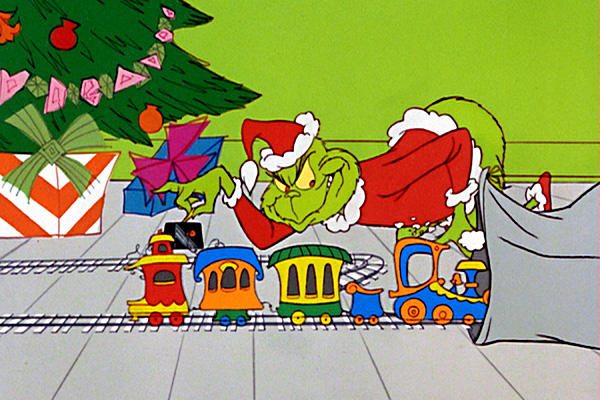
Have you ruled out wedding Grinches?

Have you ruled out wedding Grinches?

Dear Uncommon Courtesy,

At our wedding, after going through the gifts, we noticed that 4 of my close college friends had not given a gift. It seemed really weird, and I was concerned that maybe they all put their gifts somewhere together and they got misplaced or lost. If that were true, you’d think they’d want to know. What would you do here?

Sincerely,

Expected A Toaster

OFFICIAL ETIQUETTE

The official etiquette stance here would be to say nothing for a few reasons. 1) Guests sometimes send gifts a while after the wedding so they might still be getting around to it (obviously this is more likely if it’s only been a few months since the wedding). 2) guests aren’t really obligated to give gifts at all, and if they spent a lot of money travelling to your wedding, they might not have given a gift at all. 3) If the gifts DID get lost, what’s going to happen? It’s too late to try to find them and your guests will just feel bad that they were lost.

What you could do is send a thank you note thanking them for coming to the wedding without mentioning gifts and hope that if they did give a gift that was lost that they will call you up and ask if you got it.

OUR TAKE

Jaya:  So I do like that advice, but I agree that if I had given at gift and it was lost, I’d rather know about it than wait until the thank you note. Because if they don’t mention it in the thank you note, you’re thinking “wait, did they get the gift and just not thank me for it?”

Victoria:  Yes, I totally agree, with close friends, I would ABSOLUTELY ask.

Jaya:  Yeah! And these sound like close enough friends.

Victoria:  Just be like, “omg this is really awkward, but I’m really worried someone misplaced your gift at the wedding.” And this actually happened to me sort of! I went to a wedding and sent a gift ahead of time, but then I never got a thank you note. The groom thanked me verbally at the wedding for the CARD I had sent separately, which made me think maybe they hadn’t gotten the gift.

Jaya:  Ooh! What did you do?

Victoria:  Nothing, haha, it was a couple years ago. But I didn’t really know them well enough to feel like I could say anything. I should have just emailed and been like, hey, I sent you this thing, did you get it? But at the time, I didn’t want them to think I was chastising them for not sending thank you notes.

Jaya:  Yeah, that’s the tricky part. Or on the bride and groom’s side, you don’t want to make it seem like you expect a gift. But I still think it’s ok to just send a thank you note to the people for being there, and then maybe it’s up to the guest to say “wait, did you get my present?” 

Victoria:  Yeah, after my experience, I would strongly advise people to follow up if you haven’t heard from the couple about your gift. Especially with sending gifts to their house, there are so many ways it could get lost and you want to find out ASAP so you can follow up with the store and try to get a refund/replacement.

Jaya:  Definitely. But in general, I think if you’re going to send a gift, do it through the mail or give it to them in person. Leaving gifts on a table at the wedding seems like a good way to have them go missing.

Victoria:  Yeah, I am not a fan of gifts at the wedding- though I know its a regional thing- there’s way too much going on and things easily get misplaced or their cards get detached and you don’t know who gave what.

Jaya:  Cards getting detached! That’s happened to me, and it’s no fun doing the process of elimination to figure out where they belonged

Victoria:  Hahaha yeah! Exactly!

Jaya:  So yeah, I think for this, given that they say these were close college friends, you could ask if they brought a gift but if it’s some outsider, just thank them for coming in the thank you note and wait for their response.

Victoria:  Yep, and just phrase it like, “we noticed there was a big chunk of people who didn’t bring gifts and we were concerned they might have gotten misplaced at the wedding, so we were wondering if you had given us anything, but don’t worry if you didn’t! We just want to make sure we don’t miss a thank you note.” It’s going to be horribly awkward, but if you do sound a bit sheepish, your good friends won’t care.

Jaya:  Absolutely. They know you’re awkward anyway. People just need to suck it up and communicate.

Victoria: Oh! Or! If you have a bridal party member/close friend who is also good friends with these people you could send them on a little reconnaissance mission and have them ask them what they gave you. Only if you can trust them be to extremely subtle.

Jaya:  Ooooh yes, that’s a great solution.

Victoria:  I would totally do that for you, btw.

Jaya:  Aww, you’re so sweet.

Thank Goodness We Don’t Have to Do that Anymore: Display Wedding Gifts

This is something like what the display would look like. Via The Smithsonian

Now that we’ve learned how to give a wedding present, we can all be grateful that we no longer have to worry about it being displayed in the bride’s home to be judged against all the other presents that people have given!

As I mentioned in my post on The Southern Belle Primer, in the past, many brides would display their wedding gifts in their home for people to come and see.

This custom began sometime in the late 19th century, right around the time that wedding guests started to give significant gifts. Prior to that time, the bride’s family provided all of the household equipment the couple would need through the trousseau with guests giving token gifts, if anything. In fact, giving large wedding gifts would imply that you thought that the family could not properly provide for their daughter.

But by the end of the 19th century, that had all changed and manufactured goods had become pretty cheap and people started the wedding gift traditions that we know today. Unlike today, appropriate wedding presents were commonly accepted to be things like china, crystal, silver, and fine linens. These types of items made a much more lovely display.

The basic idea is that the gifts were displayed in the bride’s home for guests to see before or during the wedding. It was much more common at that time for weddings to take place at home, so it actually kind of makes sense to have the gifts displayed, since they were already there. Also, “visiting” at people’s homes was much more common around the turn of the 20th century, so it wouldn’t be as strange as it seems now for people to stop by to see the gifts- in fact, it made it a little bit easier to just have them out instead of having to pull them out of wherever they were stored every time someone came by.

There were variations over the years:

In 1896 Maude Cook writes that if the presents are not to be exhibited at the wedding reception, the bride frequently gives an informal tea the day before to her lady friends for the purpose of displaying them.

The Dictionary of Etiquette in 1904 said that it is not in good taste to display the gifts, but if they are, the names of the givers should be removed and only close friends invited to see them.

Emily Post’s 1922 book states that wedding presents should be sent ahead of time so they can be unwrapped and displayed in the brides home to show them off in a pleasing manner, not to brag but to show appreciation of people’s kindness. They do not have to be displayed, especially if the family cannot spare the room. If they are not displayed, a small afternoon party can be given for close friends to come and see them.

By 1967, Amy Vanderbilt concedes that you do not see the wedding gift display very often, though it is still correct to have it. She does mention that all the cards with the names of the givers should be removed and that though you can display checks, the names should be covered up. She also suggests grouping gifts of similar value together to prevent people from making comparisons. She also suggests having a tea for close friends to come see them and having them on view during the reception if it takes place at home.

Not everyone thought that these displays were such a great idea. Many etiquette books and the very popular Godey’s Lady’s Book denounced the practice as being vulgar and show offy. Sometimes the bride’s trousseau was included in the display, so everyone would be looking at what underwear you would be wearing the next few years- fun! When Consuelo Vanderbilt famously married the Duke of Marlborough, Vogue ran an article, illustrated, of her trousseau including one and a half columns on her lingerie. Consuelo was mortified “I read to my stupefaction that my garters had gold clasps studded with diamonds…and wondered how I should live down such vulgarities”

I have not heard of this being done  in any recent times, though some etiquette books still mention it and even suggest doing it so you can easily show your gifts to close friends. Perhaps this is a regional thing? Is anyone still doing this? Let me know!