Etiquette in Places of Worship

Notre dame noel 2006Sometimes we might find ourselves in a religious space that is not our own. Here are some very general tips to help you not embarrass yourself. Also, remember that even within a religion, there is a TON of variation, so consider these extremely general guidelines.

In General:

  • Be respectful of beliefs that are not your own.

  • Be quiet before and during all services-turn your phone off (and don’t dare use it unless an emergency), no talking or excessive rustling.

  • Follow along with whatever everyone else is doing if you are unsure.

  • Dress fairly conservatively, many places of worship require arms and legs to be covered (or have more specific requirements), even if visiting as a tourist. Check before you go.

  • If you are inviting a non-member to your place of worship, it would be kind to give them a rundown of what to expect and what is expected of them.

  • Don’t eat or drink, unless you are specifically offered something as part of the service.

Christian Churches:

  • Be very quiet even before services start, people use the time for reflection and prayer. In fact, you should almost never talk above a whisper in church as there are always people who wish to pray. Churches are very similar to libraries.

  • Stand when the congregation stands but you may sit while they kneel.

  • Communion: if you do not wish to participate, you can remain in the pew. If the pew is too narrow to allow this and let others pass, you can go up and cross your arms over your chest to signal that you are not participating. (Note: in the Catholic faith, only Catholics are allowed to receive communion, it is very disrespectful to take communion if you aren’t Catholic.)

  • You are welcome to follow along with the prayers, or to keep silent.

  • Don’t applaud after any music or singing.

  • There are many different denominations, so don’t expect every church to be exactly the same. Many have looser or stricter requirements.

  • Grace: you may be asked to say grace when dining in a Christian home. There are a number of well known graces you can say if you feel comfortable, but a general thanking of the host and talking about the beauty of the food is fine. If you want more of a “grace” feel, you could try this secularized version: “for what we are about to receive, let us be truly thankful. Amen.” If someone else is saying grace, follow along with everyone else and either bow your head or join hands respectfully and either say amen at the end, or say nothing.

Jewish Synagogues

  • At many synagogues, most men will be wearing a yarmulke (a small round hat, also known as a kippa). They may have extras for you to borrow. Apparently it is not required, but it strongly suggested in more conservative synagogues.

  • There is a lot of standing and sitting, just go along with what everyone else is doing.

  • Services can last from 3-4 hours, so often people come and go and don’t stay for the entire time.

  • When the Ark is open, you shouldn’t enter or leave the sanctuary.

  • Don’t put prayer books on the floor.

  • Kiss anything that has fallen on the floor, like yarmulkes and prayer books.

  • It is inappropriate to applaud.

Muslim Mosques

  • Remove hats and shoes

  • Do not point your feet at the Qibla, the wall that aligns to the direction of Mecca.

  • Women are required to cover their heads, and everyone should cover as much skin as possible.

  • Sometimes there might be separate entrances or separate areas for men and women.

  • You may be greeted with the phrase “Assalam Allaikum” to which the correct response is “Wa alaikum-as-salam” though no one is really going to expect you to say it.

  • It is customary to enter with your right foot first and leave with your left foot first.

  • If you are a tourist, you should avoid coming to the mosque during the 5 daily prayer times.

Buddhist Shrines

  • Remove your hats and shoes.

  • Dress modestly, long pants are preferred to shorts.

  • Do not touch the Buddha statue. It is also respectful to back away from the Buddha statue a few paces before turning your back on it.

  • Pointing is very rude. If you need to indicate something, gesture with your whole RIGHT hand, palm up. Also don’t point your feet at any people or Buddhas.

  • If any monks or nuns enter while you are sitting, stand up.

  • Only use your right hand when giving or receiving anything.

  • Women should be careful not to touch a monk or to hand them anything directly as they must perform a lengthy cleansing ritual after any contact with a woman.

  • In the opposite style of a mosque, it is traditional to enter with your left foot and leave with your right foot.

  • You may greet monks by putting your palms together and bowing slightly.

Hindu Temple

  • You will usually need to take off your shoes. Many temples have cubbies outside where you can keep them, but if you’re worried about that, bring a bag and slip them in there.

  • There are generally pastes, flowers, and other objects that will be put on you. Be aware that you might get dirty.

  • Use only your right hand when making offerings.

  • There may be some places in the temple you are not allowed to go if you are not Hindu, so be aware that you may be blocked from entering certain rooms.

Why Are Some People Sending Mass Facebook Messages Instead of Thank Yous?

thumbs-down1

Dear Uncommon Courtesy,

I recently (September) received a Facebook message from a couple whose wedding I attended in April, thanking all the recipients for coming and asking us to “keep an eye out” for cards. This is ridiculous, right? I mean, the wedding was five months ago!

Sincerely,

Where Have The Manners Gone?


OFFICIAL ETIQUETTE: The Knot says “The rule is that you’re supposed to get thank-yous out for gifts received before the wedding within two weeks of their arrival; after the wedding, within a month after you return from the honeymoon,” to say nothing of Facebook.


OUR TAKE:

[Note: Jaya and Victoria read the original Facebook message]

Victoria: So, they are intending to send actual thank you cards.

Jaya: It sounds like it. Which makes this sort of not even necessary?

Victoria: If this wedding was in the spring and they are only now sending a mass Facebook message with cards to follow, then they are really pushing into rudeness territory. Although, I GUESS if you know you are already super late with TYs, maybe it does seem like a good idea to send around a message that they are coming soon- though I think it would have been better to be super apologetic, because definitely on the first read through this sounded like it was the only TY they were sending.

Jaya: Yeah, I think this could have been done with a little more recognition of how late this is. They also say they just got back from their honeymoon, so unless they were on their honeymoon for four months, maybe they should have said something sooner? Though who knows, maybe they had a lot of shit going on.

Victoria: I mean yeah, but sending thank you notes is part of the deal. Like, don’t eat at a restaurant if you can’t afford to tip- don’t invite more people to your wedding than you can thank in a reasonable amount of time. And if it was something catastrophic that happened to them, their guests probably already know about it.

Jaya: This reader also wrote to us about not getting thanks for another wedding that she did a lot for, which, we don’t even need to debate, that’s just wrong.

Victoria: Yeah.

Jaya: Both were destination weddings, so I think people need to remember that even if your wedding isn’t “traditional,” you still need to thank people.

Victoria: Yes! And even more so if they were really shelling out a ton of cash and time to attend. It takes a lot more effort to get to Hawaii or wherever than to pick something of the registry and drive to the next town over.

Jaya: Right. And maybe they didn’t get you a gift, but your guests still showed up and dedicated their time to you, and that deserves thanks. It’s interesting looking at this in light of the post I just wrote about thank you notes, because even if you debate using email v. writing, other rules still apply. You still have to thank people individually, and those thank yous must be timely.

Victoria: Yes and yes. And to be honest, major travel to attend your wedding is a gift unto itself and should probably be thanked, even if you don’t officially have to. It’s weird that we only think to thank people for tangible items they give us.

Jaya: I think it’s maybe a symptom of what you see in a lot of these wedding horror stories that come out on the internet, of people getting angry at guests for not giving them what they want, or not giving them enough money or something–The idea that you need to make back what you spent on a wedding, and that on the flip side, if your wedding was cheap and you didn’t get many gifts, you don’t need to thank anyone because somehow it wasn’t “real.”

Victoria: Yeah, which is just ridiculous. I mean, you wouldn’t expect to make back money you spent on a dinner party or whatever. I almost think that a lot of drama around weddings these days results from the couple throwing a party to celebrate themselves. I ALMOST think it works better the old way where the parents hosted it, and the couple was the guest of honor.

Jaya: I meaaaaaaaaan.

Victoria: LOL I totally don’t want to go back to that! But it has certainly driven up costs and expectations and all kinds of things that don’t need to be there.

Jaya: There’s nothing wrong with throwing a party to celebrate your own relationship, but the priority should be getting all your loved ones in a room and having fun, not getting stuff. I mean, that’s what I’ve had in my head while wedding planning.

Victoria: Yeah, but you guys are sensible people, and a lot of people aren’t sensible.

Jaya: Well they should fix that.

Victoria: By reading our site and listening to us tell them what to do.


How To Handle Yourself In A Mosh Pit

5030_576583714479_6231011_nWhen I was 15, mosh pits were my life. Many weekends my friends and I would take the subway out to Bensonhurst, Brooklyn and jump around and flail our arms in a circle and sometimes even punch a guy or jump off the stage. It was all very there’s-no-conflict-in-my-life-but-I-have-ennui-I-guess.

Twelve years later, I still join the occasional mosh pit, and despite what they look like from the outside, there is order to the chaos. In the last one I was in, I was sidechecked and careened to the floor, my purse exploding all over. At least five different moshers stopped what they were doing and helped me recover my belongings. Then we all brushed ourselves off and continued enjoying the show. Isn’t that nice?

However, there are the assholes. The people who think it’s an excuse for an actual fight. While it’s one thing to walk away with a bruise and smile, I can guarantee you that 95% of the audience would like to keep their teeth intact. So here are some tips on how to make the experience pleasant.

1. If you see someone go down, help them. Do not continue trampling someone on the floor. They are not down there because they are “lame” and “can’t handle it,” they are there because sometimes it’s hard to keep your balance when everyone is kicking and jumping around you.

2. Apologize if you actually hurt someone. If you’re already in a mosh pit, you understand there is risk of injury. But there’s a difference between feeling someone’s elbow in your back and getting a fist to the face. Take a second to make sure anyone you hit hard is actually alright.

3. No selfies in the Mosh Pit. Seriously I saw this happen once. A couple took out their phone and IN THE MIDDLE OF THE PIT started taking photos of themselves. Basically, don’t do anything in a mosh pit but mosh.

4. Do not stage dive feet first. You will only kick some poor soul in the head and most likely be dropped on your ass. And do your best to keep your feet up as high as you can.

5. Do not stage dive if no one knows you’re going to do it. Countless times I have seen some youth rush to the stage, jump up, and immediately jump out without grabbing anyone’s attention. This usually happens on larger or oddly-shaped stages, or just when everyone is naturally looking at the lead singer and the stage diver jumps out from the side. All that happens in this situation is that you land on a bunch of people’s heads, risk breaking necks, and either fall to the floor or make everyone have to push you up from their shoulders. The best way to go about it is take a few seconds on the stage, make sure a few people are looking in your direction and know you’re going to jump, and go head-first into their upturned hands.

6. Similarly, don’t try to crowd surf from the back. No one in front of you knows you’re coming.

7. Do not just jump into the tall people. As one tall friend of Uncommon Courtesy says, “just because I am tall does not mean I want you have to look at me like I’m a ham on a cartoon desert island.” Plus, if you aim for one person, that’s just one person trying to support your weight, instead of maybe 5-6 people of average height.

8. Do not actually punch. Fists are made, arms are windmilling, but don’t just jump in and start actually beating people up. I’ve seen people actually single out other moshers and just start punching them, and then act like it’s all part of the scene. Don’t be that guy.

How to be a Good Guest

By Frederick Daniel Hardy (scan of painting) [Public domain], via Wikimedia Commons

If you are a likeable person, sometimes you will be invited over to someone’s house for a meal, a party, or even for an overnight or multiple day visit. Here are some tips to ensure you will be invited back:

  • Always RSVP and honor your RSVP, aka don’t be a flake. Technically, etiquette says that you must accept all invitations as long as you don’t have a conflict. Personally I think having a date with your Netflix counts as a conflict. Also if you do have to cancel, try to make another plan.
  • Show up on time(ish). For a big, general party, this obviously isn’t as important. But for something like a dinner at someone’s house, you need to be pretty close to the time stated. THOUGH! You shouldn’t be there EXACTLY on time. Try aiming for 10-15 minutes late so you the hosts get an extra few minutes to finish setting up. For extremely close friends, you can be earlyish, but be prepared to help out.
  • Bring something! A hostess gift is a small present you bring to give the person throwing the party. Bottles of wine, boxes of chocolates, a jar of jam are all good ideas. Flowers aren’t recommended as much because the host/ess has to deal with them right then and there, but I think they are still nice. Hostess gifts are for the hostess, so don’t expect that they will pop open the wine then and there, they may have specific wines planned to complement a meal, though they often will. Obviously this type of advice is more for a dinner party, but even for a general house party, you should probably bring something, though in that case, I would expect for it to be eaten/drunk at the party.
  • Be good company! Part of your duty of being a guest is making a party a success. That means being pleasant to all the other guests (this is where the reciting times tables to dinner partners you can’t stand comes from in Jaya’s post about turning the tables– you want to give the impression you are having a good time) and doing your best to mingle.
  • If you really want to impress your hosts, send a quick thank you email/text/note(super fancy!) the next day to tell them how much fun you had.
  • If you are visiting for a couple of days, clean up after yourself, offer to help out with chores, perhaps cook or treat your hosts to a meal, and definitely send a thank you note! Also try to remember that fish and guests start to get old after 3 days, so try not to intrude on your friend’s hospitality too much. [INDIAN FISH STAYS GOOD IN THE FRIDGE FOR AT LEAST A WEEK, HOW DARE YOU-Jaya]
  • There is actually a DEBATE in the etiquette world about what to do with your sheets when you leave, making the bed vs stripping it. Just ask your host what they prefer!
  • If you are staying for a long time, try to do some things on your own. My mom once had a friend visit her in New York City and the guest spent the week on the couch watching TV. When she could have, you know, seen New York.

Do Thank You Notes Really Need To Be Handwritten? (Teach the Controversy)

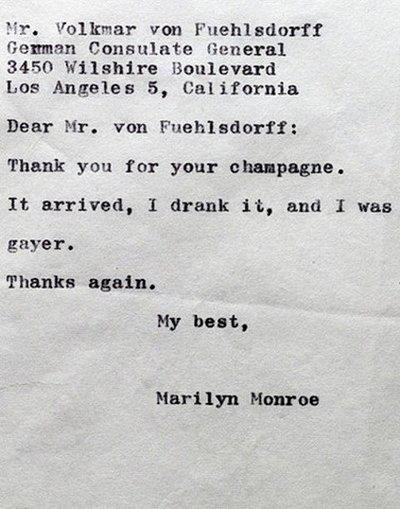
I mean really every note should look like this, yeah?

I mean really every note should look like this, yeah? [Via]

We’ve already spoken at length here about the value of a thank you note, so before we go any further, you should know that we at Uncommon Courtesy are firmly PRO thank you note. You should always be writing thank you notes, it’s a great habit, get into it.

However, we have previously advocated not just for the thank you note, but for the handwritten-in-ink-on-paper-and-mailed thank you note. But the more I think about it, the more I realize I do it mainly because That’s How It’s Done. This is not necessarily a bad thing–culture is defined by things that are just Done, and many things that are just Done are Done for great reasons. But it always helps to question authority once in a while. So I ask, does a formal thank you note need to be handwritten?

Victoria agrees that for minor thank yous (birthday presents, small dinner parties, among friends who you know don’t care), e-mail or a phone call or an in-person thank you is fine. But can you use email to thank someone for a wedding present? To your grandma? Below are some Pros and Cons for handwritten notes, so make your own choice, and let’s discuss more in the comments!

PRO: A handwritten note shows you’ve put effort into the thank you. Type out two sentences in email with no subject? That comes off as sloppy and lazy. But to write out your thanks on a card, address it and stamp it means there is physical evidence of how much thought you’ve put into it. You don’t even need to read the note to know that the sender is thankful, they spent at least 10 minutes getting the thing together for you!

CON: There is nothing inherently rude about email. I get that the medium is used mainly for sending links of funny gifs, but let’s face it, there’s nothing actually lazy or informal about email. There is nothing inherently formal or informal about any medium (ok maybe Snapchat), and email is our primary mode of written communication now. If you format your email like a letter and put thought into it, it will sound just as thoughtful. For instance, a few weeks ago I got an email from an editor of mine, saying how much she appreciates my work and being able to work with me. I nearly started crying, because it did not matter how that information was delivered to me; I felt appreciated. Of course, some people will ignore the message and judge the medium, but ultimately that’s their problem.

PRO: Supports the postal service. Our postal service is losing money! They’re shutting down branches everywhere! I used to be able to walk two blocks to my post office, and now I have to take a bus to get there, and it sucks. Every time you buy stamps and send letters, you’re supporting America and jobs and making sure your local post office doesn’t turn into another Rite Aid. And honestly, getting mail is great. It’s a small but joyful moment to open your mailbox and see something other than credit card offers and a random Pottery Barn catalog that you never signed up for. You can be responsible for giving someone that moment.

CON: Wastes paper. Handwritten notes require stationery and stationery is made on paper and paper is made from trees. There’s no way around it. Ok, I guess you can use paper made from bananas or hemp or something now, but you’re still taking things from nature, processing them, and then writing on them instead of letting them grow. If you’ve just gotten married, that is a hell of a lot of pieces of paper and envelopes to use just to ensure everyone gets thanked, when you could say what you want to say just as well by typing it out online. Oh and did I mention stationery is expensive? The basic cards I use are still $17 for 28 cards/envelopes, which I run out of fast, and which are not nearly as “formal” as some situations may dictate. Gmail, however, is free.

PRO: The note is automatically a keepsake. I have one thank you note on my fridge, written on beautiful stationery with stamped flowers, thanking me and my fiance for coming to the sender’s surprise birthday party. It’s written so well, and the paper is so pretty, and I couldn’t help display it for a while. And this is just from a friend! I’m sure you have an uncle somewhere who has saved every single thing you’ve sent him, and he would be elated to get another note to add to the collection. And then down the line you can look at these cards with your kids to teach them about manners, and handwriting, and all sorts of stuff.

CON: Your note will most likely be thrown out. I have one thank you note on my fridge, because (sorry) all the others have been thrown out. Not immediately, not before reading them and appreciating the sentiment and all that, but eventually they’re thrown out. Maybe within a week? Certainly when I open my desk drawer and find a bunch of notes in there. This is a fact of life: no matter how good your intentions and beautiful your work, all things decay. Memories fade and the legacies we try to leave behind will surely be forgotten. Best come to terms with this now.

These Pros and Cons will have different weight to different people. Maybe you’re a rabid environmentalist who doesn’t care that your cousin thinks an email is tacky. Maybe you’re a hoarder who doesn’t understand how anyone could throw away a handwritten note. Maybe you hate the Postal Service and want to watch it burn. This is something you have to figure out for yourself. Personally, I’m wrestling with it, because as much as I generally think cards are wasteful, I do enjoy writing, sending, and receiving letters and thank you notes.