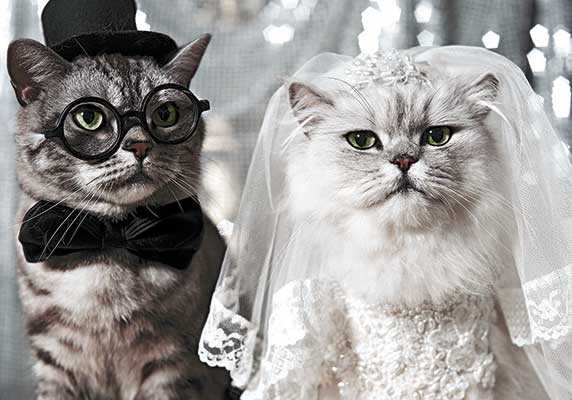
Thank Goodness We Don’t Have That Anymore: Honeymoon Edition

It’s just not a honeymoon without a giant champagne glass bathtub.

Jaya is currently on her honeymoon, so you are stuck with just me for a few weeks. Given that, I thought it would be fun to discuss some of the old etiquette surrounding honeymoons. Today, honeymoons are pretty much a free for all (except some slight continued controversy over honeymoon registries) with no real etiquette attached to them at all.

The oldest meaning of honeymoon probably comes down to being a literal honey moon, in which in mead-loving England, newlyweds were given a month’s supply of the honey based drink and left alone together.

Sometime in the Victorian period, couples started traveling around after the wedding to visit far flung friends and relatives who were unable to attend the celebration.

Then a bit later, wealthy families started paying for big trips to Europe and from there the idea of a wedding trip trickled down to the masses. And now it has reached the point where people are asking ridiculous questions on wedding blogs about whether you can have a honeymoon for less than $3000. The answer is yes (duh.)

However, the early to mid twentieth century idea of a honeymoon had some key differences of etiquette than what we understand today.

First, most couples left for their honeymoon directly from the reception. And they left fairly early! Remember, when the bride’s parents were paying for the wedding, the couple were the guests of honor and were expected to leave fairly early since no one else could leave before them.

So after hanging out at the reception for a while, they would head into another room to change into their “going away clothes.” Btw, it was at this point that the bride would throw her bouquet (and no garter tossing- as far as I can tell that was invented sometime in the 60s or 70s). She would basically go up the stairs a bit, her bridesmaids would congregate at the bottom of the stairs, and she would throw the bouquet. No playing of Single Ladies necessary. Once changed, the couple would meet at the top of the stairs. All their guests would have congregated in two lines coming out from the stairs and the couple would run between the two lines as rice was tossed at them, and out to their getaway car (which the groomsmen would have decorated with old cans and shoes and “Just Married.”)

The honeymoon itself was 100% the responsibility of the groom, planning and paying (except if generous parents gave some money to him). A lot of the time, the honeymoon would be a surprise to the bride and she wouldn’t know where they were going until they got there. Often, the groom would enlist his best man to help him with the execution of the surprise, he might take their luggage to the train or the hotel so it will be there and waiting for them, he might also check into the hotel for the groom and get the key, and even put flowers in the room.

So there you have it. Now tell me all about where you went on your honeymoon. What about your parents and grandparents? Personally, I have not yet been on a honeymoon, but my parents went to Egypt on theirs and one set of grandparents went camping for a couple of weeks, and the other set went horseback riding in Virginia or something similar (they kept the brochure and we still have it at my parent’s house! Next time I visit, I will scan it so you can see what a 1946 honeymoon might have been like). Currently my favorite honeymoon idea is a road trip around New England, (the nice relaxing kind of road trip where you can stop and poke around in cute towns) staying B&Bs. Someone should make a dating site based on ideal honeymoons.


How To Take Criticism

thecriticI’m going to break it to you now and tell you that you aren’t perfect. I know, it’s hard to hear, but it’s okay because no one expects you to be. People know you’re trying your best, and will mess up sometimes. But the best way to remind them that you indeed are trying your best is to learn to take criticism well.

Taking criticism overall means listening to what the other person has to say and seriously considering it before deciding whether you agree or not. You don’t have to agree completely, but consider the source. Is the person criticizing your work someone who knows the field? Is your friend criticizing you someone whose opinion you generally trust? Is it just another human who seems to care about the issue at hand, and should be treated with respect?

There are two main reactions to being criticized: getting defensive, and getting mopey. Both are terrible and you should do your best to avoid them, but both are understandable. Who hasn’t gotten defensive at being criticized? Your thoughts and actions are precious and special, and also probably reasonable! You want to protect them! Perhaps you start down the road of justification, explaining why you said what you said or did what you did, in hopes that the other person just didn’t understand what you were going for. Perhaps you accuse them of being ignorant, or illogical, or just mean. Yes, there are people who just like to be mean, or are seriously ignorant about things, but mainly if someone is taking the time to give you some constructive criticism it’s because they care. Listen, and really try to see if their criticism is meanspirited or if you’re just hurt that you’re getting called out.

The other reaction, which sometimes comes after getting defensive, is getting sad and mopey or mean to the point where the person criticizing you now feels that it’s their job to comfort you and tell you it’s not your fault. This may not be intentional, but in a way it’s a worse move than getting defensive, because now the blame is on the person who criticized you and hurt your feelings, instead of you for most likely doing something wrong in the first place. Symptoms of mopey-ness include: self pity, needless guilt, and endless apologizing.

This is not to say that you shouldn’t feel guilty and apologize, but that you don’t want those emotions to turn into the focus of the conversation. And the thing is, few people actually want you to feel bad about yourself when giving constructive criticism. They just want you to stop doing the one thing you were doing.

So what should you do? Well, if you see how you were wrong, you should apologize and vow to not make the same mistake moving forward. And then you should…not make the same mistake moving forward. It’s that easy! You don’t have to say anything else! Actually, you probably shouldn’t say anything else. Maybe you can ask how you can remedy the situation immediately, if you happened to offend someone, but otherwise just make the required changes and get on with your life.

Every once in a while you may receive criticism you honestly don’t agree with, even after considering the source and doing deep soul-searching about your own biases and opinions and such. Then, and only then, do you not have to apologize. You probably shouldn’t even respond, and if you do, it can be along the lines of “thank you for your input.”


What to Write on a Registry Note?

Do people still register in the store with these little scanners? [Via flickr user salvationmedia]

Dear Uncommon Courtesy,

What should I write on the “note” that gets included on the packaging when buying a wedding gift off the registry? Do I then follow up with a card?

Sincerely,

Wanting to Give the Appropriate Congratulations

Official Etiquette:

Miss Manners doesn’t believe in registries in the first place, so she doesn’t really have any advice about this.

Our Take:

Victoria: As a person with a wedding registry, what do people write on the registry packaging that they send you? And then do they follow up with a card?

Jaya: So far I’ve never had anyone follow up with a card

Victoria: Really? I always do.

Jaya: I personally find it unnecessary. They know who it’s from, they know you’re happy for them, why waste paper?

Victoria: OH! You know what, I bet a lot of people will bring them to the reception. You will have to give an update after the wedding.

Jaya: So some examples of what we’ve received:

Aunt and uncle wrote “Congratulations on this very special day! We love you! ”

Mom’s friend wrote “A toast to many wonderful years together. Cheers! And all best wishes!” (she got us some glasses and a cocktail shaker)

Matt’s great aunt said “Have a happy life together.” The period seemed ominous

Victoria: Hahah those are amazing.

Jaya: Part of what I like about the registry I used is they have a list of who got you what, and you can track if you’ve already sent a thank you note.

Victoria: That’s nice! Yeah, even if the registry does that I think its a good idea to make sure you put your name in a message somewhere just to make sure that the couple does know who its from.

Jaya: Do you have to send a thank you note for a card? Like, a card with no money in it?

Victoria: Nope, I mean, maybe if all they got you was a card but came from far away, you might still consider writing a note.I think it’s becoming more important as people get more spread out and have big weddings that people want to attend, to consider people’s “presence to be their present” and acknowledge it in the same way they do for a physical gift.

Rude Things You Will Do While Planning A Wedding

We talk a lot about weddings here, because for many adults it’s the first time the World of Etiquette descends on them in such a massive way. I’m having a wedding tomorrow. I’m sure it will be lovely, and I used much of Victoria’s and my own advice in planning it in as polite a way as possible.

But I have a secret for you–even if you’re the editor of a minor etiquette blog, you will fuck up. You will do some tactless things and commit some faux pases. Some will be out of thoughtlessness, and some will come after you’ve thought everything through and said “fuck it,” and you will not know if it goes unnoticed but you also will not care. Here are a few things we did:

  • Got overexcited and emailed a bunch of friends for their addresses with the hint that it was for invitations, before we were solid on how many people we could invite, and then didn’t invite some people on that list.
  • Threw an impromptu “engagement party” by inviting a bunch of local friends to a bar, including people who were ultimately not invited to the wedding. (I justify it in that it was clearly not an Official Wedding Event.)
  • Had an engagement party thrown for us (by my grandmother) which included guests not invited to the wedding. (This was an Official Wedding Event, but we did not have control over it.)
  • Asked people to turn of their phones/not take pictures during the ceremony (which some people think is rude but Victoria assures me is not.)
  • Invited people and not their spouses or long-term partners.
  • Invited some people within one “tier” of relation and not others.
  • Had a B-list.
  • Not had seating charts, which is apparently Not Done if you have over 50 guests. The justification is that we went to a wedding of 120 with no seats and everyone figured it out just fine.
  • Not realized we had to actually tell people our plans about day-after breakfast or afterparties or anything.
  • Ignored emails with helpful “suggestions” from family members.

More than the actual rude actions though, there have been rude feelings, which I hope you know are okay to have. It’s okay to wish that you could spend the day drinking and partying and not having to say hi to every person. It’s okay to realize that after a year of planning, if you had to do it over, you might not have a wedding in the first place, but accept that that would be impossible feel that way without having planned it already. It’s okay to not have a vegan cake option (sorry, Steve). Make every effort to ensure people have a nice time, but remember that you can’t please everyone. Just don’t apologize for not having wedding favors.

House Cleaner Etiquette

By WPA [Public domain], via Wikimedia Commons

Now that we’ve talked about all the old fashioned kinds of servants and how to treat your fancy live-in servants, let’s get real and talk about the only kind of “help” we are ever likely to have (if we are lucky!).

  • Clean up your mess! There is much hardee-haring over the idea of cleaning up for your house cleaner, but seriously, man, that person is there to remove dirt, not organize your junk. Clear off surfaces, stash stuff, pull all your makeup and potions off your bathroom counters.
  • Especially don’t leave anything gross out. Dirty undies go in the hamper, not as a surprise under the bed.
  • Stay out of the way. If you can, it’s almost best not to be there at all so that it feels like some helpful brownies have come in and worked their magic, but if you must be home while the cleaner is there, move to the bedroom when they are in the living room and then switch.
  • Don’t hover. They are pros and know what they are doing. If you find fault with the cleaning, either explain before their next visit or find someone new who jives with your expectations.
  • Discuss what the cleaner will and will not do before they get there. Some will do laundry/dishes, others won’t. Keep in mind if you ask them to do anything extra, they will probably charge you extra.
  • You don’t need to tip, but if you use an individual person instead of a service, a “holiday bonus” of the cost of one visit is pretty common. Cleaning services usually don’t send the same person/people each time, so a one time bonus isn’t that useful.
  • It should go without being said that you shouldn’t be rude to, scream at, or otherwise demean your cleaner.
  • This is one service where I don’t think haggling is appropriate. They are a professional and probably have a set price for their service.