Thank Goodness We Don’t Have To Write Letters Anymore, Right Millenials?

Clippy-letterI hesitate to write this, because I am wary of coming firmly on the side of No More Letters. What a shame, right? For a long time in my life I very much romanticized writing letters. I had a wax seal with my initials on it, for gods sake, and for one year in high school decided I’d write all my best friends heartfelt letters for their birthdays instead of getting themselves gifts (I’m so sorry, friends). Even recently I’ve found it comforting to write letters to faraway friends instead of texting or emailing, and I covet my personalized stationery.

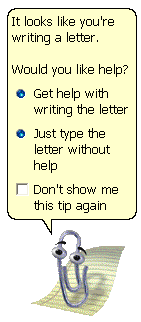
However, the last time I picked up a pen and tried to write an extended thought on a piece of paper I think my hand cramped up. I have the handwriting of a 7-year-old on a hay ride, and between trying to make sure anything I write down is actually legible, or being like “Yes Word paperclip I am trying to write a letter, YOU’RE SUCH A GENIUS,” or making sure that after all is said and done the damn paper actually gets to where it’s going (quite a few of our wedding invitations mysteriously never made it to their destinations), the art of letter writing is losing its allure, and I think I might be done. I don’t want to give a definitive answer, but some days I really appreciate Gmail.

But, obviously, writing letters has been a huge part of how people communicated. The Polite Letter Writer, 1860, states, “Had letters been known at the beginning of the world, epistolary writing would have been as old as love and friendship, for as soon as they began to flourish, the verbal messenger was dropped, the language of the heart was committed to characters that faithfully preserved it, secrecy was maintained, and social intercourse rendered more free and pleasant.” Nice, right?

The Polite Letter Writer has a whole guide for many types of letters, but there are some basic rules. First, make sure you spell everything correctly, a rule that gives me heart palpitations because I rely heavily on those squiggly red lines to let me know what I do wrong. Also, “vulgarism in language” suggests you’d be bad company, and “Proverbial expressions and trite sayings are the flowers of the rhetoric of a low-bred man.” So, you know, say what you mean. She then goes on for about ten pages about how to craft your natural writing style, which I’m sure is a lovely skill to have, but it’s all about studying the works of eminent poets but not actually imitating them, and I’d rather just send a Futurama .gif. (Hahah some Baby Boomer just read that and had a heart attack. Sorry guys, sorry for keeping it real.)

Most of the letter writing guides I’ve found follow the same format, and it’s EXHAUSTING. I mean, just look at the Table of Contents for Martine’s Perfect Letter Writer:

letter contents

You don’t even get to ‘How to begin a Letter” until 20 pages in, and that tip is literally start writing two-inches down from the top of the paper. It’s madness. Here are some other outdated tips for writing all day long.

  • If you’re writing a letter to someone you don’t know well, end with “Your obedient Servant.” As you get friendlier you can move up to “Yours faithfully” and even to “Yours very sincerely.”
  • “Honored sir” is terribly antiquated.
  • “Never sent a note to  person who is your superior.”
  • “Postscripts are generally indicative of thoughtlessness, and should be avoided.”
  • “Never write ‘I saw 5 birds’.”

Of course, there’s no need to throw out the baby with the bathwater (was that too much the rhetoric of a low-bred man?). These books still have good advice, and I’d like to leave you with something that applies whether you’re communicating via written letter or Gchat:

And finally remember that whatever you write is written evidence either of your good sense or your folly, your industry or carelessness, your self control or impatience. What you have once put into the letter box may cost you lasting regret, or be equally important to your whole future welfare. And, for such grave reasons, think before you write and think while you are writing.
Thank Goodness We Don’t Have to Do That Anymore: 1950’s Style Introductions

Be very mature and giggle at the author’s name. We’ll wait.

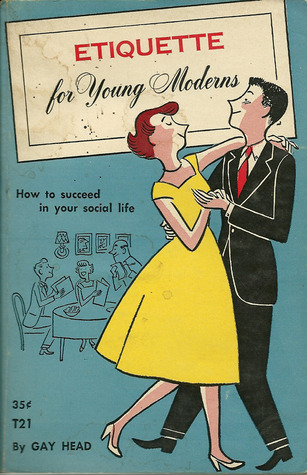
I have this great book called Etiquette for Young Moderns from 1954. It’s exactly what you would expect from a 1950s etiquette book for teens. And it starts out with how to make introductions.

The rules for introductions, according to this book, are pretty simple:

  1. You introduce men and boys to women and girls
  2. You introduce younger people to older people

This means that you say the name of the “socially superior” person first. Their charming examples:

Right: Mother, this is Chad Bowles.

Wrong: Chad, I’d like you to meet my mother.

Right: Mr. Walser, this is my kid brother, Bill.

Wrong: Bill, meet Mr. Walser, principal of Jefferson High.

They also list out acceptable and unacceptable phrases to use during an introduction.

Acceptable:

  • I’d like to introduce
  • I’d like you to meet
  • This is…

Unacceptable:

  • Mostly this has to do with “giving orders” like, “meet” and “shake hands with”
  • May I present is considered too formal for most introductions

When you are introduced to someone, you simply acknowledge it with a “how do you do” or “hello,” but don’t use frilly phrases like “charmed.”

Men and boys must always shake hands when introduced to each other, but when a man is introduced to a woman, it is up to her to extend her hand first!

These rules are very similar to all the rules you will find in older etiquette books such as Emily Post. Like I said before though, I’m just happy if someone introduces people at all, without having to remember who is introduced to whom.

A Different Way of Teaching Your Children Etiquette

Catherine Howard, the product of being reared by fancier relatives.

Send them away to be raised by someone else! It sounds intense, but during the medieval and Renaissance period in England, it was quite common for families to send their children to live with a different family to be taught things like a trade, but also how to behave. For most people, children were sent away in their early teens, to become apprentices and learn a trade. But for the aristocracy, the children were sent away much younger and in turn, their families also took in children from other families. The thinking was that parents loved their children too much to be properly strict with them. It was also believed that children would obey strangers more than their own parents.

A lot of aristocratic children were especially sent to the households of richer relatives or patrons. There, they would act as pages or ladies in waiting. This was especially done to teach the children how to behave at court and all the very fancy court manners (especially if their parents were not wealthy or noble enough to be part of the court themselves). These placements would also help the child to gain a helpful sponsor who was better placed to find them a good position or make a good marriage than the parents themselves. In turn, the children basically acted as servants (remember, ladies and gentlemen in waiting to the Queen and King actually WERE the servants because actual servants were too lowly to serve the Queen and King directly.)

Boys of course, were also prepared to be knights by passing through the stages of page and then squire. Combat training was a big part of their life away from home. Then, of course, as a squire, a medieval boy would be with the knight he served.

Catherine Howard, King Henry VIII’s fifth wife, was raised in the household of her step-grandmother, the Dowager Duchess of Norfolk, who was much more powerful and influential that her own parents. As a influential duchess, a whole gaggle of girls and boys were sent to live in her household and learn from her. However, the Dowager Duchess was somewhat lax in the supervision of these girls and boys and Catherine Howard had some early romances with the boys in the household which later helped convince the King to chop off her head. However, it was her connection to her uncle, the Duke of Norfolk (a powerful member of court) who got her placed in the Court to be noticed by Henry in the first place. So, you win some, you lose some in this system.

Thank Goodness We Don’t Have to Do That Anymore: Distinguish Between Daytime and Evening Attire

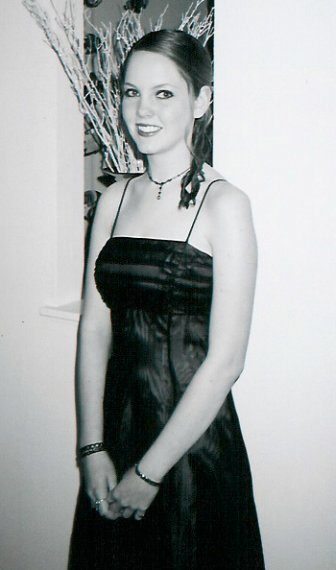
The author dressed for Junior Prom- clearly evening wear.

The author dressed for Junior Prom- clearly evening wear.

I am putting this in “thank goodness we don’t have to do that anymore” because really these days, you can wear whatever you want. Wearing “evening” clothing pieces during daytime cycles through trendiness pretty regularly also. However, there are plenty of people who still see certain things as being for nighttime only. I was shopping with my mom a few years ago and she wouldn’t let me buy an otherwise office-appropriate cardigan because it had sparkly buttons.

While we don’t have to follow Emily Post’s rules about what is appropriate to wear in the morning, the afternoon, evening, dinner at home, dinner out, and in the ballroom (and believe me, there are many, many rules), there are some basics that you can remember.

Things that are for evening only:

  • Shiny fabrics: these are your satins, sequins, some silks (more matte silks are fine for day), velvet, lamé, etc.
  • Sparkles: beading, rhinestones, sequins
  • Evening shoes: very high heels, very strappy/sexy, lots of jewels, metallics (though there are many nice daytime appropriate metallics)
  • Major cleavage is generally considered to be mostly for evening
  • And for the guys: tuxedos. Never wear a tuxedo before 6pm (and yes this includes for weddings. A wedding starting at 5 or so is fine, but not 11am, 2pm, etc.)

Even though we don’t REALLY have to follow these rules, I still find myself packing my fancy rhinestone earrings in my bag and swapping my work earrings if I am going to something fancy after work. What is everyone else’s opinion- are day and evening clothes still a distinction we should make or does anything go? Mariah Carey definitely does not care a bit about what is appropriate (but honestly, Mariah Carey is an exception to everything.)

Thank Goodness We Don’t Have That Anymore: Honeymoon Edition

It’s just not a honeymoon without a giant champagne glass bathtub.

Jaya is currently on her honeymoon, so you are stuck with just me for a few weeks. Given that, I thought it would be fun to discuss some of the old etiquette surrounding honeymoons. Today, honeymoons are pretty much a free for all (except some slight continued controversy over honeymoon registries) with no real etiquette attached to them at all.

The oldest meaning of honeymoon probably comes down to being a literal honey moon, in which in mead-loving England, newlyweds were given a month’s supply of the honey based drink and left alone together.

Sometime in the Victorian period, couples started traveling around after the wedding to visit far flung friends and relatives who were unable to attend the celebration.

Then a bit later, wealthy families started paying for big trips to Europe and from there the idea of a wedding trip trickled down to the masses. And now it has reached the point where people are asking ridiculous questions on wedding blogs about whether you can have a honeymoon for less than $3000. The answer is yes (duh.)

However, the early to mid twentieth century idea of a honeymoon had some key differences of etiquette than what we understand today.

First, most couples left for their honeymoon directly from the reception. And they left fairly early! Remember, when the bride’s parents were paying for the wedding, the couple were the guests of honor and were expected to leave fairly early since no one else could leave before them.

So after hanging out at the reception for a while, they would head into another room to change into their “going away clothes.” Btw, it was at this point that the bride would throw her bouquet (and no garter tossing- as far as I can tell that was invented sometime in the 60s or 70s). She would basically go up the stairs a bit, her bridesmaids would congregate at the bottom of the stairs, and she would throw the bouquet. No playing of Single Ladies necessary. Once changed, the couple would meet at the top of the stairs. All their guests would have congregated in two lines coming out from the stairs and the couple would run between the two lines as rice was tossed at them, and out to their getaway car (which the groomsmen would have decorated with old cans and shoes and “Just Married.”)

The honeymoon itself was 100% the responsibility of the groom, planning and paying (except if generous parents gave some money to him). A lot of the time, the honeymoon would be a surprise to the bride and she wouldn’t know where they were going until they got there. Often, the groom would enlist his best man to help him with the execution of the surprise, he might take their luggage to the train or the hotel so it will be there and waiting for them, he might also check into the hotel for the groom and get the key, and even put flowers in the room.

So there you have it. Now tell me all about where you went on your honeymoon. What about your parents and grandparents? Personally, I have not yet been on a honeymoon, but my parents went to Egypt on theirs and one set of grandparents went camping for a couple of weeks, and the other set went horseback riding in Virginia or something similar (they kept the brochure and we still have it at my parent’s house! Next time I visit, I will scan it so you can see what a 1946 honeymoon might have been like). Currently my favorite honeymoon idea is a road trip around New England, (the nice relaxing kind of road trip where you can stop and poke around in cute towns) staying B&Bs. Someone should make a dating site based on ideal honeymoons.