End of Life Etiquette

I get it, no one really wants to think about dying or make preparations to do so. It’s scary to think about and a little bit overwhelming, but if you don’t do it, you are just making it that much harder for your next of kin to deal with. And at a time when they are already going to be grieving terribly and not really capable of making clear decisions. I’m not going to go far as to say that doing all of this is clearly within the bounds of etiquette, but foisting tasks you find unpleasant onto others is surely impolite so we’re going to go with it.

Obviously, this all doesn’t have to be done at once. When you are young, single, and have few assets, it is pretty simple that everything just goes to your parents. As you acquire things and spouses and children, you should add additional documentation about your wishes. As your children become adults or it becomes clear that you won’t be having children and need to appoint a next of kin, you need to make sure your kids/key person is aware of where everything is and how to access it.

First- make a will. Once you have acquired enough stuff to leave behind, you should decide who you want to have it if you do not want the state to decide. Take the time to appoint an executor, who will be in charge of making sure everything gets done as you wish. Update it as your life changes.

When you have minor children, you need to appoint a caretaker for them in the event of your premature demise. You should probably also discuss it with that person so they don’t get *surprise* kids.

Decide what you want to happen if you become ill and incapacitated. If you have strong feelings on say, pulling the plug vs not, or especially as you get to the REALLY old stage, things like DNR (do not resuscitate) orders, make sure you state them clearly. Appoint someone who knows and respects your wishes to act as Power of Attorney and Medical Power of Attorney  and outline those wishes in a living will. Become an organ donor, if you wish.

Get organized! Make sure you have some kind of list or file of all your:

  • Credit cards and bank accounts
  • Insurance policies (especially life insurance!)
  • All pensions/IRAs/other retirement funds
  • All important documents: wills, living wills, powers of attorney, birth certificates, marriage certificates, social security cards, citizenship records, military records (Veterans can get some pretty nice stuff for their funeral), etc
  • Paperwork for major assets: your cars and house if you have them
  • Major debts- credit cards, mortgage, student loans so your executor can pay them off
  • Make copies of everything! If you die in a plane crash and all your credit cards go with you, how is your next of kin supposed to get the numbers?

If you have a lot of money and assets, talk to a financial planner about organizing a trust, or setting up special school accounts for grandkids and the like.

In the digital age, it’s also important that someone have access to all your social media accounts so they can close them or memorialize them. If you are part of an online community, wouldn’t it be nice if someone were able to tell them that you had died and not just stopped logging on? Of course, there is an app for that- If I Die sends out a message of your choosing if you die.

Plan what happens to your body and the kind of funeral you want to have. Do you want to donate your body to science? Become a crash test dummy? Do you wanted a traditional burial, cremation, natural burial? There are so many options these days! If you have strong feelings, you need to make them known. If you want a burial plot somewhere particular, you should purchase it in advance. Do you want special music played at the funeral? Special food served? Make sure someone knows!

With a little planning and foresight, a difficult time for your most cherished family and friends will be a little bit smoother and easier. And isn’t smoothing relationships part of what etiquette is all about?
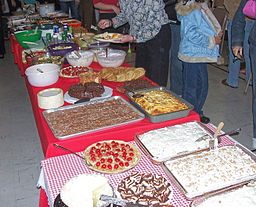
Potluck Etiquette

Church ladies know how to potluck! [Via Wikimedia Commons

Church ladies know how to potluck! [Via Wikimedia Commons

If you are throwing a potluck, you are not “hosting,” you are “organizing” as hosting implies that you are providing everything for a party.

Potlucks are not appropriate for wedding receptions as wedding receptions are supposed to serve as a thank you to the guests for doing the important duty of attending the wedding. However, you can get away with it in certain circumstances: having a VERY small wedding of mostly locals who are enthusiastic about the idea. It’s also a lovely idea to throw a potluck FOR a couple who otherwise wouldn’t have a reception.

For less formal gatherings, a potluck can be a great way for a bunch of people to get together without it being a significant cost for one person/family.

However, if you want to plan a potluck, make it clear when issuing the invitation. Do not pull a bait and switch:

“Hey, do you want to come over for dinner on Saturday?”

“Sure! That sounds so fun!”

“Great! Come at seven and bring a salad to feed 8!”

That is not okay. You must say something like, “Hey everyone, it’s been a while since we’ve seen each other and it would be really fun to hang out and play board games and have dinner on Saturday. We can have it at my place if everyone will bring a dish. I will grill burgers and hot dogs, so bring some sides, desserts, and drinks that go with them!”

And if you are the one with the great idea to host a potluck, please actually make some effort towards planning. In addition to food, you will need serving utensils, plates, cups, silverware, etc. You want to also help guide the party so you don’t all end up bringing potato salad. Making a party potluck doesn’t mean it doesn’t take any work. That being said, don’t be a potluck dictator! Letting people know what categories of items are needed is great, telling people that they must bring a chocolate cake with chocolate frosting is not. Also make sure you have a convenient area to set up the food in a central location so everyone has a chance to access it.

For the potluck attendee, of course it goes without saying that it is beyond rude to show up at a potluck empty-handed. It is also rude to bring significantly less than anyone else. Don’t show up with one $2 2-liter of soda when everyone else is bringing their famous lasagnas and layer cakes! It’s fine if you can’t cook, just say that you will bring all the paper goods or 5 2-liters of soda- something comparable!

Another good rule is to bring at least enough to feed the number of people you are bringing with you plus a few more (ie a couple with two kids should bring way more food than a single person!)

If you have significant and difficult dietary needs, make sure you bring something substantial that you know you will be able to eat, or just decide that potlucks are not your bag and decline the invitation. Don’t get there and complain there is nothing you can eat.

Never criticize a dish someone else brings. If you don’t like it, simply don’t eat it.

Your dish should be ready to serve when you arrive- you won’t be able to guarantee that there will be fridge or oven space (unless you clear it with the host in advance.)

When serving yourself, be sure to take small enough amounts that there will be plenty of food for the people behind you. It sucks to be last in line and have nothing left to eat besides some melting jello salad.

Don’t go back for seconds until everyone has gotten firsts.

Shark Week Etiquette

Shark Week started last night, and it runs through Saturday. For millions of Americans, the Discovery Channel’s annual weeklong marathon of shark-themed documentaries is must-see TV. For many of America’s shark scientists, Shark Week represents something more, and the associated rituals and complicated emotions it stirs can be confusing for their non-scientist friends. We asked David Shiffman, a Ph.D. candidate at the University of Miami studying shark ecology and conservation, to explain his Shark Week traditions.

You mentioned “complicated emotions.” How do shark scientists feel about Shark Week?
Many of us have a love-hate relationship with Shark Week. It’s always exciting to see our favorite animals on TV. However, in recent years, Shark Week’s reputation for factual accuracy is, to put it charitably, mixed. Shark Week can also be exhausting for us. I’ll be watching every episode and providing live fact-checking and commentary on twitter, and I’ve done about 20 media interviews so far. So if you attend a Shark Week viewing party with shark researchers, expect lots of surprisingly loud outbursts—some of joy, and some of frustration or even anger.

Wait, a Shark Week viewing party? Is that really a thing that people do?
Yes.

REALLY?
Yes! Really! Is that really any weirder than attending a Super Bowl viewing party when your team isn’t even playing?

Are there any taboo subjects one should avoid discussing with shark researchers at a Shark Week viewing party?
Hoo boy, there sure are! These are pretty generally applicable to any interactions with marine biologists, but emotions can be particularly raw during the “Most Wonderful Week”. If you’re talking with a graduate student, don’t ask when they are graduating—if it’s soon, they’ll proactively tell you, if it’s something they don’t want to discuss because they’re frustrated by lack of progress, they won’t bring it up.  Don’t ask if they are featured in any Shark Week specials—again, if its good news, they’ll bring it up.  And you shouldn’t ever ask any scientist why they went to graduate school in the sciences instead of medical school medical school.

Oh, this is a big one: don’t ask why we chose to study sharks and not dolphins. Many shark researchers hate dolphins due largely to public misunderstanding of the differences between dolphins and sharks.  Also because people ask us if we are getting graduate degrees in marine biology to become dolphin trainers at Sea World (that job does not require a graduate degree in marine science). People think dolphins are all sweet and innocent and that sharks are scary and mean, but did you know that some male dolphins intentionally kill newborns so that those newborns’ mothers will be more willing to mateThey also torture and kill babies of other species. Dolphins don’t really “save” swimmers from sharks, and in fact sometimes try to rape or drown swimmers. They also have lots of STDs. See, you got me started ranting about dolphins. Don’t do that.

What should I talk about with shark scientists?
Most marine biologists enjoy our work and really enjoy talking about it. Ask us what we’re studying, what our favorite part of our job is, if we have any good stories about working with sharks. Also, most of us are regular people who have lives outside of our jobs, so feel free to ask about whatever you’d talk about with anyone else you’re meeting at a party, like movies, or what your town’s local sportsball team has been up to lately.

Are there any traditional Shark Week viewing party foods or drinks?
Any truly authentic Shark Week viewing party feast should include a seal. If you can’t get a Marine Mammal Protection Act exemption, though, you could always go with gummy sharks, shark fin cupcakes, or shark-shaped watermelon.

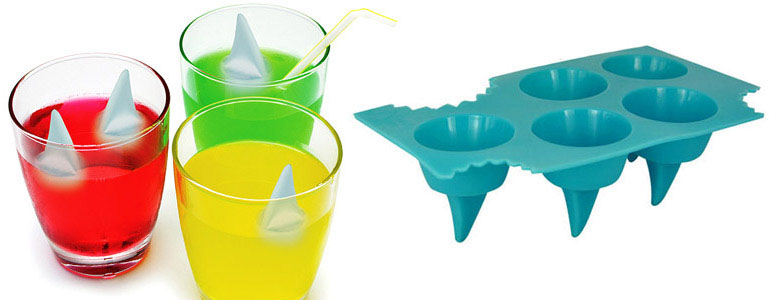
To wash it all down, you’ll need some sharky alcohol. Our great nation is blessed with an increasing variety of beers featuring sharks on the label, including Landshark Lager, Lost Coast Brewery’s Great White Lager, and anything by Dogfish Head Brewery.  Be sure to open these beers with a shark bottle opener. There are some liquors with sharks on the label, including mako vodka. If you aren’t a purist, it’s ok to use liquor featuring any kind of marine life, like Black Seal or Kraken. My personal favorite shark-themed mixed drink recipe is the SharkNado, which is made with sparkling cider, sprite, whiskey, rum, and vodka-soaked gummy sharks.  And for your mixed drinks, be sure to use shark fin shaped ice cubes.


Soaking gummy sharks in vodka in preparation for making a pitcher of SharkNados. Photo: David Shiffman

Soaking gummy sharks in vodka in preparation for making a pitcher of SharkNados. Photo: David Shiffman

Should I bring a gift to a Shark Week viewing party?
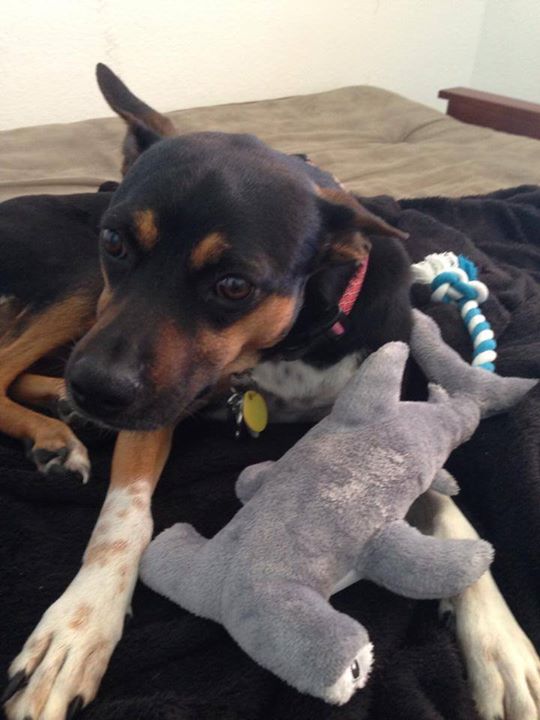
This isn’t strictly necessary, but host gifts are always appreciated at any house party. There are lots of shark-y gifts available.  You can even get a shark-y gift for the host’s pet!

Photo: David Shiffman

Photo: David Shiffman

What should I wear to a Shark Week viewing party?
The dress code is usually Shark Chic. Just wear your favorite article of clothing that has sharks on it.

An example of Shark Chic dress- my fiancée, my friends and I on our way to see Jaws in theaters.

An example of Shark Chic dress- my fiancée, my friends and I on our way to see Jaws in theaters.

Um… what if I don’t have any clothing with sharks on it?
Hahahaha, good one!  I’m pretty sure that everyone has clothes with sharks on them.

What do I do if a situation arises that isn’t covered in this guide?
Feel free to ask me about any Shark Week viewing party etiquette, or any question related to sharks, on my twitter (LINK: Twitter.com/WhySharksMatter) or Facebook Fan Page (Facebook.com/WhySharksMatter). I’m always happy to answer people’s questions.

Happy Shark Week, everyone!

Polishing Silver

Not to get too WASPy, but if you’re going to have and use real silver trays and teapots and all that other good stuff that you inherited from your mom and grandma, you should probably give it a good polish once in a while. And while I wouldn’t exactly call it bad ETIQUETTE, serving your guests with tarnished silver pieces (especially silverware) is definitely bad hosting.

However, polishing silver is really easy, doesn’t take much time, and gives you a high level of satisfaction, making it the best kind of chore.

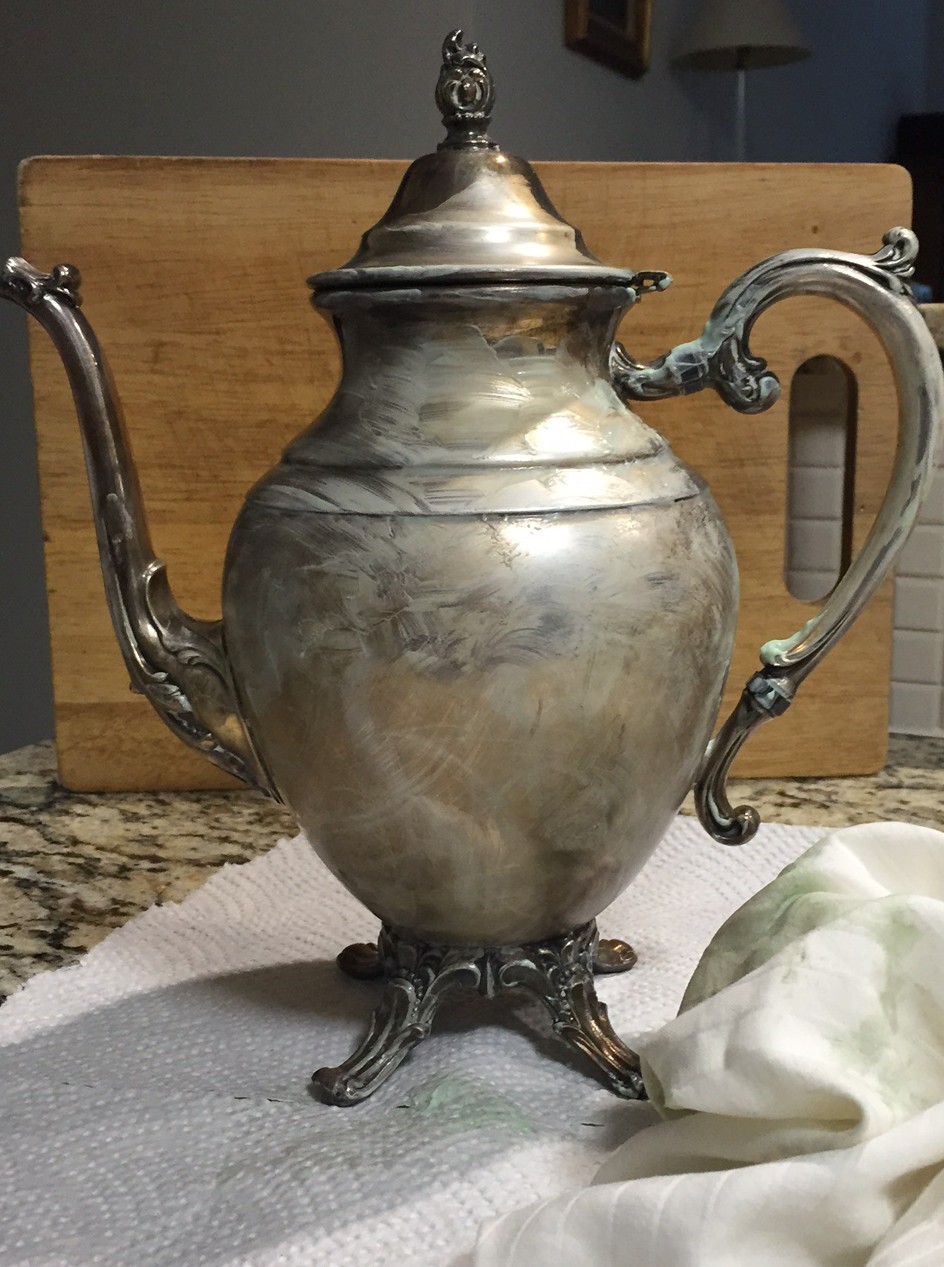
Ugh so gross and tarnished.

Ugh so gross and tarnished.

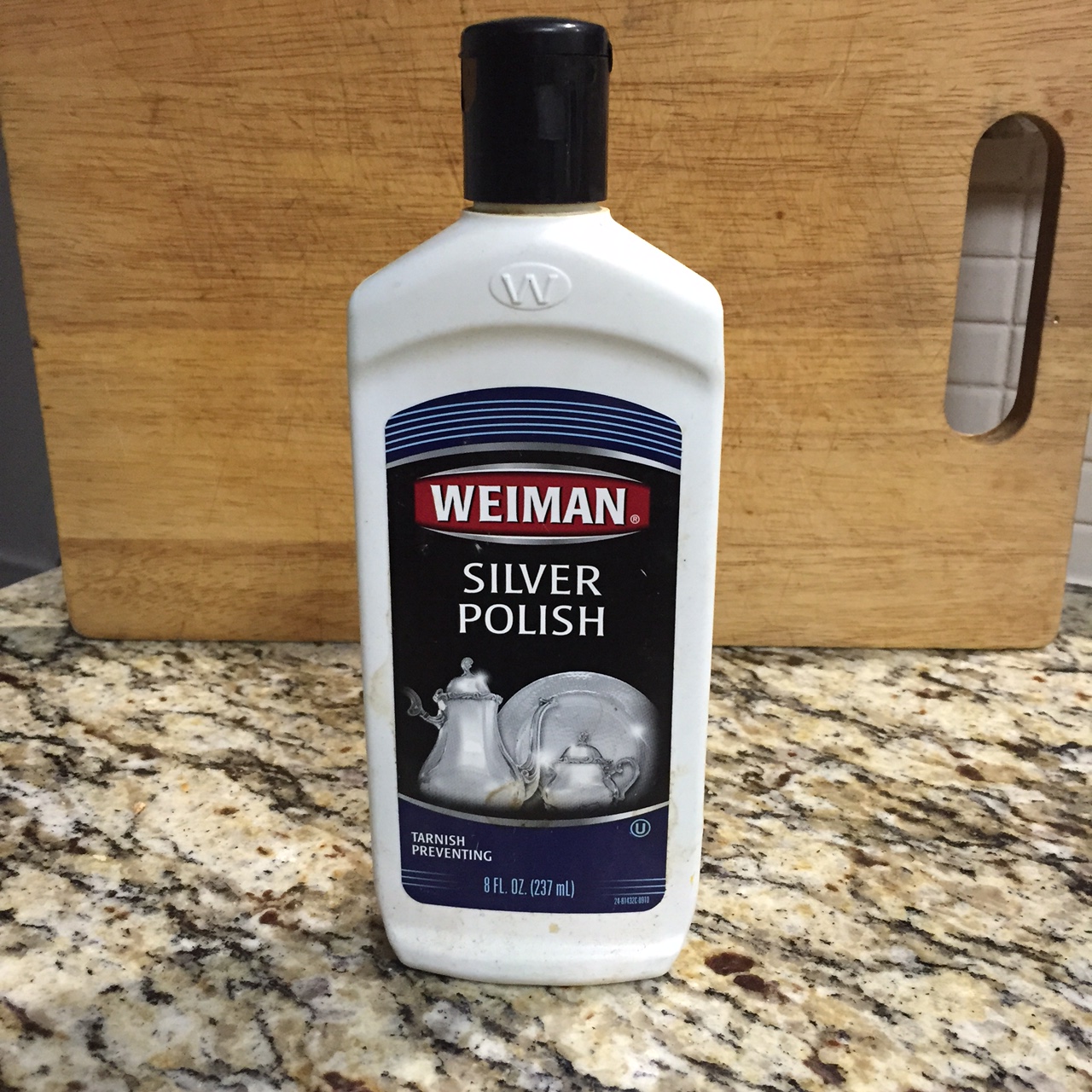
The first step is to go out and get some silver polish if you don’t already have it.

Silver 2

Read the directions for the brand you get carefully, but usually you apply the polish, rub rub rub the piece, then buff it off with a clean cloth. Sometimes you rinse with water too.

Rub rub, buff buff

Rub rub, buff buff

You can also buy special horsehair brushes to polish intricate details on your silver pieces. I only know this because my mom was FURIOUS when I used hers to scrape baked on gunk off a pan when I was about 13.

So shiny!

So shiny!

Once your silver is all nice and shiny you can put it out for display or store it away. If you store it, buy some Anti-Tarnish Strips and pop them into the container with the silver so it will still be all shiny when you pull it out again.


Genealogy Etiquette

The grave in question in bullet [Courtesy Victoria Pratt collection]

The grave in question in bullet 4 [Courtesy Victoria Pratt]

Jaya and I, in addition to being etiquette experts are really into genealogy. We both have branches of our family trees that go way back in America, both to the American Revolution and the Mayflower. I’m even a member of the Daughters of the American Revolution. Family history can be great fun- like being a detective! And it’s very rewarding in having the opportunity to connect with very distant family members.

However, like anything, there are a lot of rude genealogists out there! So here’s how to be polite:

  • Family trees are not subject to copyright. I had a 3rd cousin of my grandfather’s send me a very nasty email after I put the names and dates of our mutual family members into my Ancestry.com family tree. By all means, if you’re relying on a significant chunk of research from one person or website, cite it. But just because you are the one who told me that Charles Smith was born in 1790 and died in 1840 doesn’t mean I can never use that information for my own publically accessible trees! Of course, don’t plagiarize written stories and things that are original work.
  • Ask nicely- if you believe someone has some information that will be useful, ask them nicely for it, don’t demand it. That goes for professionals such as librarians as well.
  • Be careful with original documents so they will be available for future genealogists as well.
  • Don’t make assumptions! I had set up a Find-a-Grave page for one of my ancestors several years ago. Recently someone emailed me through the site and asked me to transfer the page to him as he was a direct descendant. Well, I am ALSO a direct descendant and I was there first, so no. If he had said, I’m a direct descendant of so-and-so and I would love to take control of the page to do this, this, and this and would you be interested in transferring it to me? The answer might have been different.
  • Always be thankful when people help you. Find-a-Grave does this awesome thing where you can submit requests for people to photograph a particular grave in a particular cemetery for you. (This is a very fun hobby, btw!!) I have submitted a few and gotten the photos I asked for. Of course I immediately wrote to the photographer to thank them for taking the time.
  • Don’t publically list information about living people! Ancestry.com hides all information about living people and you should too.
  • Always be willing to collaborate- don’t take and take information from people without giving any information back.
  • Feel free to reach out to people you might be related to, but don’t get mad if they aren’t interested. As weird as it may seem, not everyone is super into genealogy. You might trace some living relatives down through obituaries and then find them on Facebook or whatever, and that can be awesome! I’ve done it and had a great time chatting with someone who is my 5th or 6th cousin. However, I’ve also reached out to people and never heard anything back. It’s fine and totally their choice.
  • Be specific in your information requests. When reaching out to someone who might have a connection to you, make sure that you are specific in who you are researching and how you think they might fit into the other person’s research.
  • Don’t assume everyone is as fascinated by your family tree as you are. Family history is kind of like dreams- utterly fascinating to you, but a total bore to everyone else. If you must talk about it, keep it short and punchy with good anecdotes. For example, some of my family are buried in a small cemetery in the East Village in NYC and I always point it out to people when we are walking by and tell them about the dramatic suicide of one of my ancestors who is buried there.
  • Take rejection well. I get emails from other researchers occasionally who think that someone in my tree might be someone that they are searching for. After getting more information, sometimes it turns out that there’s no actual connection. Most people are fine. However, I emailed one woman back and said something along the lines of “I don’t think I have anyone by that name in my family tree and it doesn’t look like I can help you. Good luck in your research!” and she wrote back that it was the rudest response she had ever gotten and why didn’t I want to hear more about her family tree?

Also, apparently gravestone rubbing is passe now that everyone has digital cameras. Plus it’s bad for the preservation of the inscriptions. Happy family hunting!