Should We Do Away With Gendered Salutations?

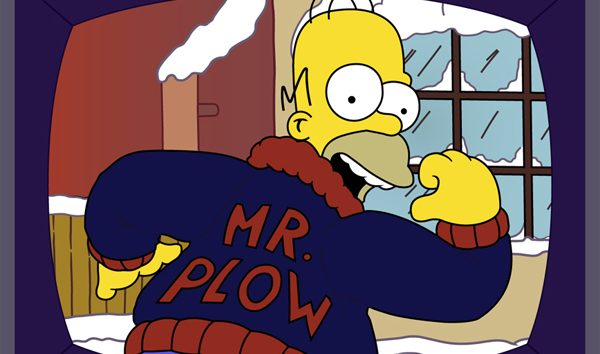
Mr-PlowRecently, CUNY Graduate schools sent out a memo that asks staff to avoid using salutations like “Mr.” and “Mrs.,” and instead asks that staff call students by their full first and last names. We talked about it!

Jaya: I am for this, at least personally. I have no real use for honorifics in my life, and I think we’ve established before they they were sort of a random thing non-noble people came up with in the name of equality? By all means if you’re a doctor or a knight, use one, but all “Ms.” does for me is tell people I’m a woman, which you can usually get by my name/seeing me. I mean, I have a STRONG preference for being called “Ms.” over “Mrs.” (do not call me “Mrs.”), but if I woke up one day and we didn’t use any of them, I wouldn’t miss them.

Victoria: This does not bother me one bit. I kind of like it from a practical standpoint for official correspondence- if everyone is just first name last name, you don’t have to have a human being sitting there being like, okay, this is a male name so it’s Mr. and this is a female name so it’s Ms. Or wondering whether someone is married or what they prefer.

Jaya: That’s true. I guess the one issue is, as some have brought up, that lots of people have valid reasons for why they’d want to use them. In some cultures it’s really disrespectful not to use them. This might just cause more problems than it purports to solve.

Victoria: Someone brought up in the comments of Jezebel that probably when you enroll there is a box or dropdown to choose your honorific so maybe it doesn’t actually save any human time anyway.

Jaya: It says they’re doing this for gender inclusivity, and the Empire State Pride Agenda praised it, saying those titles are an “outdated formality” that risks misrepresentation. So I’m inclined to go with that, especially since I’m not particularly attached to gendered titles anyway. If they’re saying it’s oppressive, it’s my job to listen. I guess the one thing is, if you’re being misgendered, the person who’s doing it is just as likely to do it by calling you “Mr.” as by calling you “John.”

Victoria: Right, it’s minor, but I think it’s great as a general thing, maybe not even about gender. It’s good in terms of women not having to declare their marital status.

Jaya: What do you think of people who see not using those titles as sign of disrespect? One commenter mentioned that civil rights activists made a huge point of using those titles, because people wouldn’t give them that respect often.

Victoria: Yeah, but that was a time when everything was more formal and it was a serious dig to not be called by a title. Like literally you would call your boss Mr. Lastname, which doesn’t happen now as much. Also there are countries that already don’t use honorifics.  In Iceland apparently it is correct to address the prime minister by her first name. By HER first name. No titles= female prime ministers. Definitely correlation = causation, right?

Jaya: Absolutely.

Victoria: But I definitely do see the point where it must be difficult for someone who does not identify as either male or female to explain that to someone who wants to know if they are Mr. or Mrs.

Jaya: Yes, first names are much easier then. It’s becoming increasingly obvious that you shouldn’t need to know someone’s gender unless they want you to know.

Victoria: I can’t even remember the last time someone insisted on calling me Ms. All my professors called me “Victoria.” Like, by the time you are in college, you are an adult and should be treated as one. And adults generally call each other by their first names.

Jaya: Plus, I’d like to think if a student sent an email saying it made them really uncomfortable to be called by their first name, there could be an exception?

Victoria: Oh yeah, for sure.

Jaya: Mainly, I wish more places would just adopt a policy of “ask someone what they want to be called, then call them that.”

Victoria: I think we’re already getting there, hopefully. Most of my mail comes to “Victoria Pratt.” If “Ms.” disappeared I doubt I’d notice. Aside from this particular school- I think it would be great if we could drop titles for formal events without people being offended. It would make addressing, say, wedding invitations a lot easier if you didn’t have to remember what EVERY SINGLE PERSON preferred.

Jaya: God that was such a nightmare.

The Manners of Downton Abbey: A Review

If you didn’t watch the Downton Abbey Season Five US premier live on PBS, you might not have caught this little gem of a documentary that directly followed it. The Manners of Downton Abbey follows Alastair Bruce, the historical advisor for the series, as he helps the cast navigate every little detail of proper Downton etiquette.

Bruce explains how all the details of manners, dress, etc tells everyone everything they needed to know about who you were and were basically as natural as breathing to the people who lived them. He also notes how difficult it is to get the cast to follow the rules in a natural way, because it goes against all the ways modern people act.

The special is divided into five sections:

How to Eat

The dining room is practically the showcase for etiquette and thus is a perfect place to start.

What’s really great, is how clearly Bruce pays attention to details that are barely even visible in the show. For instance, it was proper etiquette for women to place their gloves on their laps, under their napkin,while they ate. On the show, the actresses are required to do this even though the viewers would never know that they were there.

Bruce even explains the reasoning behind etiquette- for example, no one was ever supposed to let their back touch the back of the chair. Then why should chairs have backs? So the footmen have something to hold! He even mentions that Nannies used to put knives down the back of the chair to train children not to touch them.

He explains that the manners are especially important at dinner because, having said grace, the table becomes the Lord’s table and it is respectful to be on your best manners with all the best dishes and silver and everything because of that.

It turns out that the art department sets the table the same way a butler in Edwardian times would have- using a ruler! Unlike a butler, they use their fingers to touch the silver- for a real dinner, the staff would wear gloves so as to not leave any finger prints.

They don’t leave out the servants- they are taught the footman choreography for serving and the proper way to serve, stand, and look. Amusingly, they point out that, unlike real servants, the actors have to do all the complicated serving while stepping over electrical cords and filming equipment.

How to Marry

This section is less about etiquette and more about the social structure. They emphasise the importance of marriage for women, in that they have no position of their own, only position given to them by their husband’s position.

There is a fun bit about the debutante’s presentation at court which has extremely exact etiquette rules about how long your train could and how many feathers you had to wear in your hair. The presentation to the King and Queen showed that she was available as a suitable wife, so of course, it was incredibly important.

They discuss Burke’s Peerage, the very thick book that lists all the important aristocrats in Britain- this was important for matchmaking to ensure that all suitors were…suitable.

For the servants- generally they didn’t. It was not allowed between servants and they didn’t have much free time in which to meet new people. For a woman, if one did manage to get married, she would be expected to immediately leave her job. Being married also split a servant’s loyalty and servants really worked best if their only loyalty was to their service.

How to Behave

Formality was the building block of the aristocracy during this time, and they feared that if they showed any weakness or lessening of etiquette, the whole system would crumble around them.

However, they point out that the aristocracy is actually fairly rude to those around them- for practical reasons. If you have a servant handing you something thousands of times a day and you had to thank them each time, it would get ridiculous.

The servants themselves prided themselves on being invisible and perfectly discreet. They wanted the family they worked for to be absolutely above reproach because a servant’s status came from the status of who they worked for.

How to Dress

Clothes didn’t escape the Edwardian’s attention to every detail. Clothing was the most obvious example of who you were. Aristocrat’s clothing was incredibly expensive and detailed to show their status. But then within that there are even more rules- only married women are allowed to wear tiaras, for example.

They have an outfit for every activity and setting, you could only do that if you had plenty of leisure time to be constantly changing clothes. They do point out that as the show moves through time and clothing loosens so do the women gain more freedoms (not to mention literally being more free to breathe as corsets became less tight.) Men did not escape the stiffness of their clothes- most modern people can imagine what it might be like to wear a corset, but they don’t realize that men’s formal wear was very stiff and difficult to move in as well.

Hats and gloves all had their own rules as well, of course.

How to Make Money

This isn’t in the show, but the definition of a gentleman (as a job title) was someone who didn’t have to work for a living, they made money from their holdings and investments. This is, of course, one of the key plot points in Downton Abbey, how to maintain this lifestyle in a rapidly changing world.

They also discuss “noblesse oblige” (not in those words) but the idea that the lord of the manor provided jobs for everyone who lived there and it was important to keep up the whole staff of servants because if you decided, hey, I don’t need a valet anymore, that meant that that man was now out of a job.


I thought this was a really great program that does really give a strong and accurate insight into how hard they work to pay attention to those details to bring the audience an authentic experience. I was actually really impressed that they have a person doing this for them full time, but I guess it makes sense since there are so many things to keep track of. Alastair Bruce is an incredibly charming host and there was plenty of behind the scenes action, cast interviews, and hilarious clips from the show (prominently featuring Maggie Smith’s commentary on all things etiquette.) I highly highly recommend it for fans of Downton Abbey and all etiquette buffs.

If you didn’t catch it, you can watch the full thing on the PBS website here.

Twitter RTs Are Not A Matter Of Etiquette

I can’t believe I’m actually writing this.

Last Wednesday, Vulture published an essay asking “Does Retweeting Praise Make You A Monster?” It outlines certain rules that have gone unspoken on the social media platform Twitter, but that everyone seems to get very opinionated about, from “don’t steal jokes” to “if someone follows you, you must follow them back.” But one idea that a number of people seem to think is a massive “breach of etiquette” is retweeting praise about yourself.

Author Adam Sternbergh thankfully concludes that it’s a bit of a silly idea, but not before spending a couple thousand words asking various writers and Twitter personalities about the subject. The statement that caught me was by novelist Gabriel Roth, who said:

“I think of Twitter as a cocktail party, and a certain amount of subtle bragging and self-advancement is acceptable at a cocktail party but if you show up and just stand there holding a big poster advertising your book, who’s going to invite you back? Imagine meeting someone at a party who opened a conversation with, ‘This fellow Larry Smidgen from Minneapolis says my book is laugh-out-loud funny — but also surprisingly moving!’”

What struck me is that I’ve heard this comparison of Twitter to a cocktail party before. People have expressed joy at it being a place to mingle, to make jokes, to meet new people and talk about new ideas–that sounds like a great cocktail party to me. But I don’t quite think all the rules of a cocktail party work. After all, in a cocktail party it’s harder to enter or exit a conversation. There’s body language to pay attention to. There are things, for better or worse, that you would say on the Internet, at arms-length from any immediate reaction, that you may not say to someone’s face. It may feel like a party sometimes, but it’s also an entirely different way of having a conversation.

For instance, you can’t retweet anything in a face to face conversation.

Despite having social media platforms like this for well over a decade, many people still operate under the impression that people are always their true selves online. That you are speaking to a person, and not that person’s crafted, representative self. How distant that crafted self is from their true self is different depending on the topic and on the person, but the performative aspect requires at least a second of thought and craft to whatever message one writes, whether it’s about your baby’s first tooth or your new book. People also forget that this is fluid. Twitter may be your personal confession booth one day, but that doesn’t mean it can’t be your publicity platform the next.

Editor Kurt Andersen said in the piece that “it’s a matter of not overdoing it.” I admit having been annoyed when my feed is filled with 50 retweets from the same person, whatever the subject, just as I would be if someone dominated the conversation at a cocktail party. The difference is that online, I can close the tab.

Happy Holidays!

This is my favorite Christmas book. It’s about two dolls who live in a fabulous dollhouse and get dressed up in fancy dresses to celebrate Christmas. You can see the appeal.

Have a Merry Christmas and a very Happy New Year, dear readers! We are taking a short break for the holidays but will be back with a brand new post on January 2!

In the meantime catch up on some relevant posts to guide you through all your holiday etiquette needs:

What Do I Do With The Handyman?

Fun fact: My super's name is Mario

Fun fact: My super’s name is Mario

Dear Uncommon Courtesy,

Like a lot of New York apartments, mine sometimes falls apart and needs fixing. Of course, the repair guy isn’t someone I picked and hired, he’s the dude my landlord knows.

What exactly should I be doing when he’s working on my doorknobs or closets? I feel like a jerk who doesn’t trust him if I hover, but on the other hand I really don’t know this dude, so going into another room seems like a bad idea. He is clearly not interested in talking to me more than necessary, so friendly chatting is out.

Instead, I tend to stand kinda nearby and mess around on my phone (this is what I’m doing right now), which feels rather like the worst of both possibilities.

So what’s the least dickish, but also most sensible, thing to do?

Thanks,

Hovering Over Handyman

Official Etiquette

Amy Vanderbilt wrote of servants: “Try from the beginning of your relationship with a domestic to establish a dignified employer-employee relationship. Make your orders clear, and, whenever possible, put them in writing. From time to time review the work in a friendly manner, giving censure, encouragement, and praise, as needed.”

Our Take

Victoria: Repair guys! It is pretty awkward to figure out what to do. Personally, I pretty much like to leave them alone and not hover. But my apartment is small so I can hear what’s going on.

Jaya: I’ve found myself hovering recently, but that’s only because our Super our neighbor and really chatty. Or I’ll have questions about things.

Victoria: I also think it’s nice to offer some water, especially if it’s hot out.

Jaya: Yes! That’s been my standard: offer water, and then say I’ll be in the living room/bedroom/wherever if they need me. I also think that even if it isn’t someone you picked yourself, it’s not like you’re totally screwed if something happened. You can absolutely hold the landlord accountable if something is stolen or broken, or they do a bad job.

Victoria: Exactly. Or, you know, call the police.

Jaya: It just seems logical that if the landlord signs off on sending someone to your apartment, you can go to them if something goes wrong.

Victoria: Just don’t leave $100 bills on your counter or something like that.

Jaya: Such a problem for all of us. But yeah, I get it. It is a bit weird having someone doing stuff in your house. I feel like most of use aren’t used to having “house help” so we’re just awkward about it.

Victoria: When I was a kid my parents had a cleaning company come sometimes, and when they’d be there after school I’d sort of slink from room to room to avoid them. Interestingly, the “old way” with servants kind of worked–the servants would go up and straighten the bedrooms while everyone was awake and downstairs eating breakfast. And Emily Post admonishes people in the first edition of Etiquette for not giving their servants the time and space they needed to get into the rooms to clean.

Jaya: Psh, who has an “upstairs,” the Rockefellers? When I was a teenager my mom would have a cleaning person sometimes, and there was always a “cleaning for the cleaners” thing that would happen.

Victoria: We had that too, but it makes sense. A lot of companies won’t move stuff to clean under it. Also, if you’re paying for four hours, they won’t be able to get to the actual cleaning/sanitizing if they have to pick up a bunch of junk first.

Jaya: That’s very true. But yeah, I think servant etiquette just doesn’t translate for most people now. If your house is big enough for servant’s quarters then yes, you won’t notice them. But if there’s someone in my house, I know. I also think it has to do with the shame of hiring someone for that, or maybe it’s just me. I’m a capable woman, I should be able to reinstall windows or whatever.

Victoria: You rent though, so that’s part of the deal! It’s not like you’re investing in something you own.