The Ultimate Guide to Bedding Part 2

Part 1 is here.

So now that everyone knows the components of a bed, we can talk about putting it all together into a scrumptious mass of comfort and relaxation.

The first thing you want to remember is that if you always want your bed to be nice and clean and inviting, you have to make it everyday. Nothing makes your bedroom more untidy and stressful than an unmade bed. The inimitable Jolie Kerr runs a bed making challenge every year and every year more people are converted to the joy that is a nicely made bed. This is also great advice for a guest- make the bed everyday and make a marvelous impression on your host.

To make a nice bed, you take your mattress and cover it with either a topper or a mattress pad, or both! Then put your fitted sheet (that’s the one with the elastic in the corners) on top of that. The lay your flat sheet over that (if it’s printed, put the printed side down as that is the “nice” side of the fabric and then you are enveloped in the nice parts of your sheets!) and tuck in the bottom corners (hospital style or whatever is easiest for you). Then put blankets, if you are using them, over that. The next step is to put your pretty comforter/duvet/bedspread/quilt/coverlet on top. There are two main methods of doing this.

  1. Just lay it flat- this is typical for fluffy spreads like comforters and duvets
  2. Lay it flat and then fold the top third backwards, place your sleeping pillows on the fold, and then fold the spread back over the pillows. This is what you frequently see in older motels since it was pretty popular in the 50s/60s/70s. It obviously works better with a flatter spread like a quilt or coverlet. This is a good option if you don’t want to bother with shams or decorative pillows but you still want to disguise your drool-covered and sweat stained sleeping pillows.

This is what this style of covering looks like. [Via]

This is what this style of covering looks like. [Via]

Once your have your covering on, you need to put your pillows on. There are also two methods for this. You can lay your sleeping pillows flat, like you sleep, and put sham pillows (or not) on top of them, like pancakes. Or, you can do what pretty much all bedding stores do and put the sleeping pillows vertical, leaning against the headboard or wall and put the sham pillows in front of them. Then you can put your throw pillows in front of all that.

So, ultimately, it’s not THAT hard to have your bed look like this:

[Via]

[Via]

Wash your sheets once a week or at max once every two weeks, as a rule of thumb. Always wash guest sheets between guests.

When you are a guest, ask your host what they want you to do with your sheets at the end of the visit. Don’t assume they want the bed made up with dirty sheets OR that they want you to strip it.

Of course, if you wish to sleep in a rats nest of unwashed, unmade sheets, that’s pretty much your business.

The Ultimate Guide to Bedding Part 1

The ultimate bed [Via Wikimedia Commons]

The ultimate bed [Via Wikimedia Commons]

This isn’t technically etiquette but it is etiquette adjacent, because hosting is a big thing in etiquette, and a gracious thing to do as a host is provide a nice bed. And if you are a guest, you are going to want to know what all the parts of a bed are so that you don’t accidentally mess it up.

First the components of a bed:

The frame: all beds should have some kind of a frame. Mattresses on the floor are for frat boys. This frame might simply hold the mattress and box spring or it might be connected to a headboard and foot board.

The box spring: this is sort of optional these days as there are many kinds of beds that don’t need them. But if your bed has a basic metal frame at the bottom, the box spring raises the height of the bed, provides a solid platform for the mattress to rest on (hence why a platform bed might not need one), and by preventing contact with the frame, also prevents wear and tear on the mattress.

The bedskirt: Goes between the box spring and the mattress and hangs down to cover the boxspring and frame. It’s entirely decorative but can really help pull the bed together.

The mattress: is pretty self explanatory- its the soft thing you sleep on. It can be made out of springs, memory foam, water, and other things.

Topper: this is an optional addition to make your mattress EXTRA comfy. It can be memory foam, egg-carton foam, or feathers. Basically, its a thin, extra mattress made out of a luxurious material.

Mattress pad: This is something that you put on top of your mattress to protect it from stains. Some will have a topper built into them, like an extra thick pad. Some are just some batting in cheap fabric.

Sheets: Traditionally, a sheet set includes a fitted sheet (with elasticized corners that no one can fold- it took me a year and many youtube videos to figure it out!), a flat sheet, and pillow cases. You can also use an additional flat sheet in place of the fitted sheet, you just have to make hospital corners on each corner to keep it in place.

Sheets can come in a number of different fabrics: cotton, flannel, polyblends, linen, satin, and silk. Generally, you will want to choose natural fibers- 100% cotton, linen, or silk. For cotton, Egyptian cotton makes the softest sheets because it has longer fibers than other cottons. Linen (which is made from the flax plant) is great for warm climates and flannel is great for when it’s cold. If you can’t afford silk sheets (so, um, everyone?), you might be able to spring for just the pillow cases- they are great for your hair and skin (full disclosure, I have a set). Thread count is important, but anything above 300-400 doesn’t matter much because they are just using thinner thread.

Blankets: Blankets are often pretty scratchy, so they are generally used over a flat sheet, for extra warmth in the winter. It does seem like blankets are falling out of favor these days, with a preference for heavier comforters and duvets. In very cold climates, you can use an electric blanket which have heating coils to keep you nice and toasty.

Duvets: A duvet is a down (feathers) or fiber filled blanket. It is plain white and made out of a cheaper material because it is meant to go inside a duvet cover. They are sometimes also called comforters.

Duvet cover: A duvet cover is two sheet-like materials sewn together on three sides and left open on the bottom. You shove your duvet up inside it and use it to cover your bed for both warmth and decoration. The duvet cover is often a pretty pattern that you can use to match to the rest of your bedroom. The advantage of using a duvet cover is that it can be washed easily without harming the expensive duvet inside. It is so easily done, that many people (especially in Europe) forgo a top sheet on their beds all together and use just a duvet to cover themselves (*shudder*).

Comforter: A comforter is very similar to a duvet+cover except that the warm part is directly sewn into the decorative part. Comforters can be very elaborate and are not easily washed, so you will always want to use a sheet with them.

Bedspread/Quilt/Coverlet: This is a heavy fabric that you put over your sheets and blankets to be mostly decorative (though its great in the summer if you find a comforter or blankets to be too hot). It’s a little old fashioned and you don’t see them much.

Pillows: You rest your head on them to sleep. They come in many types: memory foam, fiberfill, down, bran (idk, its a thing), and many others. They generally have utilitarian covers, so you want to put them inside a pillowcase both for comfort and to protect the pillow from your hair and face grease, sweat, and drool. When putting the pillows on the bed, the open side of the pillowcases should be on the outside edge of the bed.

Shams: Shams are very fancy, decorated pillow cases (usually matching or complimenting your duvet cover, comforter, or bedspread). There are two ways to use shams. Either the shams have their own pillows inside them (I use cheap or old gross pillows) and go on top of your sleeping pillows. The other method is to stuff your sleeping pillows inside the shams every morning and put them on the bed like that. You do not sleep on shams! When going to bed at night, either put the shams-with-pillows behind your sleeping pillows up against the wall or headboard, on the floor, or if the sleeping pillows were inside the shams, take the shams off and fold them up and put them on the floor or a chair or something.

Throw pillows: These are decorative pillows and should also not be slept on. They can be piled up in a handy chair or tossed on the floor.

On Friday, I will continue with part two: how to make a bed.

How To Announce You Aren’t Changing Your Name

Your DJ works for you and should follow whatever script you give them. [Via ]

Your DJ works for you and should follow whatever script you give them. [Via]

Recently, A Practical Wedding had a question for a reader about how to let her vendors know she wasn’t changing her name and how she and her husband should be announced at the reception. And like so many etiquette and wedding questions, the solution felt obvious to me. For the vendors, you simply tell them (although, most of them won’t really need to know as they are doing most of the work prior to the wedding?). They are people you have hired and should therefore address you as you prefer.

For the wedding and reception itself, during the ceremony, you can always skip the “I now present Mr. and Mrs. HisLastName” part. And as for the reception, personally I find the big boxing match style introduction with much clapping of hands and stomping of feet to be tacky (especially when you pair up the bridal party and announce them as couples when they are not and make them run in doing some stupid dance or cheer…), but that is a personal preference and it certainly not wrong by etiquette, so you can skip it if you want to skip the whole issue. If you DO want to do a big entrance to the reception, you can have the MC say something like “the happy couple!” or “the Bride and Groom!” or just your first names. It’s your wedding, everyone knows who you are, so no need to get formal with last names!

Of course, none of these options are informing your guests that you are keeping your last name. You don’t HAVE to make an announcement, simply just keep using your name they way you like it. You can give strong hints by using a return address sticker or stamp with your full names on it. Or perhaps include a little card with your thank you notes that says something like “our marital address” with both your full names and your address (this is especially good if you weren’t living together before the wedding or if you are moving shortly after.) You can also just correct people as things come. Like, getting a check addressed to Jane HisLastName when you are Jane YourLastName- call them back and be like, oh, by the way, I’m keeping my last name, luckily the bank was very understanding about depositing the check.” Or just be a little abrasive and say, “Hi Grandma, I’m soooo sorry, but since my last name is Jones not Smith, the bank won’t take the check you sent…”

Now, the be perfectly honest, you are probably going to have to fight assumptions for a few years unless you happen to have really awesome friends and family. Just be firm and consistent with correcting your name and they should get it down eventually. (And you will definitely still get junk mail addressed to the wrong name, but just throw it in the trash and get your anger out!) Or not- my grandma still calls my mom by her childhood nickname that she hates even though she has been going by another name for 30+ years, so.

The New York Times is Wrong- Parties Are Not Dead

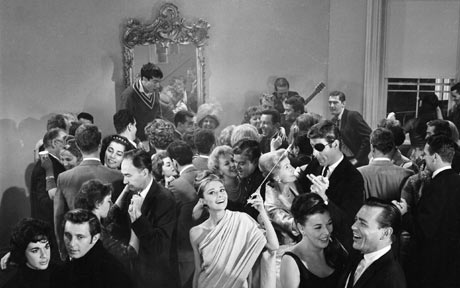
Holly Golightly managed to throw quite a party in a small space with no money.

Holly Golightly managed to throw quite a party in a small space with no money.

Recently, the New York Times’ Style section continued it’s trend for being tone deaf and out of touch by declaring “The Death of the Party”. I made a particularly frustrated noise upon seeing it as I had JUST thrown a party the previous week.

The author, Teddy Wayne, says: “The incidence of house parties in America (and sections of Canada) thrown by and for those in their 20s, the prime years for adult socializing, may be dropping for a raft of technological, economic and cultural reasons.”

Now, I am on the older edge of the “millennial generation” but my experience has absolutely been full of parties. I went to many a raging house party full of underage drinking and shenanigans in high school thanks to some friends with remarkably obliging parents. In college, I was in a sorority so there were plenty of parties there, but even if I wasn’t, Tulane was a party school and there was no lack of them. I even attended Stanford for a semester due to some…hurricane problems, and even they had some particularly wild parties. And now as an adult in New York, it’s almost a constant cycle of parties- some in apartments and some out at bars.

Wayne sites David Foster Wallace’s famous prediction “It’s gonna get easier and easier, and more and more convenient, and more and more pleasurable, to be alone with images on a screen,” which is true, I suppose. But if my Facebook, Twitter, and Instagram feeds are any indication, it’s all of our friends being out at parties and other fun social events that are giving us FOMO rather than pleasure.

He does point out a fear of party throwing saying that these days a keg and some discount chips just don’t cut it, interviewing one girl who said “As for alcohol, her friends have top-shelf taste. “Now it’s bourbon — and not just any bourbon.” Which…can be true, honestly. I throw parties and I can easily spend a hundred dollars or more on food and beverages. But that’s because I like to put out a really nice spread. In my experience, people are perfectly happen to bring things to share and don’t REALLY care that much about what you serve (and if they do, maybe you need better friends?). If hosting at your own apartment is too much, it’s really easy to “host” the festivities at a bar. Definitely in the millennial age group, no one sees anything wrong with that and plenty of people like the excuse to come out as long as someone is doing the actual organizing. It may technically be “rude” to invite people to a thing and then not pay for everything, but who cares when you are in your 20s (and now that I am going to be moving on up into my 30s, I am seeing that age bracket as not so stodgy either!)? Jaya and I usually throw an Uncommon Courtesy anniversary party every year at a great tiki bar and everyone always has a great time.

Meeting at a bar also solves the problem that Wayne proposes that with rents in NYC so high, the younger crowd is all spread out over the city and going from your house in deep Brooklyn to a party in Astoria can take ages and many subway transfers. To that I say pffft anyway. Are these people really that lazy? Didn’t we all move to New York to not stay at home all the time (and I say this as a major homebody!)?

Anyway, I challenge all of you to pick a date, throw a party, invite everyone you know, don’t worry about space or food. It will be fun! And invite some Times reporters, as they don’t seem to get out much.

The Power of An Apology

Leo knows.

Leo knows.

I’ve been noticing lately just how much of a difference an apology makes. It seems like one of those things like please and thank you where, it’s nice to hear but it doesn’t make THAT much difference in your feelings about a situation. But recently, I decided, it actually DOES make a big difference.

I’ve been in several situations where I’ve been irritated by something another commuter, or even a friend, does. And sometimes, these situations really put you on a path towards a bad mood. Like say a friend has made a commitment to doing something for you and then they don’t. You might be bottling it up and feeling really bad towards your friend. Then one day, they say, “hey, I’m really sorry I haven’t done that thing.” Even if their reason is bad, you automatically feel so much better because you feel a bit justified for having your feelings recognized. It’s a very lightening feeling.

Plus, when someone apologizes, even if it’s just for stepping on your toe on the subway, you get to accept the apology and move on rather than stewing about the rude person on the train all day.

So even though it seems SO trivial, please make an effort to give real and sincere apologies when you are in the wrong. It really makes a difference and makes the world a more pleasant place.