Life Is Like A Box Of Chocolates

SeesToday is my birthday, and honestly, my ideal birthday present is a pound of Sees chocolates with a custom assortment of my favorites, all for me!

It turns out that there is actually etiquette for chocolate boxes if you are inclined to share them (I am not inclined)

  • Don’t poke holes in the bottoms of the chocolates so you can see what the flavor is (apparently this a thing people do. I have heard about it. These people are MONSTERS.)
  • Obviously, also don’t bite into a chocolate and then PUT IT BACK if you don’t like it.
  • The little frilly papers. These are a problem. Generally, I will say that you should take the frilly paper when you take the chocolate and throw it away. HOWEVER, with boxes of chocolates that have a little map on the bottom telling you what the flavors are, it is apparently better to leave the wrappers in place so you don’t mess up the placement of the chocolates.
  • When a box is passed around for sharing, don’t take too much time to deliberate. Just chose a chocolate and move the box on to the next person.

What are your favorite kinds of chocolates?

It’s 5 O’Clock Somewhere

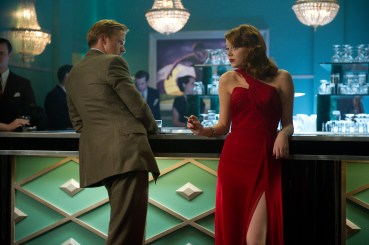
Always be Ryan Gosling or Emma Stone

Always be Ryan Gosling or Emma Stone

So you think you know about cocktails. They have alcohol and you like them.

But there is so much more to it!

Technically a cocktail is a drink with sugar, water, spirits, and bitters. Though a more modern definition is a spirit a mixer, and bitters or other flavoring. Whereas a rum and coke is a highball, or just an alcohol and a mixer. They are called highballs because they are served in a tall, highball, glass.

Other ways to take your alcohol are neat (just the spirit, in a glass), “on the rocks” (just the spirit, over ice), straight (just the spirit, chilled), or up (in a stemmed glass- a martini “straight up” would be a chilled martini in a stemmed glass). A fun way to refer to a measurement of alcohol is by fingers. If you put your finger up to the bottom of the glass and pour enough alcohol into the glass to reach the top of the finger, it’s about one ounce of alcohol, then you can ask for one finger, two fingers, etc. If you are a jokester, you can put your pointer finger and pinky finger out and call THAT two fingers, ha-ha.

There are generally two designations of spirits: top shelf and well. Top shelf is the premium expensive liquor and well is the least expensive. It took me a couple of years of going to bars in college to figure out what well meant. Usually any happy hour specials will note that they apply to well drinks. And that is generally what you will get if you ask for a whiskey and ginger or whatever. If you have a preference, you will have to specify it, or the bartender may ask.


How to stock a bar

To create most basic cocktails, your home bar should have:

  • Vodka
  • Rum
  • Whiskey
  • Gin
  • Tequila
  • Vermouth (both white and red)
  • Bitters
  • Mixers (should include plain club soda or seltzer, coke, 7up, ginger ale)

Barware:

  • Short glasses (rocks glass)
  • Tall glasses (highballs)
  • Wine glasses
  • Stemmed cocktail glass (a martini glass)
  • Champagne flutes
  • Cocktail shaker
  • Ice bucket/tongs
  • Jigger (you can use a regular shot glass too)

Good beginner drinks

Highballs are a great introduction to drinker liquor because they are fairly sweet and diluted. Rum and coke, whiskey and coke, whiskey and ginger ale, 7&7 (bourbon and 7up), cranberry vodka, pineapple vodka, etc are all good choices.

When you want to move up to something a bit more sophisticated, whiskey sours and margaritas.

It’s also a great idea to have something fancy and mature in your pocket for when you might be taken out to a really nice cocktail bar. Of course, it’s great if they have a menu you can pick off of, but a Manhattan, Old Fashioned, or French 75 will impress.

Etiquette:

Knowing what everything is and knowing what you like to drink is the cornerstone of drinking etiquette, but there are a few more tips to keep in mind:

  • Don’t whistle at or snap your fingers at a bartender. Be patient and they will get to you.
  • Have your order ready when they do get to you.
  • Running a tab means that you hand over your credit card and they keep track of what you are drinking and then you settle up at the end of the night. Many bars have a minimum you have to spend to run a tab. When you run a tab, you add the tip at the end.
  • If you are paying in cash, you pay when you receive each drink. Tip a dollar or two per drink each time.
  • Don’t get belligerent. If the bartender cuts you off, accept it. Relatedly, just don’t get THAT drunk anyway (but these things happen, I know.)

The Second Episode of 3rd Rock From the Sun is All About Etiquette

This has nothing to do with this episode, I just thought it was great.

This has nothing to do with this episode, I just thought it was great.

3rd Rock from the Sun is on Netflix, and if you missed it’s original run in the 90s, it has held up pretty well and is worth going back and watching.

I (and my giant crush on Joseph Gordon Levitt <3<3<3) did watch it regularly when it was on, but due to being a fairly young child at the time, much of it went over my head.

Then it came on Netflix, and I was watching it while folding laundry, and realized that aliens coming to Earth is the perfect foil for talking about etiquette. And the second episode is especially full of it.

In this episode, Mary’s date for a wedding cancels, so Dick agrees to fill in. He is excited because it is the first wedding any of the aliens have attended and he is eager to observe an important human ritual. It sounds ridiculous as he describes it:

Dick: It’s really a very fascinating ritual. The ceremony begins with the bride being given away.

Sally objects to the idea of a woman being given away like an object, because she is the best.

Unfortunately, all the aliens come down with a cold. Dick decides to attend the wedding anyway, after taking quite a lot of cold medicine, and hijinks ensue.

  • He asks questions all throughout the ceremony and engages in a shushing war with other guests
  • He battles the maid of honor to catch the bouquet
  • He steals a present from the “prize table” and gives it to Mary
  • He stands up and proposes a toast, not to the bride, but to Mary
  • He then tangos Mary around the room, pushing other people out of the way

However, Dick is so endearing that Mary forgives him for embarrassing her and has a great time at the wedding anyway.

While this kind of behavior wouldn’t fly normally, the aliens in this show are show charming and innocent about human culture that we are really rooting for them to succeed in their mission to study us, pointing out how weird the human experience is along the way.

*Martha Stewart guest stars on this episode, in a dream Harry has, so it’s basically perfection.

The Founding Fathers and Etiquette

So distinguished! [Via Wikimedia Commons]

So distinguished! [Via Wikimedia Commons]

While they weren’t busy declaring independence, fighting a revolution, or bringing forth a new nation, the founding fathers were also writing a bit about etiquette!

George Washington

It makes sense that the most famous founding father was the only one to write a whole BOOK of etiquette. Washington wrote his Rules of Civility at the tender age of 15 in 1745, as part of an educational exercise, probably copying from a European manual of etiquette. As a young man, his social prospects were not that high- his father had died when he was a young teenager and had left a lot of land but not much money to support his mother and four younger siblings. Part of his purpose in learning these rules might have been to better his station in life. Highlights:

  • In the Presence of Others sing not to yourself with a humming Noise, nor Drum, with your Fingers or Feet.
  • Kill no Vermin as Fleas, lice ticks &c in the Sight of Others, if you See any filth or thick Spittle put your foot Dexteriously upon it if it be upon the Cloths of your Companions, Put it off privately, and if it be upon your own Cloths return Thanks to him who puts it off
  • Do not puff up the Cheeks, Loll not out the tongue rub the Hands, or beard, thrust out the lips, or bite them or keep the lips too open or too close.
  • Shew not yourself glad at the Misfortune of another though he were your enemy
  • In Speaking to men of Quality do not lean nor Look them full in the Face, nor approach too near them at lest Keep a full Pace from them.
  • Be not tedious in Discourse, make not many Digressions, nor repeat often the Same manner of Discourse
  • Take no Salt or cut Bread with your Knife Greasy.
  • Let your Recreations be Manfull not Sinfull.
  • Labour to keep alive in your Breast that Little Spark of Celestial fire called Conscience.

Thomas Jefferson

Jefferson believed “it would have been better, in a new country, to have excluded etiquette all together.” When he took office in 1801, he took the opportunity to bring his “republican simplicity” (quite the hypocritical statement for someone who brought a French chef and 86 packing crates full of books, household goods, art, and other fine things back with him from France) to the Executive Branch. He described it as suppression of “all those public forms and ceremonies which tended to familiarize the public eye to the harbingers of another form of government [ie monarchy].”

Washington and Adams had had “presidential levees” which were receptions held by the President and First Lady. Levee was a word that came from European courts and so Jefferson abandoned them in favor of small informal dinners. He also made sure to never be mistaken for a king- choosing to shake hands rather than bow, riding out unaccompanied, and dressing informally. He most famously introduced a “pell mell” policy for dinners and public ceremonies- rather than the guests proceeding in according to rank, they came in in no particular order. This angered a lot of important diplomats, but Jefferson stuck firm to it. Some of Jefferson’s more republican policies were later changed back to a more formal etiquette by subsequent presidents.

Alexander Hamilton

I don’t know if you realized, but recently a musical came out about Alexander Hamilton and it’s pretty good! Though it doesn’t specifically speak about Hamilton’s opinion’s about etiquette, there is a great song called The Ten Duel Commandments that outlines all the rules of the code duello that duelers like Alexander Hamilton (and PS that duel with Aaron Burr was not his first time at the dueling rodeo- he was in at least 10 others before!). Hamilton, being a pretty good guy, actually threw away his first shot by trying not to hit Burr- very gentlemanly of him! But that got him killed, so I guess maybe being a gentleman isn’t all that it’s cracked up to be ¯\_(ツ)_/¯.

Hamilton did actually comment on etiquette occasionally (how could he not have? The man wrote NON-STOP!) In fact, he advised Washington on what protocols seemed correct for a new republic. In a letter from 1789, Hamilton recommends three things:

  1. That the President have a levee once a week for visitors (see Thomas Jefferson above).
  2. That the President not accept invitations but give 2-4 formal dinners per year- on Independence Day, the anniversary of his Inauguration, the day of the Treaty with France, and the day of the final Treaty with Britain. He saw these dinners consisting of high ranking US officials and some foreign officials.
  3. That on levee days, the President host informal dinners for members of the legislature. At all these events, the President was not to stay too long.

In addition, as a loving father, he advised his children on etiquette matters, among other things- writing to daughter Angelica in 1793, he says, “We hope you will in every respect behave in such a manner as will secure to you the good-will and regard of all those with whom you are. If you happen to displease any of them, be always ready to make a frank apology. But the best way is to act with so much politeness, good manners, and circumspection, as never to have occasion to make any apology.” Good advice!

Benjamin Franklin

Among many achievements, the polymath composed a list of 13 virtues to live by as a young man in 1726. While not strictly etiquette, they form the basis on which good etiquette is built upon:

  • Temperance: Eat not to dullness; drink not to elevation
  • Silence: Speak not but what may benefit others or yourself; avoid trifling conversation.
  • Order: Let all your things have their places; let each part of your business have its time.
  • Resolution: Resolve to perform what you ought; perform without fail what you resolve.
  • Frugality: Make no expense but to do good to others or yourself; i.e., waste nothing.
  • Industry: Lose no time; be always employ’d in something useful; cut off all unnecessary actions.
  • Sincerity: Use no hurtful deceit; think innocently and justly, and, if you speak, speak accordingly.
  • Justice: Wrong none by doing injuries, or omitting the benefits that are your duty.
  • Moderation: Avoid extremes; forbear resenting injuries so much as you think they deserve.
  • Cleanliness: Tolerate no uncleanliness in body, clothes, or habitation.
  • Tranquility: Be not disturbed at trifles, or at accidents common or unavoidable.
  • Chastity: Rarely use venery but for health or offspring, never to dullness, weakness, or the injury of your own or another’s peace or reputation.
  • Humility: Imitate Jesus and Socrates.


Sales Parties Are Not Social Events

Tupperware_party

Does anyone even sell Tupperware anymore? [ViaWikimedia Commons]

It’s weird how you hit your late twenties or early thirties and suddenly everyone is all about Avon or Jamberry or Scentsy or whatever the latest thing is. Now, despite my own personal feelings about multi-level marketing (aka selling a product but also recruiting people to work below you so you get a share of their sales), what you do with your time is your own business. But once you start annoying all your friends, coworkers, and relatives, you are being rude, rude, rude.

So, on the seller’s side, to market politely:

  • Don’t bug people, you can maybe reach out to people ONCE to let them know you have starting selling a product.
  • It would be better to just make a general announcement and then people can get in touch with you if they want.
  • Leaving catalogs in the breakroom at work is fine. Pushing your coworkers to host parties or buy product is not okay.
  • Keep your business side separate from your personal side- create a separate Facebook page so people who want to be notified about products can follow it without subjecting your entire friends list to it.
  • Take no for an answer. Many people REALLY do not like the kinds of products that are sold by multi level marketing/direct sales companies. And the tactics that these companies encourage easily alienate people. Ask once, if you must, but be prepared to hear no a lot. If people want to buy stuff from you, they will reach out.

For people who want to host a sales party:

  • Tupperware parties have a cute vintage ring to them. It’s NOT cute to do a bait and switch. Don’t invite people to a cocktail party and then bust out a surprise salesperson. Make it clear from the beginning.
  • Do provide some snacks and drinks, especially if you receive free items in return for your guests purchases.
  • Don’t pressure people to buy things.
  • Don’t invite people who you wouldn’t have invited to a party that wasn’t about sales. Hearing from someone for the first time in a long time to be invited to hear a sales pitch where the host will receive free product feels like being used.
  • Prepare to hear a lot of nos.
  • Don’t call people out who don’t buy something.
  • Realize that many people don’t perceive these events as true social events or parties, so don’t assume that you are repaying your social obligation for people who have entertained you at “real” parties. After all, you didn’t really invite them for their company.
  • If you want to throw these kinds of parties, you should probably also throw non-sales parties too.

For invited guests:

  • You should still RSVP yes or no, but don’t feel at all guilty about saying no.
  • However, don’t be rude about declining- don’t say bad things about the product or salesperson or people who invite people to sales parties.
  • If you get bait and switched, feel free to make your regrets and walk out.
  • Don’t feel obligated to buy anything.