The Best Way To Miss a Thank You Note

Little Miss LateWe talk a lot about thank you notes here, because really, if you have to choose one thing in your life to do that’s polite, thanking people should be it. You can use a spoon for a fork and argue about politics and never offer to bring a bottle of wine to a party, but if you thank someone for the pleasure of their company, you’ll probably still be considered a nice person. Actually, who knows, the person I just described sounds like sort of a dick, but thanking people is still important!

One of the biggest thanking tasks adults face is thanking guests after a big event, and for most people this means a wedding. Currently, the median age at first marriage is around 29 for American men, 27 for American women, so plenty old enough to have mastered a thank you note and know that they should be sent timely. But guess what else happens around age 28? Graduating from grad school. Having enough money to buy a home. Pursuing an active career. Maybe a kid happened, or a parent died, or you moved across the country. Life doesn’t stop for weddings!

Which is why this belated thank you note package makes me so happy.

I recieved this from two friends who got married in March 2012 and had not yet sent out thank you notes. Honestly I didn’t notice, because we’d seen them many times since and always talked about what a good time we had together on that day. But the other day we received a rather thick envelope from them, which included a card that began “Thank you for your patience…” It reads:

To our wonderful family and friends,

Between New Year’s Day 2011 and now we have had: a grad school graduation, a wedding, a giant honeymoon to the other side of the world, several job changes, and more. Through all of that, we had all of these cards sitting at our house waiting…and waiting…and waiting…to be mailed, and it just didn’t happen, because well, we failed. We have owed these to you for quite some time and wanted to take advantage of this opportunity to correct our error. Hope you are doing well, and happy…Veteran’s Day?

Inside were personal thank you notes, photos, holiday cards, etc., all which had clearly been written at the time they should have been sent. Honestly, it was fantastic. You know how we questioned whether someone would feel loved and appreciated getting a thank you note a year later? Well, I did!

The key is, though, that they acknowledged their missteps. If they had just sent a card a year later it would be one thing, but clearly they felt a little bad and wanted to remind everyone they cared. That’s what this whole thing is about. So kudos to the couple, for knowing how to make someone feel thanked.

You Do Not Have A Year To Send Thank You Notes

no-letters-webThe other day, while on our various rounds to wedding websites because we like to see how things are done, we stumbled upon YET ANOTHER person saying something along the lines of “well whatever, even Miss Manners says you have up to a year after the wedding to send thank you notes.” We’ve addressed this before. Miss Manners has called it “slander.” (FYI she says: “It is a popular young brides’ tale (as opposed to an old wives’ tale) that one can take up to a year writing thank-you letters for wedding presents.This is not true, and never has been. Thank-you notes are due right after presents are received.”) And yet the myth persists. Today, we try to figure out just who the hell is perpetuating it.

Victoria: First off, Miss Manners is the STRICTEST etiquette expert. She doesn’t even like registries and will call it a “shopping list.” She pretty much thinks you should psychically figure out what people are getting you and send the note ahead of time so it arrives the same time the gift does, lol.

Jaya: Yeah, and that’s insane. But now I’m worried. If enough people think that you have a year, is that gonna become the rule? Hahah “worried.” Obviously there are bigger issues, but still.

Victoria: I mean, we can only do so much.

Jaya: I personally do not care about settling on a specific time frame. I’ve gotten letters late and it’s been perfectly fine (more on that in another post). I’m just frustrated that people seem to get tied up in the rules and forget about looking at this from a common sense perspective. Waiting a year to send thank you notes just does not make sense. Would you feel very thanked and appreciated if you got a note a year later?

Victoria: Exactly. Besides, then you just have them hanging over your head for a year.

Jaya: I’m guessing if you’re the type of person to think a year is ok, you wouldn’t feel like it’s “hanging over your head.” I  mean maybe they are, but I always felt like if you really wanted to thank someone, you’d do it quickly whether “etiquette” says so or not.

Victoria: Yeah! Like why would you bother sending thank you notes a year after the wedding? At that point no one even remembers, and the people who do are already mad at you about it.

Jaya: Hahahahaha. Ok, so where the hell did this idea that you have a year came from?

Victoria: I think it came from the idea that you do, technically, have a year to send a gift, and people got confused about what you had a year to do. And if someone sends you a gift 8 months later, you are going to be sending out that thank you note 8 months after the wedding. But not for gifts that got there around the wedding! Although, I feel that waiting a year to give a gift is kind of dumb too.

Jaya: Yeah, that seems impractical.

Victoria: On the other hand, maybe it’s wise to wait—especially if you are going to a celeb wedding—they might be divorced by the time you get around to it.

Jaya: MISS MANNERS MADE THAT SAME QUIP ABOUT CELEBRITIES AND QUICK MARRIAGES!

Victoria: I have been reading her column regularly.

Jaya: Maybe it’s that people planning weddings are looking for any excuse not to have to do something.

Victoria: Haha yeah, but that’s a total bridezilla move, to write off something for the courtesy and happiness of your guests/loved ones in order to make something easier for yourself.

Jaya: I have noticed another trend of waiting to send thank you notes so you can include photos. Most of the ones I’ve gotten 4-5 months out have prints of the bride/groom and any of me that the photographer managed to snap. Which is nice, but there is also no reason why you can’t do both.

Victoria: I honestly think most people would prefer a plain old thank you note on time to stewing for 6 months waiting for a photo- which 75% of the guests will throw away. And with a picture of the bride and groom, unless you are super close- what are you going to do with it???

Jaya: Yeah! I am not gonna have my 2nd cousin’s wedding photo framed in my apartment.

Tarot Card Etiquette with Jolie Kerr

51193491_2Look, I don’t care how much you think tarot cards are bullshit, or how sad you think that neon “tarot readings” sign looks in the 2nd floor of that apartment building over the chinese takeout place, or that you don’t get Stevie Nicks’s fashion. If that’s how you think you just probably were never a teenage girl who saw Practical Magic and then started buying all the incense and “spell books” she could at Barnes & Noble, and for that I’m truly sorry.

The thing is tarot is great.

Victoria and I went to college in New Orleans, where opportunities for tarot card readings, fortune telling, and more abounded in Jackson Square. Of course, at 19 we were too intimidated to speak to these women, with their candles and velvet and “do I look like I give a shit if you stop at my booth?” stares. But that’s because we didn’t have the wonderful Jolie Kerr around to tell us what’s what about tarot readings.

Though she’s best known as A Clean Person, Kerr also dabbles in the tarot arts, and we sat down with her to talk about how to get a tarot reading. First rule? Don’t be scared. “Tarot is not fortune telling. What it does is tell you a story based on a question you have in mind. But you can still change the outcome. Nothing is set in stone.” However, if you are a bit nervous, mention that to the person doing your reading so they can take it into account. Also, don’t freak out if you see a card with a scary or violent motif, as most cards are not literal. For instance, pulling “The Tower” (which depicts people falling from a burning building) usually is a sign of a change ahead, not that you will fall from a burning building.

So how do you get a tarot reading? Since this is an art based on intuition, Kerr suggests using your gut. “If you get a sense that someone is trying to rip you off, they probably are. If they don’t look like they know what they’re doing, they probably don’t.” Take a second to talk to them, and see if you feel comfortable. After all, what you’re going for is having a conversation about your life, so you’re going to want to feel comfortable opening up a bit.

Once you’re doing your reading, be sure to follow directions, and do not touch the cards until you’re instructed to. It’s also a good idea to wash your hands before touching the cards, out of respect, and just because a lot of people are probably touching that deck. In general, respect is the name of the game, as it is with many religious or spiritual practices. “If you come in not taking it seriously, you’re wasting both yours and the reader’s time. You may not really believe in it, but try to be open minded, even if just for that moment.”

As for payment, if the reader has prices posted then that’s that, but if they don’t it’s up for debate. Like with most instances of haggling, you can go lower but not too low. For instance, “if you have a friend with you, and the reader says it’s $35 a reading, offer $40 for both of you,” says Kerr. And as for tip? “I think readers would probably feel tipping is disrespectful, though if you have someone you regularly go to, you can tip them on Christmas, or the winter solstice.”

There is a tarot reader who set up shop in a shack next to a mechanic up my block, and thanks to Kerr, I will no longer fear going there! Ok, I still will, but not because I’m worrying about tipping.

Like us on Facebook, follow us on Twitter! Got an etiquette question or funny story to share? Email us at info@uncommon-courtesy.com.

Thank Goodness We Don’t Have To Speak Floriography

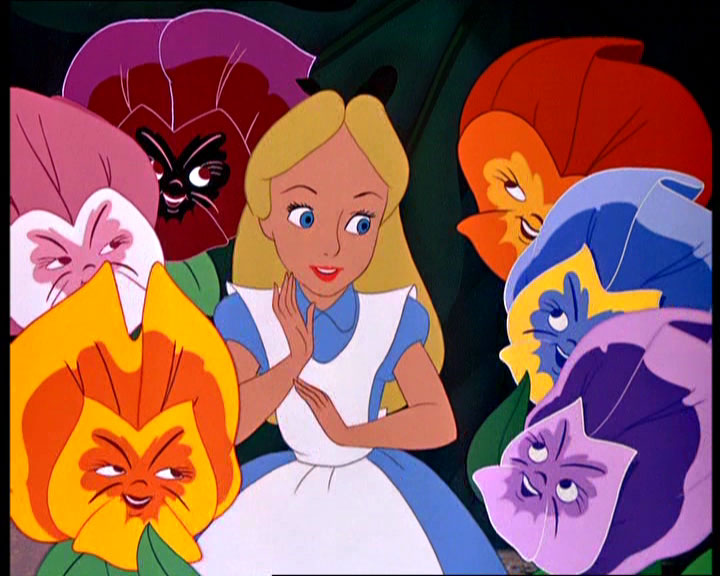
These flowers are trying to tell you something

These flowers are trying to tell you something

If there’s one downside to etiquette is that it’s often all too easy to forego an opportunity to be honest with your feelings. Why tell someone what you really feel when you could vaguely hint at what you mean in codes the other person may or may not be familiar with? How easy it is to escape your emotions in the name of being polite! If you want to go all out, I don’t think there’s a more coded and frustrating way to communicate than the art of  floriography, or flower language, where you better hope you don’t get caught giving chrysanthemums to a business associate.

According to 1891’s Polite Society at Home and Abroad, floral language began in Greece and other “Eastern lands,” but it, like many unnecessarily elaborate etiquette practices, became popular in England during the Victorian era. I don’t know much about the politics of the Victorian era, but I’m assuming it was just like the 1990s, where the economy was good and we didn’t have many problems so we just did things like form boy bands and rollerblade and take Lisa Frank notebooks to our affordable colleges to keep ourselves amused.

Anyway, floriography is a doozy of a practice. Sure, there was the obvious Rose=Love stuff, but I had no idea the sorts of specific feelings that could be communicated through flowers. Want to tell someone your heart weeps for them? Give them the green leaves of Acacia. You’re fascinated with them? Fern. Hand someone Fuschia? You’ve just proposed. And let’s just take a second to appreciate the everlasting pun of saying “your looks freeze me” with an Ice Plant.

Of course, as many ways as there are to compliment someone through flowers, there are as many to insult them. Artillery plant? That means “your shafts are pointless,” a thought we’ve certainly all had, right? Black Mulberry means “I will not survive you,” and Mock Orange means you think the recipient cannot be trusted. And don’t forget to send some Tansy to any country you want to declare war against.

In her book Flowers, The Angels’ Alphabets, Susan Loy argues “There is little evidence that Victorian lovers used the language of flowers for secret communications.” However, that list in Polite Society makes a pretty compelling argument that at least some people took this seriously. The Language of Flowers by Kate Greenway (1900) and The Flowers Personified (1849) had similarly thorough lists, which some people certainly memorized or kept as a quick reference.

What I want to know is how could you ever guarantee the recipient would pick up on what you were putting down? Or,  if you were the recipient, the giver really meant to tell you you’re too ostentatious by giving you some peonies for your birthday? For example, in many European and Asian countries, the chrysanthemums are symbolic of death—one topic in 1946’s The Chrysanthemum and the Sword, which you may remember from Mad Men—whereas in America they’re often thought of as friendly and uplifting. Are you to be blamed for not doing your research, which would have been especially difficult in times where you couldn’t just Google “Japanese Business Etiquette”?

Even though most of these practices have fallen out of fashion (if they ever were used to begin with), floriography remains, and can be just as confusing. According to this infographic, yellow roses can either mean friendship or “I’m betraying you.” And Teleflora has a whole section of their site on the symbolic meaning of funeral flowers, one of the main areas where these codes are still in use. Though honestly, it seems like you can come up with an excuse to use almost any flower, as they mention everything from pink roses to orchids to daffodils.

How Do You Cut The Cheese (Every Pun Intended)

Oh boy, cheese etiquette. This is something near and dear to my heart. Last year for Christmas my fiance got me a beautiful bracelet and a $25 gift certificate to a fancy cheese store and I was 10 times more excited about the cheese. Actually, when I first met my fiance at summer camp, it was taco night and I asked him to go back up to the fixins bar and get me a cup of shredded cheddar cheese. And he did. And then I was violently ill but that’s love right?

Now mostly, I’d say screw cheese etiquette because 90% of the time I enjoy cheese like this:

However, if you’re at a party, snuggies and/or personal cheese knives may be discouraged, and there are a few rules to follow to make sure everyone enjoys the cheese plate equally.

1. Don’t scoop out the cheese from the rind. Oh my god, if you’re one of those finicky people who can’t stand the rind of the creamy, soft cheese it covers then you have no place in my life. And if you’re one of those people who uses a cracker to scoop out brie from its rind, leaving nothing but the shell for everyone else, I’m saying right here that your host has my full permission to publicly call you out and never invite you back. Take a full slice, rind and all, and just eat out the center from the privacy of your plate if you must.

2. Don’t mix knives. This is pretty standard for most foods, but especially for cheese, because as Bonjour Paris puts it “Cheese is alive and flavors of neighboring cheeses are easily absorbed.” THE CHEESE IS ALIVE, EVERYONE!

3. Cut the cheese based on its natural shape. This means if it’s a wheel, cut it in a wedge like a pie. If it’s square, cut off even square slices. If it’s a wedge, cut along the sides so the wedge shape is preserved. In countries where cheese eating is more prevalent, children are taught to cut the first wedge out of a wheel at about the width of a pencil. This is adorable.

4. In France, where cheese is serious business, you should not cut the point off a wedge of cheese (see the point above). They even have a name for when you do it: “breaking the nose.”