Thank Goodness We Don’t Have to Do That Anymore: Dueling Etiquette

Alexander Hamilton and Aaron Burr fight their famous duel
(Alexander Hamilton is the hottest founding father, please discuss.)

Duels were a popular way of hashing out ones differences from the Middle Ages to the late 1800s. During that period, guns became much more accurate and thus you were more likely to actually DIE during a duel. Also, people started going to law school when they didn’t know what to do after graduation, leading to more lawyers who could resolve our differences in a courtroom rather than on a field of honor.

Dueling worked like this:

A gentleman insulted another gentleman and that second gentleman challenged the first to a duel. Each chose a “second,” a person to act as their representative and make sure the fight was fair. The seconds would actually do a lot of the work. They did all the negotiating and trying to calm everyone down, then when that failed, they loaded the guns, counted out the paces, and signaled to fire.

There were several ways to end a duel which had to be agreed on before beginning. It could end at first blood, when one party was too injured to continue, death, or after each man had fired one shot. They could even agree to purposefully miss- apparently in their famous duel, Alexander Hamilton  purposefully missed (or deloped) Aaron Burr. Either Aaron Burr didn’t get the memo or was a true cad because he (obviously) shot to kill. Though, some duelists felt that this practice  implied that you thought the other guy was not worth shooting and was thus even more of an insult.

Some fun dueling etiquette facts:

  • There were several published codes of dueling. The Code Duello in Ireland in 1877 and the Wilson Code by a South Carolina governor in 1838

  • Duels usually took place at dawn in some hidden location like an island in a river to help avoid arrest because you a) can’t be seen and b) the jurisdiction over strange locations is often hazy.

  • Only gentleman were allowed to duel, because you had to have a certain level of honor before it could be insulted. “Lower class” men had different ways of resolving their differences.

  • If a man refused a duel, he might be “posted” meaning a poster would be placed in a public place calling him a coward or some other foul thing until he was SO insulted that he would have to accept the duel.

  • The goal of a duel was not necessarily to kill but to gain satisfaction and show that you were brave enough to face death for your honor.

  • One statistic says that between 1700 and 1845, in England, dueling had a 15% death rate.

  • Back when duels were fought with swords, women would fight topless. The reason for this was so that if they were stabbed, the sword wouldn’t push any of their clothing into the wound, causing infection. Men had never thought of this and many wounded duelers died of sepsis.

How To Be A Decent Person At A Wedding

Just make sure you look like this [Via Perez Hilton]

Just make sure you look like this [Via Perez Hilton]

The big day is finally here! You’ve sent in your RSVP, you’ve selected and sent a gift, you know what to wear, and now it’s time to see your dear friend(s)/family/strange coworker tie the knot! But what happens at a wedding and how do you know what to do?

The Ceremony

  • Show up around 15-20 minutes before the time stated on the invitation. The time on the invitation is generally the time the bride intends to walk down the aisle and you do NOT want to be skittering into the ceremony behind the bride. If you do end up late, wait until the bride is all the way at the end of the aisle and then quietly take a seat in the back.

  • If you are staying at the “official” hotel with a provided shuttle, make sure you know when and where it is picking up so you are on time!

  • Traditionally friends and family of the bride sit on the left and friends and family of the groom sit on the right. If there are two brides or two grooms, these sides may be labeled. If you are close with both,  you sit where there are less people. However, almost no one is going to care if you forget, and many couples may explicitly state that you sit wherever you want.

  • Everyone seems to stand when the bride walks down the aisle, so go with the crowd. Either the officiant should tell everyone to sit, or people should just sit when they start talking, but this doesn’t always happen. There’s not much you can do about it, but I hope if you get stuck standing that the ceremony is pretty short!

  • Obviously turn your cellphone off.

  • Many couples are starting to request that people not take pictures during the ceremony. If they haven’t specifically asked you not to, you still can, but you might consider just enjoying the moment! These days many couples post their official pictures online for people to see later and they are going to be MUCH nicer than an Instagram shot of the bride with everyone’s head in the way. Plus, no couple wants to look out at their guests and see a sea of iPhones.

  • If the ceremony is religious or has unfamiliar elements, hopefully there will be an explanation of anything you might be asked to do or not do. Otherwise, just sit back and watch.

The Reception

  • After the ceremony, there might be a variety of things happening. There might be photos, everyone might head straight into the reception, you might have to go to another location for the reception, etc.

  • When you get to the reception there might be a receiving line (there probably won’t be a receiving line), in which case, you need to stand in line and wait your turn to congratulate the couple, and greet their parents before going into the reception.

  • When you get to the reception, there might be a cocktail hour, there might be a sit down dinner, there might be assigned seats, there might be assigned tables, just go with the crowd when figuring out what to do.

  • I think cash bars are extremely poor hosting (we will get to this later), but they do happen, so keep some emergency cash on you, just in case.

  • There might be a box for cards, so put it there if you brought one.

  • In the olden days, you were supposed to stay until the bride and groom left, but since couples are more likely to stay until the bitter end now, the cake cutting has become the signal of the end of “official” activities and you can properly leave any time after that.

  • There is some debate on whether or not you must say goodbye to the couple before you leave. I say, say goodbye if you can, but don’t worry too much if you can’t find them or they are deep in conversation or dancing.

  • Many etiquette sites will tell you not to get drunk at wedding. I’m not going to say that, but you should take into consideration if you are a good or bad drunk or are likely to get sick or cause problems.

Why Did This Person Send Me A Baby Shower Invite, And Do I Have To Send A Gift?

Just hope these aren't there. [Via Cakewrecks]

Just hope these aren’t there. [Via Cakewrecks]

Dear Uncommon Courtesy,

Hiya!  I love the website so far! And now I have a question of my own.

I just got my first baby shower invitation (yikes).  I am busy that day so I can’t go — but do I still have to send them a present? If it matters, this is an old high school friend who I’m not very close with, and I wasn’t invited to her wedding (which I was totally fine with–I only mention it to illustrate how not-that-close we are and I think it is weird I got this shower invite).  Is it a huge faux pas to forgo a gift? If you tell me to, I will get something small from their registry, otherwise my natural inclination is to buy books and give them to her at some vague point in the future, because I buy everyone books.

Sincerely,

Strangely Showered

OFFICIAL ETIQUETTE

You are under no obligation to send a gift, though, of course, you can if you wish.

OUR TAKE

Jaya:  Baby shower gifts! I actually just got invited to a baby shower, so this is timely.

Victoria:  Nice! Yeah, gifts are totally optional if you can’t go. And for someone not close like this I would totally not send something because…it kind of seems like a gift grab? Showers are tricky, they are really supposed to be just for your super intimate friends, but now we have people inviting all the female wedding guests to them and all kinds of craziness.

Jaya:  Absolutely. And yeah, it does seem like a gift grab. It’s probably not intentional, but presumably this mother-to-be knows they are not that close.

Victoria:  And usually, I think the hostess will get a list of guests from the mother-to-be?

Jaya:  Right. But just inviting everyone you know to every occasion (unless that’s culturally what you do) seems a bit like a ploy for gifts. I don’t know, showers bother me sometimes in general.

Victoria:  I don’t mind them so much for babies, but I wish they would fall out of favor for weddings as they are starting to seem redundant with all the crazy gift giving that is starting to happen. Like, why are people giving you TWO (or MORE!) gifts for the same life event?

Jaya:  And also, you’d think anyone important and supportive in your life would already know you’re having a baby, and would probably buy you a gift.

Victoria:  Yeah, because its kind of like, for the baby!

Jaya:  I have no problem with people throwing parties! I love parties! But yeah, to invite everyone you know, who may not have been a part of this baby’s life already, sounds like you’re trying to get more stuff.

Victoria:  Weirdly, I have heard a thing that it is bad luck to throw a baby shower before the baby is born.

Jaya: Oh is it bad luck?

Victoria:  I have heard that, but it seems like everyone does them before anyway.

Jaya:  Problem solved. Don’t send a gift or the spirits will get you.

Victoria: I guess the idea is that birthin’ babies is dangerous and it might die and then you will have all these presents to deal with, but no one wants to think that way!

Jaya:  Omg Victoria!!!!!

Victoria:  It’s a thing I heard! Not something I believe!!

Jaya:  “Please save the money on buying me a baby bjorn in case I die and you need it to raise my orphan child.”

Victoria:  No no, they are afraid the BABY will die.

Jaya:  Ooooh.

Victoria:  Don’t Indians not give babies names until they are like, 2, because of the same reasons?

Jaya:  Yup! Also because they wait until the baby has a personality, so their name will match who they are. But yeah don’t waste the good names if they’re gonna die of malaria by the time they’re 4 anyway.

Victoria:  Ooooh, that makes a lot of sense actually.

Jaya:  Hi! Ok, back to gifts, and not infant mortality.

Victoria:  Yeaaaah, I really like the idea of sending a classic children’s book.

Jaya:  For this person, I think it’s totally up to her whether to send a gift. Gifts are always optional no matter what, and especially in this case. And I love the books. Good, gender neutral option.

Victoria:  I personally wouldn’t send one, I don’t think. What am I, made of money? No. But maybe if later on they invited me over to come see the baby, I would probably bring something. And then I would squish its little face. Although, I do think if you choose to attend a baby shower, you do need to bring something since the main activity of a shower is gift giving.

Jaya:  I always liked the idea in these things of like, giving something not related to a baby. Like how nice would it be, as a new mother, to have someone give you a nice robe and some bath salts and be like “hey, take a night not as a mom.”

Victoria: Remind me to invite you to my shower if I ever have a baby.

Jaya:  Also, pregnant ladies of the world, do not invite acquaintances to your baby shower. There is probably a lot of vagina talk and that’s weird.

Victoria: I hear there are games where people put melted candy bars in diapers and you have to guess what candy bar it is. Although, again, there is this whole hyping up of every portion of our lives- baby showers, gender reveal parties, specially colored cakes! Where does the madness end??? (I don’t really object because I love parties, but still!)

Jaya:  I also had no idea Baby Registries were a a thing until last year.

Victoria: Yeah, actually, interestingly, while it is not etiquette approved to put registry info on your wedding invite, it is totally okay to put it on shower invitations.

Jaya:  Oh interesting. I guess because you’re not inviting people to your birth. The shower is sort of the one event. Unless you want 60 people to see a baby and your bloody vagina. Which…hyped up!

Victoria: OMG that is absolutely going to happen. What a world we live in.

Jaya:  I can’t wait to get invited to my first birth. What sort of cardstock do you use for that?

Victoria: Although! It would kind of be more traditional! Because it used to be all the ladies of the village would come help out.  Paleo-birthing, it’s gonna be big.

Thank Goodness We Don’t Have To Follow These Crazy Dating Rules

Via Random_fotos

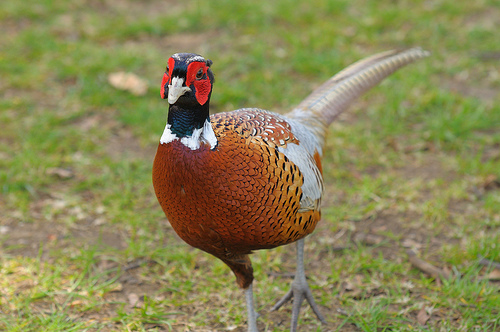
Pheasants make very romantic gifts Via Random_fotos

I think I have only been on one date in my life. I was 16, he was the 19-year-old half-brother of a friend, and we saw Master and Commander and then got pizza. It all happened because he asked me. He straight up asked me. Ok we had been making out on my futon at a party, but afterward he asked if I wanted to go out sometime, and I said yes, and then we went on a date. And even though that was the only date, how fantastic is it that he could just ask and I could just go? Obviously this was not always the case because if not for an elaborate system of rules, someone might get the wrong impression.

Dating as we know it did not even really exist in more western culture until the 1920s, when first-wave feminism and cars collided to pretty much invent the modern teenager. You could get a lot more necking done in the backseat of a model T than on your parent’s porch, and young people in general were rebelling against the Victorian models of etiquette and decorum solidified by their parents. Furthermore, with more women entering the workplace, the idea of what marriage meant was beginning to change. Women began looking for a friend and companion with sexual chemistry in a potential husband, not just someone to provide a house.

But we’re getting ahead of ourselves. Before the radical drunks of the ‘20s, there was courtship. You’ve probably read about it in a Jane Austen novel. A man and a woman of the same social circle are introduced formally, the man makes clear his intentions to woo this woman, and after some supervised interaction they agree to plan a wedding. Romance was not really in the picture the way we experience it today. Cassell’s Hand-Book of Etiquette (1860) states “According to the strict code of our forefathers a gentleman should ask the consent of the parents or guardians before he endeavours to win the affections of the young lady.” Because of that, “parents should be very careful whom they receive as intimate friends,” especially if they have daughters. (However, it was not just men who were in danger. Men should “beware the lady of unmeaning attentions.”)

Once a man decided he wanted to woo a lady, there were a few options. He could hang out at her house. He could hope to run into her at a ball. He could take her out with a chaperone (more on that later). He could also send her gifts of fruit and flowers, though according to Cassell, “in fashionable life, game is almost the only present that acquaintances make of each other.” For the love of god, why has nobody brought me a “Thinking of You” pheasant?

Later, if he wanted to propose, he could do so in a handwritten letter, provided he had received permission from her father first.  However, Gertrude Elizabeth Campbell mentions in her 1893 book Etiquette of Good Society that “it is said in the olden times of [England], the women made the advances, and often became the suitors.” She also mentions that “In the twelfth and thirteenth centuries it seems to have been the height of gentility to hold the lady by the finger only.” In case you wanted to go retro on your next date.

Anyway, back to the more modern age of 100 years ago, when “dates” began to be a thing. How do you know when you’re ready to date? How do you ask someone on one? How do you know when it’s over. Various etiquette books over the years had advice, though some rules are unbreakable. Putnam’s 1913 Handbook of Etiquette says “is it necessary to state that a young lady who desires to hold an enviable position in smart, ceremonious society does not, whether motherless or not, go to restaurants alone with young men for any meal?” Surely it is not!

By the 1950s things had changed even more. Amy Vanderbilt says that parents know when their boy is ready to date when “his shoes will be shined to a glassy polish” and he starts paying attention to all of his ties. However, Vanderbilt offers no advice on just how this boy will ask a girl on a date, saying they “bungle through somehow in the early years of dating, eventually acquiring a certain polished technique only experience can bring.” Great. Once he does ask her on a date, it is the girl’s responsibility to signal when the night is over. To do this, “She places her napkin unfolded at the left of her plate, looks questioningly at her escort and prepares to rise. If he suggests they linger she may do so if she wishes. However, her decision must be abided by.”

Even if you were an adult with a career and your own place, some old rules still applied. Vanderbilt wrote in 1952, “A career girl, from her twenties onward, can accept such an invitation [to a single man’s house] but should not stay beyond ten or ten-thirty. An old rule and a good one is ‘Avoid the appearance of evil.’” No word on what to do with your napkin if you’re a career girl in a bachelor’s pad; we’ll get back to you on that.

How to Take a Compliment

Pretty much

Pretty much

Is anyone actually comfortable taking a compliment? You’re probably not. For this post, we decided to both weigh in. As you may be able to tell, Victoria is much better at it than Jaya. But let’s talk. How do you take a compliment?

Victoria’s View:

Just say thanks, it’s that easy!

But seriously, it is. If you try to deny it or explain it too much, it’s just going to turn into this big awkward thing. Besides, own your awesomeness! You are great and deserve to be told so. I do think if you say “thanks, I got it at ___________” or “thanks, it was my grandmother’s” that’s totally fine and can sometimes be a nice conversation starter.

Jaya’s View:

IT’S NOT THAT EASY OMG. It’s all fine and easy when someone compliments you on an article of clothing. Duh, you can’t take credit for soldering that bracelet or creating the pattern for those pants (but if you did you should totally take credit because clearly you’re the most talented person alive). But what happens when someone compliments you…on you? Most of the time when someone calls me pretty, or says I did a good job writing an article, or says I’m smart I curl up into a ball and start making strange grunting noises until they stop. I’m not kidding. Ask Victoria. I could even feel my face twisting up just writing that sentence, as if admitting that someone has complimented me on being pretty means I think I’m pretty and that means I’m really vain and oh god it’s happening again.

I think a lot of this anxiety comes from the fact that when most people learn “don’t brag,” it bleeds into “don’t admit any good qualities about yourself ever.” Which is a shame because it is so freeing to admit to yourself that you’re good at something. On my more enlightened days, I know I’m pretty and I’m strong and I’m a half-decent writer. This doesn’t mean I think being pretty is important, or that my writing will change the world, just that I like things about myself. And with lots of work, when someone has said “You look nice” or “I liked that article,” I’ve been able to say thanks without any apologies or conditions. Just remember, no one will think you’re a monster for saying “thank you.”


Please follow us on Facebook and Twitter for etiquette news and other fun stuff.