What Is a Marrow Spoon?

I managed to eat at the original M Wells in Queens in the year or so that it was open and the most memorable thing from that dinner was their marrow and escargot dish. It was a full on bone cracked in half so you could get at the marrow with little escargots dotting it, so delicious, though I don’t recall any particularly special utensils with it.

However, if you were a hostess in the 17th or 18th century and you didn’t want your guests sucking on bones at the dinner table, you would have special suuuuuuuper skinny spoons called marrow spoons to allow diners to get inside bones and scoop out all that delicious marrow.

They seem to have fallen out of fashion by the Victorian period or later, Emily Post doesn’t mention them at all.

Luckily for us, Martha Stewart, in all her glory, has a video tutorial of how to use them: http://www.marthastewart.com/916502/how-use-18th-century-marrow-spoons

So tell me, have you eaten marrow? Do you like it? Did you use a marrow spoon?

If You Want, You Can Still Take Etiquette Lessons


The idea of charm school is really quaint at this point. Girls walking with books on their heads, the back of your hand smacked if you pick up the wrong fork or put your elbows on the table, the thought that you need to practice how to curtsey. Most of these are not practical lessons in our lives anymore. But, if you so choose, there are places you can still go for etiquette lessons.

I recently came across the Etiquette School of New York, which has been around for ten years and offers classes in dining and entertaining, teen etiquette, and even corporate etiquette. There are also online classes at It’s All About Etiquette, and Beaumont Etiquette, which features this woman measuring the distance between flatware with a butler’s stick. Of course, these classes come at a price–the Etiquette School of New York’s adult finishing school will set you back $750.

I’m not sure how I feel about this! On one hand, we believe social graces are important and something that should be more general knowledge. I mean, that’s the point of this damn blog. And running these classes is work and nobody should work for free. The instructors are teaching specific skills and should be fairly compensated–no one should be expected to put in time and effort out of the goodness of their own heart. (To that end, click on our ads so we can make money!)

On the other, however, is the concept of privilege. The idea is that by going through these classes you’ll have the upper hand in social and business interactions by learning the “soft skills” you may not learn in college or elsewhere. Guess who already has the upper hand there? People who can afford $750 for finishing school.

No, you don’t need a class to learn how to give someone a firm handshake and look them in the eye while talking to them, or to say “please” and “thank you.” But I worry that the other skills these classes teach–networking, small talk, “how to make a good first impression”–are being taught to the people who were already in the position to be getting those jobs. That, basically, rich white people are taking classes in the rules rich white people created in order to advance more rich white people.

I’m not saying that’s what these schools are explicitly doing, and hey, it would be amazing if all kids got lessons in table manners early. But the inclusivity is the thing. If we’re going to say a general knowledge of etiquette and manners is necessary to social and professional advancement, those lessons should be available to everyone, whether through formal schooling like this or elsewhere. And if not, well, it’s pretty shitty to hire someone because they’re good at networking when they already had the money to learn how to do it. But, you know, put a book on your head. Posture is really important.

What Is The Role Of Godparents?

Growing up, I was a little jealous of people who had godparents who were friends of their parents. My godparents were an aunt and uncle, so I didn’t get any additional gifts or attention. And that sums up my understanding of godparents.

Just kidding. Though, in this day and age, a present at Christmas and maybe a fun outing or two is the most anyone expects out of a godparent after the baptism happens.

The most important role of a godparent, traditionally, is to participate in a child’s baptism. They participate to act as the voice of the child, since infants and small children cannot speak. They generally promise to oversee the child’s spiritual upbringing as well. Usually, one godparent of each sex is chosen: a godmother and a godfather, but sometimes more are chosen. Among the aristocracy, it was very common to ask members of the royal family to be godparents to a) show respect b) hope they will be helpful in the child’s life. This still continues- Queen Elizabeth has 29 godchildren, Prince Charles has 28 (Camilla’s son…), and Prince William has 4 already.

Some religious denominations have rules- Episcopalians must have a baptized Christian as a godparent and Catholics are supposed to have a baptized Catholic in good standing as godparent. Catholics are also not supposed to serve as godparents to non-Catholics (ha- tell that to my Catholic godmother. I was baptized Episcopalian.)

Some other expectations of godparents in the Christian faith:

  • Participation in or recognition of the other sacraments (first communion, confirmation, marriage, etc)
  • Modeling good Christian life
  • Helping support the parents in religious education

So, theoretically, you should choose someone who will really do this, rather than just a friend or relative you are close to. Of course all of this is moot if you are baptizing your child for tradition’s sake and aren’t actually interested in raising them actively Christian. Then, you and the godparents can decide what kind of relationship you are all interested in having with the child.

Many people assume that the godparents are also those who will care for the child in the event of the parents’ deaths. This can sometimes be the case, but the parents must site the guardians in their will, it isn’t automatic (especially if you have multiple children with different godparents!)

Amy Vanderbilt says that “once asked to serve as a godparent, a friend is virtually bound to accept.” Though, I would update this to say if there was no religious (or anti-religious) reason preventing you from accepting. Then she says that the godparent should present the child with an heirloom-type gift that can be passed down- her example from one of her own children was “an engraved Sheffield hot-water plate, fine for keeping his baby food hot but also fine for the time he begins entertaining in his bachelor quarters. The plate will be excellent for hot hors d’oeuvres.”

Do you have godparents? Do you want your children to have godparents? Tell me more in the comments!

The Lady Magazine

Where else do you think you are going to find your staff?

Where else do you think you are going to find your staff?

I don’t know why I never thought to look at The Lady until recently. I subscribe to Town & Country specifically because it seemed like it would be a useful resource for Uncommon Courtesy, but for some reason, I never thought to look up and see what The Lady is like, even though I knew it existed. Now, I won’t be subscribing to it because the print version is 70 Great British Pounds which is EVEN more in American dollars, not even thinking about whether they have an even more expensive rate to ship internationally. Happily for me and for you, they have a website!

The Lady is actually Britain’s longest running weekly magazine- founded in 1885. Even more delightful for me, the founder was Thomas Gibson Bowles, the maternal grandfather of the famous Mitford sisters (Nancy was a contributor at one point, natch.)

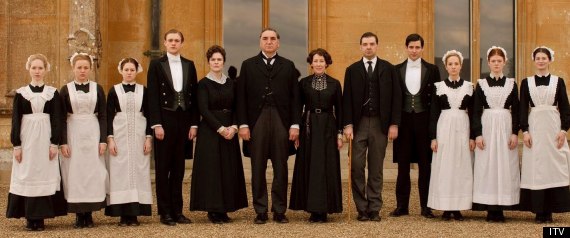
The Lady has also been mentioned on Downton Abbey several times because it was and continues to be THE place for aristocrats to advertize for household help-even the Duchess of Cambridge does it.

Aside from it’s fascinating history and royal associations, the current The Lady is MAGNIFICENT.

First, there are the world famous ads for domestic help:

“Titled Sir and Lady, without children, require a butler and housekeeper for a couple position in a beautiful country house on their estate in Yorkshire.

The suitable couple will be responsible for the smooth running of the house, chauffeuring when required, care of fine antiques, fabrics and furniture, and must be knowledgeable in laundering full clothing and care of silver.  Traditional and formal service skills are necessary.”

Secondly, a column entitled “Nanny Knows Best:”

“It’s a fine line for parents and carers who instinctively protect and cushion children from life’s difficulties. So I’ve always found that somewhere between a stiff upper lip and a gentle warm heart approach is best. Like a spectrum of sorts. Sometimes a child needs a firm but fair hand. Sometimes lots of love and hugs. And sometimes a “you’ll be right” in that moment they’ve fallen over and not sure if crying or getting back up and playing is what they want to do.

Situations require all manner of approaches and not just constant smothering.”

Traditional British culture- like how to host a Burn’s night!

“Food should be absolutely central to the party. The star of the show is normally a haggis which, in a traditional sit-down dinner, is piped in by bagpipes, toasted with a dram of whisky and pierced with a dagger before being eaten.”

Of course they have their own etiquette column:

“Dear Thomas,
My oldest friend always criticises my Christmas presents and accuses me of getting them from charity shops. This year I thought I’d really try to improve. But I’m completely stuck for ideas. Can you help?
Doris Sydenham, Reading”

And the world’s most perfect horoscopes (this is for Scorpio, which is both Jaya’s and my sign):

“Grace and tact will not diminish the power of what you have to say or write. Think: iron fist, velvet glove.”

So, as you can see, this is a must-read for any anglophile or lover of all things pretentious.

Why Is It So Difficult To Accept “No Gifts”?

[Via Emily Orpin]

[Via Emily Orpin]

I’ve been invited to my first wedding where, in lieu of a registry, the couple has asked that anyone inclined donate to one of their favorite charities. It’s a wonderful gesture, and I’ll absolutely be donating, and yet somehow I’m plagued with anxiety over the thought of not giving the couple themselves a gift. Even though they asked that I not! Even though I’ll be giving money elsewhere!

This is, of course, ridiculous. But it’s something that I realize others might feel if presented with the same situation, or even further, if the couple specifies no gifts or spending at all. I think this reaction comes from a good place. We’ve been taught that giving is good, and for multiple reasons–it’s an opportunity to show we care, to show we know the recipient’s taste, and often a physical marker of our presence at an event. But notice that many of those reasons have to do with us more than the recipients. The entire concept of gift giving hinges on one thing: the recipient actually being thankful for the gift.

It’s also difficult to think of someone not being thankful for a gift, because most of us have been taught that money/stuff is good no matter what (yay capitalism). We chide that they must be being coy, and insist on giving small tokens or even large gifts anyway, under the assumption that they’ll be appreciated. Don’t do that! Not only is it disrespectful to the couple’s wishes, it’s disrespectful to their intelligence. It suggests that you know better than them what they actually want, and that they’re being dishonest about their desires.

Here’s another secret (that’s maybe not a secret, maybe I’m just a terrible person): The couple will likely not remember what you got them. Yes, immediately after the wedding I had a mental list of who bought what off the registry, who sent checks, and who gave cards. And I was very thankful for everything we received, and wrote thank you notes indicating so. However, almost two years later, it has all blended into my life. Aside from a few gifts that are distinctly tied to the giver, I can’t really recall who got us our plates or who gave us a check that allowed us to buy plates. I think that’s fine. There’s warmth in my heart for everyone who bought us gifts, and everyone who didn’t but who spent their time and money to celebrate with us.

Gifts are a symbol of love and consideration and joy, but they are not those things. If a couple asks you not to give them gifts, or to donate your money or time elsewhere, they are saying that they don’t need that middleman. But if you’re really freaking out, bring a card.