Birthday Cakes

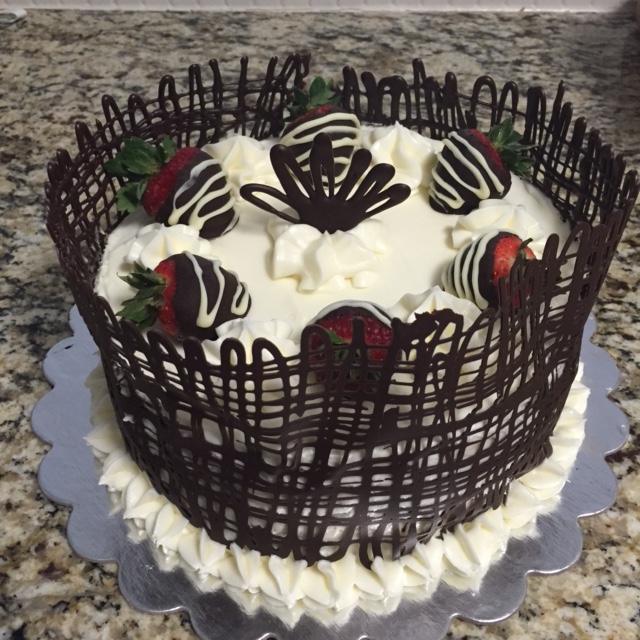
The cake in question (mostly I just want a chance for everyone to admire my beautiful cakes)

The cake in question (mostly I just want a chance for everyone to admire my beautiful cakes)

So, I thought it was extremely commonly understood etiquette that if you are at a birthday party and there is a cake, that it is a Birthday Cake and should not be cut into until Candles Are Lit and Happy Birthday Is Sung, and yet…

So here’s a hot tip that is good most times- don’t be the first to cut into something at a party unless you are told that it is okay.

How To Not Talk To Someone About Their Name

4125yIn this country (the USA, where I’m writing from), I have what is considered an unusual name. It’s important to note that it’s unusual for this country; if you go to India there are plenty of Jayas and Saxenas all over the place, and you’ll be the one out of place with a name like Joseph Tabbert or whatever. What we consider “exotic” is extraordinarily objective, so before we get started, tattoo that into your brain. I do not assume most Americans will have heard my name before, or will know how to pronounce it. There are plenty of Western European names I cannot pronounce (and plenty of Indian names I can’t pronounce, for that matter), and nobody is expecting anyone to get everything right on the first go. What I get frustrated about, often, are follow up questions or inane, racially-coded commentary about my name that, I’m going to guess, the average Mackenzie is not subjected to. I know plenty of people with similarly “foreign” names that share my experiences, but also people with names just considered “unusual,” and thus, game for commentary. Here are a few things I think we’d all appreciate.

  1. Do not make name commentary the first thing you say to someone. Last week I wrote a humorous post about this for The Toast, and it got picked up on a MetaFilter board, where there were no shortage of people arguing about their free-speech right to talk about whatever they want, and PC culture, and how #millennials just need to lighten up, and how when they were kids they talked about their backgrounds and names all the time. NOBODY IS SAYING YOU CAN’T DO THAT. I too grew up in a diverse area and had lots of friends of different backgrounds, and I too spent many recesses talking about where my parents were from, where their parents were from, what our names meant, what other names our parents might have given us, and plenty more. You know why we talked about that? Because we were friends, and shared backgrounds and heritage are what friends talk about. What’s infuriating is when you introduce yourself to someone and the first thing they say is “Wow! What a strange name.” The explanation will probably come in time. Or it won’t, and you’ll live. (Or you can probably just Google it later.)
  2. If you see it written out, do ask how it’s pronounced. Again, nobody is expecting you to know every name in the world, and if you encounter a name you honestly don’t know how to pronounce, ask politely how, without any comment on how “it’s so long” or “you don’t see those letters together every day” or “seems foreign.” You can also try to give it your best shot, but follow up by saying “did I get that right?” That gives the name-haver (???) an opportunity to respond yes or no, rather than coldly having to interject and correct you. Similarly, if you need to know how a name is spelled, ask, and with no addition of “wow that’s easier than I thought.”
  3. Do not pre-emptively nickname someone. When my parents named me, they wanted something that reflected my heritage but that wouldn’t get nicknamed into something stupid. I love my name, but what sad reasoning! How unfortunate that we can’t trust each other to just call us what we want to be called, instead of seeing “Shivangi? I’m gonna call you Shishi.” And yes yes yes YOU may be very progressive and worldly and would never think to do this, but, people do. Again, if you’re friends for a while and a nickname naturally appears, go ahead, but if someone introduces you by their name, call them by that name.
  4. Do not inform someone where their name comes from. Go ahead and assume they know.
  5. Do not inform someone that their name is a burden to you. This comes in many forms. It could be by saying it’s complicated to pronounce, or doesn’t fit on their coffee cup. It could be in the form of a teacher that doesn’t study his new students name list, and on the first day rattles through the Amy Johnsons and Brian Smiths before pausing at yours. It could be the person balking when you introduce yourself, asking “what kind of a name is that?” or making an assumption about what your parents are like.

So, what should you do? My idea: Treat every name like it’s Sarah (or some similarly common name where you’re from). A common comment I get on my name that I’m sure lots of people think is innocuous, or even a compliment, is “wow, that’s so pretty!” And it is! I love my name and I think it’s very pretty. You know what are other pretty names? Jenna and Mary and Laura and Alexis, but they don’t get that commentary. You wouldn’t ask Sarah where her name is from, or where she is from. You wouldn’t ask her why her parents named her that. You wouldn’t tell Sarah she has such a pretty name, even though she does! Maybe start telling everyone they have pretty names and see how that feels. [Ed: I (Victoria) am told I have a pretty name allll the time. But the point still stands.] On a last note, somewhat related to this, I’d like to call for an end to the idea of “respectable” names, which is often just code for white, Western European names. You see this in lots of places, whether it’s the proof that resumes with black-sounding names get fewer callbacks than identical ones with white-sounding names, or people acting incredulous over the idea of a President Paisley. The worst, in my opinion, is saying “that name is made up.” Guess what? All names are made up! John was just made up a bit longer ago than Jaxon (maybe? I actually don’t know that.) So unless their parents have named them something like “Dick Johnson-Schlong” (please don’t do this), accept it and move on.

Gloves, Again

Sleeveless=opera length gloves. Lady Mary is perfection.

Sleeveless=opera length gloves. Lady Mary is perfection.

I’ve talked about general glove etiquette before, but when I was writing that post, I neglected to talk about different glove lengths and when they are appropriate. And lately, I’ve been seeing some terrible glove fashion, so it’s time to talk about it.

There are three basic lengths of gloves- wrist length, elbow length, and opera length (opera length is long, past the elbow). When shopping for gloves, you might find them sized by button number- 2 button, 4 button etc. The more buttons, the longer the glove (even if the glove does not actually have buttons.) The general rule of thumb to follow is that the shorter the sleeve of your dress, the longer your glove should be. So, opera length gloves would be worn with strapless, sleeveless, or capped sleeved gowns. Opera is also the most formal length and should only be worn for evening events.

Elbow length gloves (which really end just before the elbow) can be worn with long or short sleeves. If the sleeves overlap the glove, the sleeve should cover the glove. Wrist length gloves are worn with long sleeves and are most appropriate for daytime. In the daytime, you would normally wear wrist length gloves even with a short sleeve.

Gloves should also match the tone of your dress. Dark dresses can match with both black and white gloves, but generally, you wouldn’t pair black gloves with light dresses. Similarly, a nice lacey glove looks nice with a light colored, breezey dress, but that same dress would look terrible with a heavy, dark glove. Lacey gloves aren’t going to look good with a heavy wool coat. And so forth.

Have you worn gloves? Would you ever? I have a great dark purple cocktail dress that I think would look smashing with black satin opera gloves…


Making Plans and Reading Socials Cues

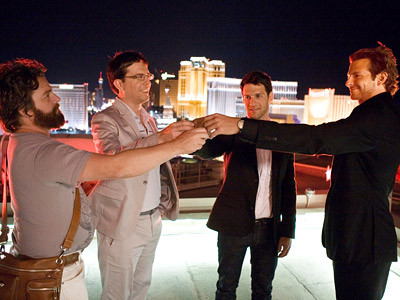
Maybe these guys didn't even WANT to go to Vegas.

Maybe these guys didn’t even WANT to go to Vegas.

One of the key points of etiquette is about making people comfortable. Unfortunately, people won’t always flat out say that you are making them uncomfortable or they aren’t interested. Oftentimes we all feel the pressure to be “polite” and not say no and hurt people’s feelings. Of course, it is absolutely polite and fine to say no to things, but it is hard!

So, if you practice reading the social cues people are giving you, you will be better able to interpret whether they are truly interested or whether they are just too shy to say no.

This is especially true when it comes to making plans. Sometimes you meet a new person and think you really click. You say “hey, we should hang out!” They say “omg that would be amazing, want to try this new ice cream place with me on Friday after work?” Then, you have a very enthusiastic person and that’s great. If you conversation goes more like this: “hey, we should hang out!” They say, “oh, yeah, definitely sometime!” You says “how about getting drinks Friday after work.” They say, “oh, I’d have to check my calendar…” There is a lot less enthusiasm there. If you don’t hear back, you should certainly follow up with them because yeah, maybe they do have to check their calendar. But if they are busy that night and all the other nights you suggest, you should probably give up on them.

This kind of thing is especially true for dating. If someone is barely responding to your messages/calls/etc or does a lot of one word answers, chances are they are just not that into you and it’s probably time you move on.

You especially need to be sensitive to the cues people are giving you when it comes to things that are going to cost a lot of money. Like trying to plan a big trip with your group of friends, like a bachelor/ette party. I just saw this example on A Practical Wedding where the bride is upset that her groom’s friends don’t seem that interested in doing a big weekend bachelor party for the groom that has a lot of subtle social cues going on. If someone is saying- “hey, let’s whisk Jimmy away to Vegas for a big crazy weekend- penthouse suite, strippers, bottle service, the works!” and everyone is emailing back things like, “oh, well we just bought a house and money is really tight right now” or “I only have one vacation day I can spare right now,” or “hey, my parents have a cabin at [nearby lake], let’s do a fishing weekend there,” or “maybe we could do a night out a couple of days before the wedding” then maybe it’s time to think about whether a trip like this is really going to work for this group of people at this time. If people are making excuses, it’s usually because they are not really into the general idea (and often those excuses are very valid!). But if people aren’t picking up the things you are putting down, you need to step back, scale down, and not push. (Hey Ladies is the not-quite-totally-satire version of this. It’s great, check it out.)

However, it can sometimes be difficult to tell if the cues people are giving you are because they aren’t interested or that they are interested but they just aren’t interested in doing any planning themselves. Take a long chain email about a plan to go hiking. A few people are debating dates, locations, times, train vs carpool etc. The rest of the group gives the dates they are available and then are silent for the rest of the conversation. These folks are likely still interested in going, but they just want to be told when and where to show up. A good way to figure this out is do a roll call after the details have been hammered out- send around an email giving the date, time, place, and relevant details and ask that everyone respond if they are going.

All of this is so very subtle and it can be very complicated. Is there anything I left out? Got totally wrong? Let me know in the comments!
How to Graciously Accept a Gift You Do Not Want

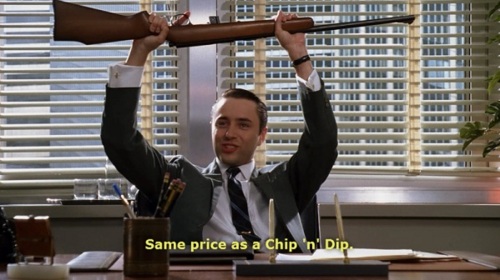
Always an option

Always an option

There was a video going around recently (that turned out to be fake) showing a husband surprising his wife with a $60,000 kitchen remodel. And when she walks in she is not impressed and walks out. Now, if it were me, I would be FURIOUS that my (hypothetical) husband spent $60,000 of our money without consulting me on a change in our house that I would have to look at and cook in for at least the next 10 years. And the fake kitchen in this particular video was not even that nice, so adding in that anyone who had spent $60k on it was an idiot who got wildly ripped off. It was baffling to me, then, that so many of the comments on the video were about the wife being ungrateful and horrible. Now this is an incredibly extreme example of being ungracious about a gift, but highlights this visceral reaction that people have to their gifts being rejected.

Thus it is important to learn how to receive gifts gracefully and with tact.

Obviously, it is important not to scowl, say “this isn’t what I wanted,” call the thing ugly, throw it across the room, or otherwise make the giver aware that you hate their gift.

You should at least act like you are pleased- say something like “this is great! I always wanted a purse shaped like a cat!”

If it’s someone close to you like your grandma who you see frequently, it’s a nice gesture to keep the offending item around and pull it out when they come over, but this is completely optional.

Say thank you in person or write a thank you note if you are not with them.

If you are able to figure out where they bought it and return it, that’s fine and great. If not, give it away to someone who can use it more.

Avoid regifting if it is likely that the original giver will find out.

If you do run into a problem where someone is consistently giving you tons of stuff that you don’t want and don’t have room for (like bringing you random junk every week) then you can have a gentle conversation about appreciating the thought but you are trying to get clutter out of your life and you would love to see just them, no presents.

If a repetitive poor gift giver is someone VERY close to you like your parents or your spouse, you can also have a gentle conversation to try to steer them in the right direction.

So tell me, what are the worst gifts you were ever given?