
What Is The Deal With Online Registries?

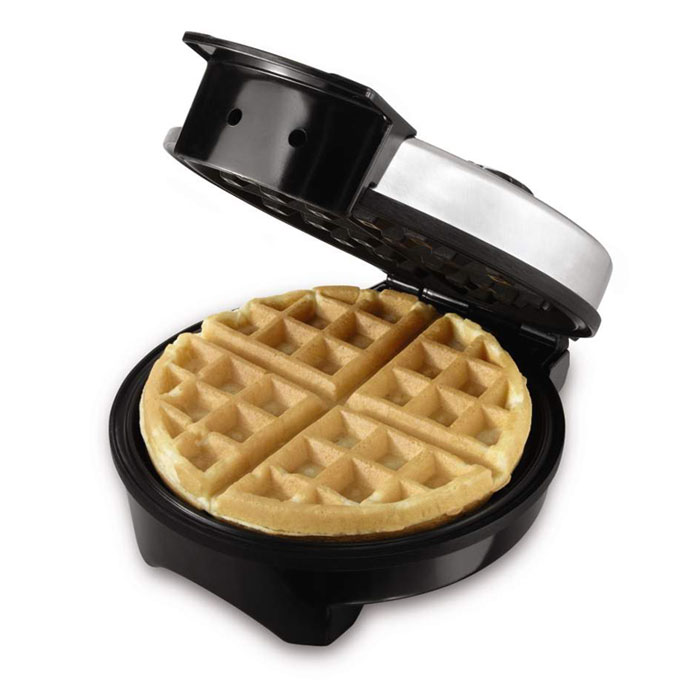
B007UO40LE-1._V149139675_Registries are already a weird thing we’ve agreed upon doing as a society, but after receiving two waffle irons within weeks of my engagement, I begrudgingly signed up and now understand the appeal. But a huge reason for that is because I signed up for an online registry that lets me register for anything from any store, in one place. It’s pretty great!

However, things like online and honeymoon registries have to be navigated carefully, as most people still aren’t familiar with them, so I’m going to break down a few of the common features you can look for and how they should be handled.

Gifts from Anywhere

The main appeal of these types of registries (Simple Registry, NewlyWish, MyRegistry, to name a few) is that you can list gifts from anywhere, on one page, so your guests don’t have to find your bedding at Macy’s and your plates at Pottery Barn and your tech gear at Best Buy. It also means that you can register at smaller or local stores, or stores that don’t have websites, which is fantastic for variety and also supporting small businesses.

One thing to be mindful of is ensuring the things you register for are still in stock. A few times I’ve found that trays, glasses, and decorations I registered for at a smaller store were completely out of stock, and I had to change my registry accordingly.

Also, check out how they work, and whether the registry redirects your guests to purchase the gifts at the specific sites, or whether you just get the cash and it’s up to you to keep your promise and use it to buy the thing you intended. Because you DO have to use the money to buy the thing you said it would be for, which is another reason why it’s good to regularly check that items are not sold out.

Split Gifts

So, you want a KitchenAid mixer, right? We all do, and you registered for one because if you had $600 to plunk down on one you wouldn’t be in this predicament. But chances are many of your friends and family do not have $600 to plunk down on a mixer either! Many of these sites offer ways to split up larger gifts into separate payments, so someone can chip in $100 to your mixer, another person $50, and soon enough it’s yours.

Remember that separate thank you notes are required for everyone who chipped in, no matter how small a donation.

Experience Gifts

Probably the best part of online registries is that you can register for experiences, not just physical things. I have honeymoon activities (snorkeling, sailing), cooking classes, and magazines subscriptions on mine. Most likely these sites will just give you cash to spend on these activities, so it’s doubly important that you actually do these things. To be extra nice, take some pictures and send them to the gift-giver to show them how much fun you had!

Cash

Speaking of cash, many of these websites have a built-in option for a cash gift (something I didn’t notice on mine, and cannot get rid of, which is the one thing that irks me). As we’ve mentioned before, everyone knows that everyone else could use cash, so there’s usually no need to make it explicit.

Many couples these days could really do without matching china, or even cooking classes, and instead would like to save up money to buy a home or make some other significant purchase. And while I am all for saving up money you receive as gifts for something like that, I would suggest against putting a “down payment fund” or “our dream home” on your registry. Here’s the thing I’ve noticed: the people who give cash will always give cash, but the people who give gifts like giving specific gifts. And asking that their “gift” be to throw $50 into a general pile of cash for a home that doesn’t exist yet is sort of cheating them out of their part of the arrangement.

I know, I know, I am always the first to cry about how people should show love the way the recipient needs it, not the way the giver wants to give it. If all the giftee wants is to save up for a modest house and the gifter thinks it’s not good enough, the gifter is the rude one, right? Totally, yes, you can go with that. But just keep in mind that if cash is truly all you want, you shouldn’t even register in the first place. (And that people will buy you gifts anyway, but you can probably just return them for cash.)

A note on honeymoon funds: Many people equate paying for a couple’s honeymoon (flights and hotels and such, not just fun excursions) similarly to paying for a couple’s house–that it’s rude. I’d disagree, because in my mind, a Honeymoon would not exist without a wedding, but a house would. It still feels like an extension of the festivities. However, allow your guests the joy of buying you specific things on your honeymoon, even if it’s just 1 night in a hotel or lunch on your third day there. Throwing a few dollars into a giant “honeymoon fund” just doesn’t feel as good. (See above.)

Also don’t register for a dog. I saw that. It was weird.

Fees

If you register at a site like Amazon or Macy’s, giftees will usually pay the shipping and taxes to have the gift sent to your house, because that’s just built into the way those sites work. However, with many online registries, it’s not that simple. For instance, if a guest buys me a gift that costs $75, their $75 is transferred into a holding fund on the site. I can then have it deposited directly into my bank account, or have a check sent to me, and use the money to buy the item I requested. They haven’t ordered you anything, but that credit card transaction still costs money.

Most sites do not require users to pay to use the service. It seems that most of them run on credit card transactions, fees and ads. Each site has its own way of doing fees. Some have a flat fee, others have fees based on the cost of gifts. Some require giftees to pay the transaction fees, while others allow you to pay it for them. I’m divided on which is the “nicer” way to do things: on one hand, making sure your guests don’t pay extra fees is nice. On the other, if you’re giving a gift and make the recipient pay a fee to receive it that’s not very nice. And if they bought you a gift through Amazon they would be paying shipping and tax fees anyway, so why should it be any different here? And Amazon and other sites make at least some of their money via product markups and such, right? And then you get into this whole conversation about capitalism and corporate greed when really you just want someone to get you a nice salad bowl. So shop around, see what the fee policy is, and if it seems reasonable to you it’s probably ok.

I would also suggest factoring in shipping and tax costs into gifts you put on an online registry. If you say it’s $75 for a set of plates, someone gives you that $75, and you go to the site to order it and find it’ll be $85 with shipping and handling, that sort of defeats the purpose of being given a gift.

Disagreements

There will most likely be someone who thinks having a registry like this is rude. There are people who still think having regular registries are rude. I’m still one of those people sometimes! But just remember that having a registry doesn’t mean that anyone is obligated to use it, which means two things. One, if you are giving a gift and don’t like the couple’s registry or its fee policy, you are perfectly welcome to buy them something else somewhere else. Two, if you are the owner of the registry, you cannot get mad if you guests don’t buy you gifts off of it. Actually, you can’t get mad if people don’t buy you gifts, period. It’s a “gift,” not a requirement.
How To Talk About Death

kermit-mickeyDeath is not common in western society the way it used to be. Infant mortality is relatively low, we have penicillin, and people die in hospitals, not at home. For many, this means that death is a rare occasion in their lives, which is a relief. But the flip side is that familiarity with death means an understanding of how to talk about it or offer sincere condolences. I still clam up when a friend loses someone close to them, unsure of quite how to offer support at a time when most people probably don’t know what they need. But here are a few things to think about when offering condolences.

1. Should I offer condolences?

In most instances, yes, you should, whether you’re the griever’s best friend, boss, or doorman. And if the griever brings it up first, you always should, even if you don’t know them very well.

2. When should I offer condolences?

If the griever tells you, immediately. If you hear it through another party (for instance, if your friend’s husband lets you know her aunt just died, because she’s not in any mood to be calling people), use your discretion based on your relationship. If it’s your best friend then obviously say something soon, but if you’re not as close, maybe give it a day or two, when it would make sense that news had gotten out.

3. How do I offer condolences?

If you can’t do it in person, I actually think text or email is much, much better than a phone call in most instances. When one’s grieving, the last thing most people want to do is get on the phone and interact with someone else, for multiple reasons. They may be making funeral arrangements, and don’t want to take time out of planning to hop on the phone with every relative or friend. They may need time alone, and don’t want to have to talk to anyone. Also these phone calls can quickly turn into the griever comforting those calling, explaining “no really, I’m ok, don’t worry” when they just want to grieve in peace.

An email or text on the other hand lets them know you’re there, but requires no response or effort from the griever (note: do not expect replies for these).

4. What should I say?

If you met the deceased, it’s always lovely to include a word or fond memory about them. If not, focus on the griever. You may say “I know how much he/she meant to you,” but a simple “I’m sorry for your loss” always works. This is also a good time to offer any services with something like “if there’s anything you need, please let me know.” If you’re closer, you can offer something specific, like house-sitting if they need to travel.

“I’m sorry for your loss” doesn’t sound like much. Often times I think I’m being too generic or uncaring when I send that message to a friend, but then I remember just how comforted I was with the flood of messages just like that the last time someone close to me died.

Tell us, what have you found comforting when a close one has died? What did people do that frustrated you?


Registries, Wedding Gifts, and Thank You Notes

Because we all know what weddings are really about. [via Wikimedia Commons]

I’ve saved my post about gifts and gift registries for last because they are the least important part of your wedding. Yet somehow they get quite a lot of attention on etiquette sites and in the news.

Here’s the thing, yes you are going to get gifts because that is what is done. However, gifts for weddings are completely optional, the amount a guest spends on their gift is up to them (I don’t ever want to hear the words “cover your plate” coming out of the mouth of a couple about their own wedding), AND what a guest chooses to give you is also up them.

Registries

Back in the day, a bride would go down to the department store in her hometown and pick out a china pattern and a silver pattern (this means the design on your knives and forks, btw). The store would note it down and when people came in to buy the bride a gift, the store could tell them what patterns she had chosen and they could select a place setting or two and be on their way. And that was the beginning of registries.

Now, you can register for anything your little heart desires. This is great! Not everyone needs 12 settings of Wedgewood china and Waterford crystal. However it also creates some confusion about what a registry really is.

A registry is a list of IDEAS. It can also be somewhat helpful in preventing a couple from receiving 5 toasters (has this really ever happened? Why is the example always toasters? ED NOTE: I got two waffle irons! No toasters yet -Jaya). A registry is not a list of demands or a shopping list for guests to pick from. Guests can absolutely get you things that aren’t on your registry.

Now if you are going to set one up, try to come up with items in a range of prices and try to come up with enough items that guests feel like they have some options.

Alternative Registries

Every day it seems that a new entrepreneurial has created a new way to do online registries. A popular version is the honeymoon registry. While many of your elderly relatives might be heartily offended by these types of registries, they are growing in popularity and are now generally accepted even by etiquette experts (such as the Emily Post Institute). However, there are good ways and bad ways to do a honeymoon registry.

A good way is to list a number of experiences you want to enjoy on the honeymoon- things that feel like real gifts, not just chipping in for airfare. Then, if you receive your “massage on the beach” or whatever, you should do you best to actually do that activity, even though the honeymoon registry company basically just gives you a big check at the end.

A bad way to do it is to just have a general fund that all the guests deposit money into- feels more like you are collecting cash rather than receiving gifts. You should also do what you can to make sure any fees are paid directly by you rather than passing them on to your guests.

Another new registry type is where you list the things you want and guests contribute money to those items through the site. For example, you want a KitchenAid Mixer (it’s not a registry without a KitchenAid, amirite?), but you know that no one will be able to buy you one for $400. So you split it up and ask for 4 gifts of $100 each for the mixer. This is pretty cool! Just like chipping in for a group gift but with less hassle. However, if you are asking for all this stuff, you should do your best to actually buy the things you are asking for when you get your big check at the end. If you are using these registries to trick your guests into giving you cash when they think they are buying you a mixer that you will bake Christmas cookies for years with, then that is extremely shady and you shouldn’t be doing it.

Asking For Cash

That brings me to my next point, cash. Cash is great, everyone loves it! It’s so great that everyone already knows you might like it, so you don’t need to ask for it. I mean think about it, here’s this list of items you might like for your newly wedded home and then at the bottom, you are like, “cash is good too!” Umm, duh.

However, you don’t have to despair. You can get the word around by word of mouth- tell your mother, tell your partner’s mother, tell your bridal party. And if someone ASKS you what you want, it’s totally fine to say “oh we are saving up for a house, so we would really love some money for that, but anything you want to give us is great!” It just doesn’t belong on a list. And if you don’t make a registry, many people will infer that you would prefer cash (though you might end up with some really hideous and/or memorable gifts as well.)

Getting the Word Out

So you’ve made this carefully curated registry. Now how do you let everyone know about it? Traditionally, it was all spread by word of mouth. Your aunt would call up your mom and ask her where you were registered and your mom would tell her. This still works! And again, if someone asks you where you are registered, you can tell them.

The one thing you do not want to do is include any mention of gifts or registries on the invitation. The invitation is all about wanting the guest to come share your day, not about what they are going to give you. This includes “no gifts please,” the point is to not talk about gifts, even not wanting them.

A really excellent place for registry information is on your wedding website, under its own discreet link. This creates a polite layer in which the guest is seeking out information that they want, you are not waving it in their face telling them to buy you stuff.

The Gifts Start Rolling In

It might surprise you at how soon after you announce your engagement that gifts start showing up at your door, so be prepared.

It is traditional that you don’t use your wedding gifts until after the wedding. The reason for this is that, if something should happen and the wedding is called off, those gifts must be returned to the giver!

Make sure you keep track of who sent you what- spreadsheets are great for this! This way makes it easier to send thank you notes.

Thank You Notes

Handwritten thank you notes are absolutely mandatory for wedding gifts. Even if you called them or thanked them in person, you still need to send a note. Wedding gift giving is a sort of formalized gift giving tradition that is basically required of all your guests. Therefore it deserves a formal thank you in return.

For gifts that arrive prior to your wedding, you want to send out a thank you within 2-3 weeks of receiving the gift (so they know it arrived safely!). DO NOT wait until after your wedding to send these notes. You are going to want to break up the note writing as much as possible so you don’t have to do 100 at once!

For anything that arrives shortly before your wedding, on the day, or afterwards, you only have 3-4 months tops to get them done. A year is a MYTH. Just do it and you can enjoy married life without the Sword of Thank You Notes Yet To Be Written hanging over your head.


I hope you all have enjoyed my series on How to Throw a Perfectly Polite Wedding. Be sure to check out all the earlier posts as well!

The Wedding Guest List

Wedding Invitations

The Care and Keeping of Wedding Attendants

Showers, Bachelor/ette Parties, and Rehearsal Dinners, Oh My!

Wedding Ceremony Etiquette

Wedding Reception Etiquette

Door Etiquette

Revolving doors strike terror into the hearts of the impolite. via Wikimedia Commons

Regular Doors:

This is really basic stuff, but apparently it needs to be said:

  • Hold doors for anyone coming behind you.
  • Especially hold doors for someone who has their arms full.
  • Say “thank you” if someone holds a door for you.
  • Don’t slam doors.
  • Don’t stop once you are on the other side of the door. Someone might be right behind you.
  • Along the same lines, don’t stand in front of doors.

Revolving Doors:

There are a lot of revolving doors in New York City and apparently no one knows how to use them, from what I’ve been witnessing lately.

  • If you are in a revolving door, you must push! Don’t rely on someone else to do it for you.
  • One person per slot (unless you are with a small child). You do not fit and you are slowing the whole process down.
  • Go with the flow of the door, don’t try to walk the opposite way that everyone else is pushing.
  • If you have an option between a revolving door and a regular door when entering a building (especially in winter and summer) you should choose the revolving door as it keeps the heat/air-conditioning in better.
  • Don’t stop once you exit the door, you are even more likely to be run into than with a regular door.
  • Technically, traditionally, if a man and a woman are entering a revolving door, the man should actually go first so that he can get the thing moving since he is physically stronger. These days, your mileage may vary with this.

Wedding Reception Etiquette

Is it just me or do these intense wedding reception setups make you feel kind of nervous and claustrophobic? [via Wikimedia Commons]

Receptions are the really fun part of weddings but they can also be the most complicated and fraught with etiquette conundrums. Etiquette doesn’t care about what your decorations are, your colors, how many people you invite, whether you have a band, a DJ, or an iPod, or which of the zillions of traditions you want to include. There are a million websites and books out there to help you decide on the style of your reception. But there are a few etiquette points that are important to keep in mind.

Reception Timing and Meals:

Often, your ceremony venue will have specific times that you are allowed to be there, this is especially true for churches. What do you do when your ceremony has to be at 2pm and you want to have an evening dinner reception?

Typically, you should do your best to avoid a gap, but they can be unavoidable. If you must have a gap and your wedding site is too far away for most guests to return to their homes/hotels, you need to have something for them to do in the meantime- many couples will have a longer cocktail hour at the reception venue to fill the time. Gaps are especially rude if you use them as a way to avoid paying for a meal for your guests- for example, having a wedding at 3pm and then having a “cocktail reception” starting at 8pm.

This leads me to my next point, you need to provide a proper meal if your wedding takes place over a mealtime, or be ready to expect some grumpy and hungry guests who order pizza and eat it in a parking lot (it happened on an episode of Four Weddings). If your ceremony starts at 4 or 5pm and is immediately followed by a reception that goes until 9, 10, or later, you need to provide a full meal of some kind. It is very poor hospitality to expect people to be spending 5, 6, or more hours on your wedding and not eat a real meal in that time. Now, very very heavy finger foods and appetizers can certainly count, but only if it is truly enough to fill up hungry bellies.

If you can’t afford to provide a full dinner for your drinking and dancing late into the night reception, then you need to consider other options:

  • A ceremony followed by a simple 2 hour cake and punch reception is a perfectly proper celebration for a wedding on a budget. Have the wedding at 2 and everyone is gone by 5 and you have no etiquette faux pas.
  • A morning wedding followed by a brunch or lunch reception gives you the ability to provide a nice meal which is usually much cheaper than a full dinner.
  • A very late evening wedding with the ceremony starting at 8 and followed by snacks, cake, drinking, and dancing late into the night.
  • A dinner reception with more casual foods- you don’t need to serve a choice between plated rubber chicken and filet mignon. Why not try a big pasta buffet, catered barbeque, takeout Chinese, food trucks, or big sandwich platters? Think outside the box and you will find something that will suit your budget and satisfy your hosting requirements!

It is smart to include a hint of what your reception will be like on your invitation so guests know what to expect ie cocktail reception to follow, dinner and dancing to follow, join us for cake and punch after, etc.

Toasts:

Traditionally, the Best Man and Maid of Honor give toasts at the wedding. Please ask them well in advance if they feel comfortable giving a toast at all. Check out Jaya’s post on toasting etiquette for more!

Seating:

If you are serving a meal, you need to provide seats for all your guests.

You don’t have to have a seating chart or assigned tables, but it can take the pressure off your guests and prevent the “school cafeteria” feeling of “where do I sit?” It also prevents the problem of large groups pulling in chairs to overfill one table and leaving another table with only two chairs for a couple of guests to sit awkwardly.

If you have assigned tables but not assigned seats, you can either have a list posted somewhere or “escort cards,” these are little cards (or something else more creative!) that have the guests’ names on them. They pick them up before going in to dinner and see what table they are at. If you have assigned seats, just use normal placecards at each person’s seat.

Receiving Lines:

You don’t often see receiving lines anymore (or at least not in my circle!). Most couples have opted to skip them in favor of going around to each table during the reception. Whichever you choose, you must do something to ensure that you speak to each guest for at least a moment during the wedding. Even though it seems like it would take a long time, the receiving line might actually be faster and allow you to enjoy more of the reception than trying to greet each person while they eat and reduces the risk that you will miss someone.

For the logistics: you either have the receiving line immediately after the ceremony and guests go through it as they exit the ceremony and go to the reception or you have it at the reception as everyone goes into dinner. Obviously, the couple needs to be in the line, but usually their parents and often the attendants will stand in it as well.

You needn’t do more than greet each guest and thank them for coming. After that, move them right along to the next person to keep the line moving.

Cash Bars:

I am going to take a very strong stance here and say that at American weddings, cash bars are always against general etiquette. Think about it: a wedding reception is essentially a thank you gift for your guests for taking part in your Important Life Event, and you shouldn’t ask anyone to pay for part of a gift. Also, it has always seemed strange to me that alcohol is the one area people feel comfortable asking others to chip in for. If you wouldn’t ask someone to pay for their dinner or their share of the cake, you shouldn’t have a cash bar. You are the host; you have to pay for everything associated with your event.

That being said, you are not required to serve alcohol at your wedding. You are also not required to have a full open bar; beer, wine, and soft drinks are a perfectly acceptable and cheaper option. Anyone who complains about your hospitality is being rude.

Another problem with cash bars is that it creates a situation in which some guests have something that the other guests do not because they can afford to pay for it. All of your guests should receive exactly equal food and drink and it is extremely rude to flash differences in their faces.

If you even THINK of having a cash bar for ALL drinks including soft drinks, then, I don’t even know what to do with you. (I have never seen this in real life, but it happened once on another episode of Four Weddings. That show is a mess.)

Of course, you are welcome to do what works in your community and if every single wedding you have every attended has had a cash bar, then you are probably okay.

Money Dances/Wishing Wells:

In a few cultures, money dances are traditional and therefore acceptable. General American culture is not one of them. In traditional American culture, your guests have already purchased a present or given you a check, so why are you asking them to give you even more?

Reception Activities:

Weddings have many fun traditions such as special dances, cake cutting, and bouquet and garter tossing. You can choose to have these as you wish, and don’t let anyone pressure you either way. However, some thoughts:

  • If you decide to do a garter throw/bouquet toss, do NOT force people to participate and don’t let anyone drag all the single people out onto the floor. Personally, I would also recommend keeping the retrieval of the garter tasteful, but you should do what works for you. And if you want your groom crawling up under your skirt to porno music in front of your grandma, that’s your business.
  • I have seen the first dance/father daughter dance occur between the cocktail hour and dinner, but traditionally they happened immediately after the dinner and toasts and opened up the floor to dancing. I have also been to weddings where there was dancing between each course of the dinner, so in those cases, you don’t really need to open the dance floor. Just be thoughtful about how you are scheduling activities and how they will help your event flow.
  • Some modern couples are opting to do a “marriage dance” where all the couples dance and the DJ has them sit down in order of how recently they have been married and then the couple who has been married the longest gets the bouquet. This can be a nice alternative to a bouquet toss which makes single people feel put on display, but at the same time, it excludes single people entirely. Basically you can’t win, so go with what works for you. Or start a new tradition where the whole reception has to try to catch the bouquet? Or you hide the bouquet and there is a search for it? So many possibilities.
  • If you are Jewish, you might want to dance the Hora. Presumably, you already know how to do this, but if you are having a lot of people at your wedding who have never done it before there are a couple things you might want to remember:
    • Everyone is allowed to join in! But your gentile friends might not know what to do, so make sure there are enough people around to show them the ropes.
    • Only the bride and groom go up in the chairs (though we’ve been to Jewish weddings where the parents went up too). Make sure the people lifting you know to keep you close enough together that you can both hold onto the napkin (“schmatta”).
    • Don’t use folding chairs for this activity unless you want to lose a finger!
    • (H/T to my good friend Rachel at whose wedding I had my first Hora experience and who was kind enough to answer my questions.)
  • Cutting the cake: this is pretty simple- the couple goes over to the cake, hold the knife together and cut a small slice. Then they feed it to each other and pose for pictures. Smashing the cake into each others faces is a thing in some places, and it’s totally at your discretion, but definitely don’t do it if one half of the happy couple doesn’t want to! Icing on that $4,000 dress!!
  • Reception activities should happen fairly quickly after dinner and end with the cake cutting. If you are having a “sending off” you can do the bouquet toss/garter throw immediately before you leave. (This is actually more traditional than having the bouquet toss randomly in the middle of your dance- originally it was more of a “just toss the bouquet in the direction of your girlfriends as you head out the door” type of thing than an event that everyone gathered around to watch.)
  • Have your MC announce when these activities are taking place as people will want to watch.

Ending the Reception:

Back in the day when parents hosted the wedding and the couple was the guest of honor, the couple would be expected to leave the reception before it was completely over. They might even change into “going away clothes” and there would be a big sending off as they left on their honeymoon. Then the guests would know that they could leave and everyone would start clearing out.

Now, often, the couple has paid good money for this party and they want to enjoy it until the bitter end. This can create a conflict with some older and more traditional guests who feel like they absolutely have to stay until the bride and groom leave. Nowadays, most people know that the cake cutting signifies the end of official reception activities and that people are free to leave anytime after that, so you might consider making sure that it is the end of official activities or even having your DJ or band leader announce that it is “the last activity but to please enjoy the music and dancing until [end time].” You might also want to consider having it (and your other “official” activities) fairly early during the reception in consideration of guests who might need to leave.

Other Things:

  • Apparently it is a tradition for guests to take home the centerpieces? If this doesn’t bother you, that’s great. If you have plans for your centerpieces, warn your caterer/wedding coordinator/family members/etc or maybe put a note under them saying not to take them.
  • Tip your vendors! Make sure either someone is assigned to handle this or you’ve prearranged the tips.