If you are going to clutch your pearls…

While we try not to be too pearl clutchy here at Uncommon Courtesy, we do occasionally run across situations that leave us grasping at our college-graduation-gift strands [Ed note: Or our inherited ones, Victoria. – Jaya]. And if you are gonna clutch them, you might as well know something about them.

Are they real?

Grab your pearls. Now open your mouth and rub them gently across your teeth (this won’t hurt them!). Do they feel a bit gritty? Or are they smooth? Real pearls feel gritty on the teeth and fake pearls feel smooth. If you see me out and about in pearls I will let you put them in your mouth, it’s such a neat trick. BTW, a lot of fake pearls are really good, so if you can’t afford the real thing, don’t feel bad about wearing fakes.

What is a pearl?

A pearl is a bit of crud covered in oyster spit. Fortunately for us, oysters have magical spit that turns into a shiny hard material. Nowadays almost all pearls are cultured, which means a small bead is artificially inserted into the oyster and left to get covered in nacre (they even have a fancy word for oyster spit!), which is a much faster and more efficient way of getting pearls. The alternative is hauling up millions of oysters and hoping you might find a few pearls.

Are all pearls the same?

No! There are several different types of pearls:

  • Akoya: are your basic white pearls
  • Freshwater pearls: are the cheapest kind
  • Tahitian pearls: are what people usually refer to as black pearls, because they are black
  • South Sea pearls: are giant pearls
  • Baroque pearls: aren’t really a type, but a shape. They are the ones that are all lumpy.

How do you take care of them?

Fortunately for pearl clutchers, the oils from your skin are good for pearls, so it’s great to fiddle with them. They will also dehydrate if you leave them in a drawer forever, so make sure you wear them frequently! However, stuff like perfume and hairspray are very bad for them, so they should be the very last thing you put on and the first thing you take off. Store them where they won’t get tangled and scratched by your other jewelry (I keep mine in the box they came in, outside of my usual jewelry box.)

Introductions

Nice to meet you! [Via Flickr user schluesselbein]

Introductions are one of those areas of etiquette that I see otherwise super polite people fall down on. I get it, because we get wrapped up in what we are doing and who we are talking to and forget to notice if we are leaving anyone out. But it’s really really awkward to be standing there while your friend talks to their other friend that you’ve just bumped into without introducing the two of you. Yes, you can and should introduce yourself if this happens, but be the bigger better person and introduce EVERYONE.

How to do introductions:

  • You are in a little group where you know all the other parties and they do not know each other.
  • You say, “Oh by the way, Millicent, this is Evelyn” they say hi and you move on and everyone is fine.

Alternate:

  • You are in a little group where you know all the other parties and they do not know each other. But you are hosting a party and need to mingle with your other guests.
  • You say, “Evelyn, this is Millicent- she went to college with me. Millicent, Evelyn plays on my recreational croquet league with me” And now they know something about each other and you can move on.

I am also a big fan of the walk into a big room of people and someone reels off everyone’s name. At least then you have been “introduced” and can reintroduce yourself later.

Whatever you do, just do something! I will tell you all about the crazy introducing rules that we don’t have to follow anymore on Friday.

Napkin Etiquette

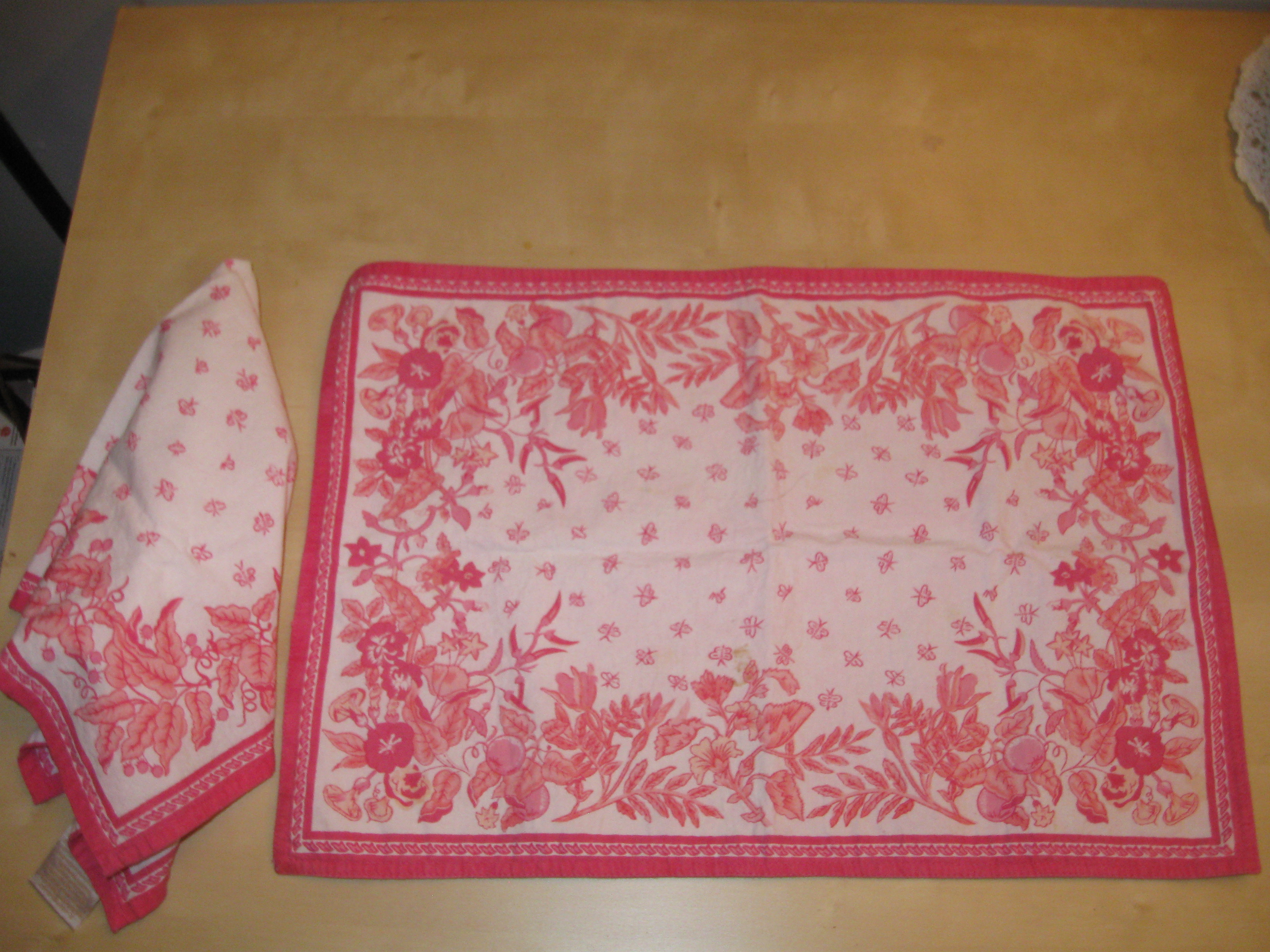
And this is what your napkin looks like after the meal, loosely gathered and placed to the left of your place setting.

And this is what your napkin looks like after the meal, loosely gathered and placed to the left of your place setting.

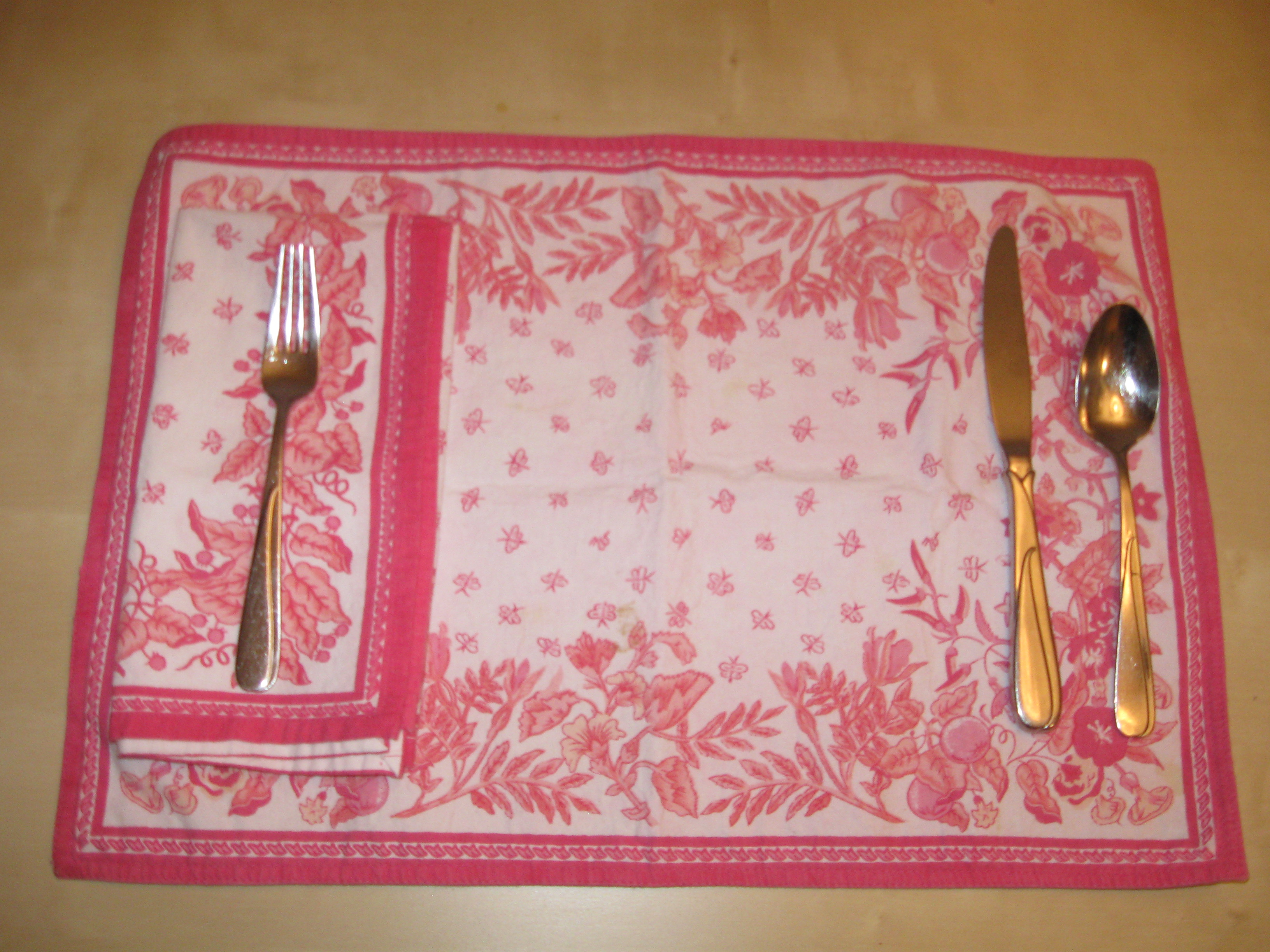
This is what your place setting looks like before you start. Napkin is under your fork. (Also, bless my mother for ensuring that I own a set of cloth napkins and placemats!)

This is what your place setting looks like before you start. Napkin is under your fork. (Also, bless my mother for ensuring that I own a set of cloth napkins and placemats!)


Yeah, I know you think you know how to use a napkin, but from my observations, there are some finer points to napkin etiquette that not everyone is aware of.

Different kinds of napkins:

  • Lunch napkins- lunch napkins are smaller than dinner napkins. You don’t fold it when putting it in your lap.
  • Dinner napkins- are the biggest napkin, and you fold it in half before putting it on your lap.
  • Cocktail napkins- are small and are mostly used to put around the bottom of your drink.

How to Use Your Napkin:

  • When eating meals, always put your napkin across your lap (I even do this when eating lunch at my desk at work…there is such a thing as taking etiquette too far!).
  • You never refold your napkin at the end of the meal, you gather it loosely and place it next to your place setting.
  • Napkin rings are used to hold a used napkin for the next meal (and they should be different…or if you are a WASP, monogrammed…so everyone knows which belongs to them), but this should only be done with immediate family. Nowadays, napkin rings are used more for additional decoration.
  • Napkins must never be tucked into the collar, except for very small children.
  • Generally at formal meals, the napkin matches the color of the tablecloth. At very fancy restaurants, the waiter will sometimes change out the white napkin for a black one if you are wearing dark clothing, to prevent lint spots (this happened to me at Commander’s Palace in New Orleans recently!)
  • If you need to leave the table during the meal, loosely gather the napkin and place it next to your plate (try to have the least dirty side facing up). It is generally recommended not to leave the napkin on your chair, as it will dirty the fabric of the chair cushion.

How To Borrow From A Friend

The important thing to remember about borrowing things from friends is that you have to give whatever you took back. Do whatever it takes to remember this. Don’t put, say a book, with your own books. Keep it separate. Even set a reminder on your calendar to return it by a certain date.

When you are asking to borrow something, pay attention to your friends tone of voice. If they seem reluctant to let you borrow it, let it go. Don’t ask to borrow things that are very valuable or sentimental.

Treat anything you borrow with the absolute best care and return it in absolutely the condition you found it in. If you damage it in any way, offer to repair or replace it.

Say thank you when you return it. And if your friend asks for it back, return it ASAP.

If your friend has borrowed something:

Try to put your name on it, especially for a book or a DVD or something. People are much more likely to remember to return it.

If you need it back, just ask nicely. If they keep flaking, you might need to go to their house to get it yourself.

Don’t lend out anything that you would seriously miss if it was never returned.


(PS. Jaya, I will return your book ASAP, I promise, XOXOXO)

How To Take Criticism

thecriticI’m going to break it to you now and tell you that you aren’t perfect. I know, it’s hard to hear, but it’s okay because no one expects you to be. People know you’re trying your best, and will mess up sometimes. But the best way to remind them that you indeed are trying your best is to learn to take criticism well.

Taking criticism overall means listening to what the other person has to say and seriously considering it before deciding whether you agree or not. You don’t have to agree completely, but consider the source. Is the person criticizing your work someone who knows the field? Is your friend criticizing you someone whose opinion you generally trust? Is it just another human who seems to care about the issue at hand, and should be treated with respect?

There are two main reactions to being criticized: getting defensive, and getting mopey. Both are terrible and you should do your best to avoid them, but both are understandable. Who hasn’t gotten defensive at being criticized? Your thoughts and actions are precious and special, and also probably reasonable! You want to protect them! Perhaps you start down the road of justification, explaining why you said what you said or did what you did, in hopes that the other person just didn’t understand what you were going for. Perhaps you accuse them of being ignorant, or illogical, or just mean. Yes, there are people who just like to be mean, or are seriously ignorant about things, but mainly if someone is taking the time to give you some constructive criticism it’s because they care. Listen, and really try to see if their criticism is meanspirited or if you’re just hurt that you’re getting called out.

The other reaction, which sometimes comes after getting defensive, is getting sad and mopey or mean to the point where the person criticizing you now feels that it’s their job to comfort you and tell you it’s not your fault. This may not be intentional, but in a way it’s a worse move than getting defensive, because now the blame is on the person who criticized you and hurt your feelings, instead of you for most likely doing something wrong in the first place. Symptoms of mopey-ness include: self pity, needless guilt, and endless apologizing.

This is not to say that you shouldn’t feel guilty and apologize, but that you don’t want those emotions to turn into the focus of the conversation. And the thing is, few people actually want you to feel bad about yourself when giving constructive criticism. They just want you to stop doing the one thing you were doing.

So what should you do? Well, if you see how you were wrong, you should apologize and vow to not make the same mistake moving forward. And then you should…not make the same mistake moving forward. It’s that easy! You don’t have to say anything else! Actually, you probably shouldn’t say anything else. Maybe you can ask how you can remedy the situation immediately, if you happened to offend someone, but otherwise just make the required changes and get on with your life.

Every once in a while you may receive criticism you honestly don’t agree with, even after considering the source and doing deep soul-searching about your own biases and opinions and such. Then, and only then, do you not have to apologize. You probably shouldn’t even respond, and if you do, it can be along the lines of “thank you for your input.”