Thank Goodness We Don’t Have To Use Visiting Cards Anymore

You know, like this.

You know, like this.

The first thing I found when beginning research on Calling Cards (aka Visiting Cards) was this line from Lillian Eichler’s 1921 Book of Etiquette, which says “The origin of the social call dates from the Stone Age,  when the head of a family used to leave a roughly carved block of stone at the door of another as an expression of good will and friendship.” THIS CANNOT BE TRUE, RIGHT? Let’s just take a moment to picture that, a caveman thinking to himself “You know, I really should call on that eligible girl Kathleen,” and carving his name into a rock and then leaving it with her chaperone. It’s beautiful.

A calling card was essentially a proto-business card, and was used in far more social situations with far more rules. You know how awkward it is to admit you’ve been networking and hand your card to somebody? (If not, you’re a better, confident person, teach me to be you.) Imagine doing that with someone you wanted to date, and there were set hours in the day with which to do it, and guardians had to be involved. Yeah.

Half of the rules of dating cards are about fonts, sizes, and card stock. Men’s cards were longer and narrower than Ladies cards, and Emily Post notes that a “fantastic or garish note in the type effect, in the quality or shape of the card, betrays a lack of taste in the owner of the card.” However, Marion Harland’s Complete Etiquette mentions “the styles of calling cards change from year to year even from season to season so that it is impossible to make hard and fast rules as to the size and thickness of the bits of pasteboard or the script with which they are engraved. Any good stationer can give one the desired information on these points.”

The rest of the rules concern when to leave or send cards. The basic idea was that Person A would not expect to see Person B in her own home (unless already invited or introduced) without Person B first leaving his visiting card at the home of Person A. Cards are left for bereavement, used to RSVP to events (bring the card a week before if you’re attending, earlier if not), and absolutely must be left “within a few days after taking a first meal in a lady’s house; or if one has for the first time been invited to lunch or dine with strangers.” Turning down the corner of a card meant that more than one person from the family name on the card had arrived.

There’s also this great anecdote from Emily Post. So (new money) Mrs. Vanderbilt was having a super lavish ball and everyone wanted to go. (Old Money) Mrs. Astor waited and waited and didn’t receive an invitation, so finally she sends around a note asking where her invite is. And Mrs. Vanderbilt responds: Mrs. Astor has never called on her and she wouldn’t be so presumptuous as to invite someone who had never called on her to a ball. So Mrs. Astor sends her card, Mrs. Vanderbilt invites her and they eventually become great friends.

It all sounds pretty exhausting, and involving a lot of footwork. For instance, this is an excerpt from Naval Ceremonies, Customs, and Traditions on how Naval Officers should conduct themselves with calling cards: “In formal calls, both the officer and his wife left a card in the tray provided for such a custom near the front door. In the most formal situations, the husband would leave two cards, one each for the senior being called upon and for his wife, while the officer’s wife would leave only one, since the inviolable rule of polite society was that ladies did not call on gentlemen. If the senior was unmarried, only the officer himself left a card.” The book also notes that this etiquette was far more rigid in Europe.

However, there is one aspect of this whole circus that I wish still existed: “Not at home.” If you are not available to entertain a guest when the guest calls, your servant (ha) would simply say that you are “not at home.” That could mean you’re out, it could mean you’re taking a nap, or it could mean that you hate the person calling and don’t care to hang out with them right now. It doesn’t matter, because they just leave their card and try again later. Only if you’re in your drawing room do you officially have to accept anyone, and you never have to explain yourself.

I DREAM about this lifestyle. I mean besides having a drawing room and lots of people to do my bidding, I dream of a life set up structurally so that I don’t make myself feel guilty about turning down social engagements. If you want to be social, you either had to go to someone’s house, or essentially set up office hours, and if you didn’t feel like it someone else could just say you weren’t there. It’s a perfect, cowardly move and I want it. But maybe we should all learn from this model and work on setting boundaries in our lives. I can’t be the only one who struggles with that, right? Let’s meet back here to discuss how that’s going for us. If I’m not available, leave your card.

How To Handle Yourself In A Mosh Pit

5030_576583714479_6231011_nWhen I was 15, mosh pits were my life. Many weekends my friends and I would take the subway out to Bensonhurst, Brooklyn and jump around and flail our arms in a circle and sometimes even punch a guy or jump off the stage. It was all very there’s-no-conflict-in-my-life-but-I-have-ennui-I-guess.

Twelve years later, I still join the occasional mosh pit, and despite what they look like from the outside, there is order to the chaos. In the last one I was in, I was sidechecked and careened to the floor, my purse exploding all over. At least five different moshers stopped what they were doing and helped me recover my belongings. Then we all brushed ourselves off and continued enjoying the show. Isn’t that nice?

However, there are the assholes. The people who think it’s an excuse for an actual fight. While it’s one thing to walk away with a bruise and smile, I can guarantee you that 95% of the audience would like to keep their teeth intact. So here are some tips on how to make the experience pleasant.

1. If you see someone go down, help them. Do not continue trampling someone on the floor. They are not down there because they are “lame” and “can’t handle it,” they are there because sometimes it’s hard to keep your balance when everyone is kicking and jumping around you.

2. Apologize if you actually hurt someone. If you’re already in a mosh pit, you understand there is risk of injury. But there’s a difference between feeling someone’s elbow in your back and getting a fist to the face. Take a second to make sure anyone you hit hard is actually alright.

3. No selfies in the Mosh Pit. Seriously I saw this happen once. A couple took out their phone and IN THE MIDDLE OF THE PIT started taking photos of themselves. Basically, don’t do anything in a mosh pit but mosh.

4. Do not stage dive feet first. You will only kick some poor soul in the head and most likely be dropped on your ass. And do your best to keep your feet up as high as you can.

5. Do not stage dive if no one knows you’re going to do it. Countless times I have seen some youth rush to the stage, jump up, and immediately jump out without grabbing anyone’s attention. This usually happens on larger or oddly-shaped stages, or just when everyone is naturally looking at the lead singer and the stage diver jumps out from the side. All that happens in this situation is that you land on a bunch of people’s heads, risk breaking necks, and either fall to the floor or make everyone have to push you up from their shoulders. The best way to go about it is take a few seconds on the stage, make sure a few people are looking in your direction and know you’re going to jump, and go head-first into their upturned hands.

6. Similarly, don’t try to crowd surf from the back. No one in front of you knows you’re coming.

7. Do not just jump into the tall people. As one tall friend of Uncommon Courtesy says, “just because I am tall does not mean I want you have to look at me like I’m a ham on a cartoon desert island.” Plus, if you aim for one person, that’s just one person trying to support your weight, instead of maybe 5-6 people of average height.

8. Do not actually punch. Fists are made, arms are windmilling, but don’t just jump in and start actually beating people up. I’ve seen people actually single out other moshers and just start punching them, and then act like it’s all part of the scene. Don’t be that guy.

Do Thank You Notes Really Need To Be Handwritten? (Teach the Controversy)

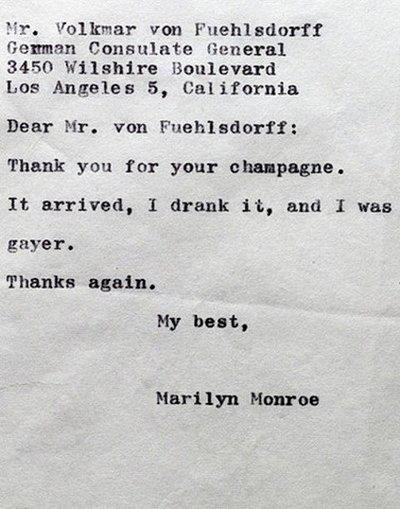
I mean really every note should look like this, yeah?

I mean really every note should look like this, yeah? [Via]

We’ve already spoken at length here about the value of a thank you note, so before we go any further, you should know that we at Uncommon Courtesy are firmly PRO thank you note. You should always be writing thank you notes, it’s a great habit, get into it.

However, we have previously advocated not just for the thank you note, but for the handwritten-in-ink-on-paper-and-mailed thank you note. But the more I think about it, the more I realize I do it mainly because That’s How It’s Done. This is not necessarily a bad thing–culture is defined by things that are just Done, and many things that are just Done are Done for great reasons. But it always helps to question authority once in a while. So I ask, does a formal thank you note need to be handwritten?

Victoria agrees that for minor thank yous (birthday presents, small dinner parties, among friends who you know don’t care), e-mail or a phone call or an in-person thank you is fine. But can you use email to thank someone for a wedding present? To your grandma? Below are some Pros and Cons for handwritten notes, so make your own choice, and let’s discuss more in the comments!

PRO: A handwritten note shows you’ve put effort into the thank you. Type out two sentences in email with no subject? That comes off as sloppy and lazy. But to write out your thanks on a card, address it and stamp it means there is physical evidence of how much thought you’ve put into it. You don’t even need to read the note to know that the sender is thankful, they spent at least 10 minutes getting the thing together for you!

CON: There is nothing inherently rude about email. I get that the medium is used mainly for sending links of funny gifs, but let’s face it, there’s nothing actually lazy or informal about email. There is nothing inherently formal or informal about any medium (ok maybe Snapchat), and email is our primary mode of written communication now. If you format your email like a letter and put thought into it, it will sound just as thoughtful. For instance, a few weeks ago I got an email from an editor of mine, saying how much she appreciates my work and being able to work with me. I nearly started crying, because it did not matter how that information was delivered to me; I felt appreciated. Of course, some people will ignore the message and judge the medium, but ultimately that’s their problem.

PRO: Supports the postal service. Our postal service is losing money! They’re shutting down branches everywhere! I used to be able to walk two blocks to my post office, and now I have to take a bus to get there, and it sucks. Every time you buy stamps and send letters, you’re supporting America and jobs and making sure your local post office doesn’t turn into another Rite Aid. And honestly, getting mail is great. It’s a small but joyful moment to open your mailbox and see something other than credit card offers and a random Pottery Barn catalog that you never signed up for. You can be responsible for giving someone that moment.

CON: Wastes paper. Handwritten notes require stationery and stationery is made on paper and paper is made from trees. There’s no way around it. Ok, I guess you can use paper made from bananas or hemp or something now, but you’re still taking things from nature, processing them, and then writing on them instead of letting them grow. If you’ve just gotten married, that is a hell of a lot of pieces of paper and envelopes to use just to ensure everyone gets thanked, when you could say what you want to say just as well by typing it out online. Oh and did I mention stationery is expensive? The basic cards I use are still $17 for 28 cards/envelopes, which I run out of fast, and which are not nearly as “formal” as some situations may dictate. Gmail, however, is free.

PRO: The note is automatically a keepsake. I have one thank you note on my fridge, written on beautiful stationery with stamped flowers, thanking me and my fiance for coming to the sender’s surprise birthday party. It’s written so well, and the paper is so pretty, and I couldn’t help display it for a while. And this is just from a friend! I’m sure you have an uncle somewhere who has saved every single thing you’ve sent him, and he would be elated to get another note to add to the collection. And then down the line you can look at these cards with your kids to teach them about manners, and handwriting, and all sorts of stuff.

CON: Your note will most likely be thrown out. I have one thank you note on my fridge, because (sorry) all the others have been thrown out. Not immediately, not before reading them and appreciating the sentiment and all that, but eventually they’re thrown out. Maybe within a week? Certainly when I open my desk drawer and find a bunch of notes in there. This is a fact of life: no matter how good your intentions and beautiful your work, all things decay. Memories fade and the legacies we try to leave behind will surely be forgotten. Best come to terms with this now.

These Pros and Cons will have different weight to different people. Maybe you’re a rabid environmentalist who doesn’t care that your cousin thinks an email is tacky. Maybe you’re a hoarder who doesn’t understand how anyone could throw away a handwritten note. Maybe you hate the Postal Service and want to watch it burn. This is something you have to figure out for yourself. Personally, I’m wrestling with it, because as much as I generally think cards are wasteful, I do enjoy writing, sending, and receiving letters and thank you notes.

Yes, You Can Turn Down A Job Interview

Work for more than bananas [Via philcampbell]

Work for more than bananas [Via philcampbell]

I know what you’re thinking. We’re still in a recession or something, right? Why on earth would you turn down a job interview? But the truth is, people are liars, and sometimes jobs are not what they seem. Maybe you thought you were applying for one type of position, and after a phone interview discovered it was something completely different. Maybe it’s something you like but too far away/crappy benefits/something else legitimate. Whatever the reason, sometimes you need to take yourself out of the running.

Firstly, you need to figure out whether you actually want to cancel, and there are different schools of thought. Ask A Manager says if you’re 100% sure you don’t want the job (and let’s assume this is after a phone interview or something where you know they’re interested and you’ve gotten more information than whatever the initial job posting says), you shouldn’t take the interview, as you’re taking an interview slot away from someone who may really want it, and wasting both your and the interviewer’s time. However, Forbes says you should still go, because it may be an opportunity for networking or just practicing your interview skills, or the job may surprise you. We can’t make that decision for you.

If you do decide to cancel, first, be prompt. As soon as you know it’s not right for you, say something. It’s just a lot nicer than calling an hour before your interview and saying “you know what? Sorry.” And if possible, do this over the phone, though honestly most correspondence is done over email these days. Finally, be honest about your reasons, though you don’t have to go into a lot of detail. Sometimes the reasons are concrete (you’re moving far away), and sometimes they’re not (you just don’t think it’s a good fit).

You can say so about either of these things. If it’s more on the side of “it’s just not what I’m looking for,” use your email/phone call as an opportunity to educate them as to why. Once, I interviewed for a job that would pay a lot, but it was “freelance” pay so I would have had to pay all the taxes, and there was no health insurance or paid vacation/sick time. I tried to negotiate on this to no avail. Once I decided that I wanted to cancel our schedule in-person interview, I emailed them, thanking them for the opportunity, but that “upon further review of the position and compensation” it wasn’t the right fit for me. Hopefully they were able to pick up on the fact that you’d need to pay someone a hell of a lot more than what they were offering if there was no health insurance.

Have you ever turned down an interview? Did you ever go to an interview only to find the office/person/job to be absolutely ridiculous? Tell us!

Thank Goodness We…Oh Wait We Still Sort Of Have Chaperones

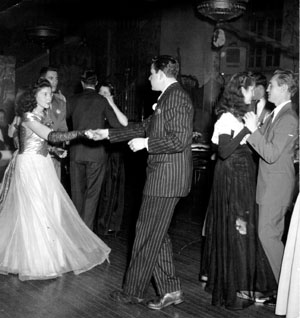
1940sDance

But where is the supervision!? [Via]

We’ve already spoken about how no girl of good breeding would be caught dead at a bachelor’s apartment past 10 pm, or ever at dinner alone. But let’s say you’re a man. You’ve been introduced to a lady of good breeding from your own class and she has “meaning intentions” and you want to get to know her better, outside of her home. For that, you’d probably need a chaperone.

Often times, a mother would be the chaperone for her own daughters. But if that wasn’t possible, an outside chaperone could be enlisted. These were typically older, widowed or unmarried women who ensured that a young woman’s virtue remained intact throughout an evening of interaction with men. In Europe in the late 1800s, it was the chaperone’s job to introduce her “protege” to the hostess and other important people at any social gathering. And if a man wanted to call upon the protege, he had to ask her chaperone’s permission first. Chaperone’s had permission to accept or decline invitations from young men on behalf of their proteges, especially if they could not be present, and would often leave their own calling cards along with those of their proteges.

As we hit the 20th century, chaperones were not nearly as omnipresent in America as they apparently were in Europe. Putnam’s Handbook of Etiquette (1913) mentions the “Spanish law which says no unmarried woman may go out unaccompanied whatever her age and mission.” This largely has to do with European rules of class and society. “ In Europe, where social lines are distinctly drawn, a young woman either belongs in ‘society’ or else she does not,” writes Agnes H. Morton in 1909’s Etiquette: Good manners for all people, especially for those who dwell within the broad zone of the average (what a title). “In the former case she is constantly attended by a chaperone. In the latter case she is merely a young person, a working girl for whom ‘society’ makes no laws.” This was the case in America at the turn of the century, where many young, single women held jobs.

Morton agrees that, for these working American girls, enlisting chaperones to take them to and from work every day would be “burlesque in the extreme.” However, just because you work doesn’t mean you’re still not a delicate flower that needs constant watch around men.  “The girl who is thus allowed to go alone to an office in business hours sometimes thinks it absurd for any one to say that she must not go alone to a drawing room and she does go alone. Right here this independent girl makes a mistake.”

Morton suggests the solution is “intermittent chaperonage,” because while at work, a young woman is “shielded from misinterpretation.” This idea of misinterpretation is basically what chaperonage is about–the idea that young people, especially women, needed a social translator, lest they say something risque and their reputation ruined.

As time went on the rules relaxed a bit, and chaperones became more like teenage watchdogs instead of personal attendants. In 1948, Vogue’s book of etiquette mentions teenage dates where young women couldn’t go out without a chaperone if they were going to be out past 7. It also mentions college dances, where male guests must first greet the chaperone or the house mother before entering the party, or cut in to introduce themselves if the chaperone is dancing.

Today, chaperones are mainly relegated to school dances and other organized, nighttime gatherings of teens, though there definitely are still regions where supervision on dates is required (*cough* Big Fat American Gypsy Wedding *cough*). And honestly, how different is the assumption that a boy must ask permission of the father to take a girl on a date than asking permission of a chaperone?